🐾 Ryder Wells: The Boy Who Survived a Brutal Dog Attack—And Society’s Cruelty
In a world that often celebrates survival stories, the tale of Ryder Wells stands out not just for its horror and heroism, but for the painful aftermath that followed. At just 21 months old, Ryder was viciously attacked by two 45kg Rottweilers while visiting a family friend in Granite Falls, North Carolina. The physical trauma was devastating—but what followed was a different kind of wound: the emotional toll of being labeled a “monster” by strangers, even as he fought to reclaim his life.
🧸 The Attack That Changed Everything
It was Thanksgiving weekend in 2015 when Ryder’s life was irrevocably altered. His mother, Brittany, had taken him to visit a friend. The dogs—familiar to Ryder—had never shown aggression before. But in a tragic twist, they turned on the toddler.
Brittany recalls the moment with haunting clarity:
“We were eating breakfast and Ryder was back and forth to his toys and back for bacon. Then he disappeared. I looked out of the window and he was face down in the garden. His face was just gone”.
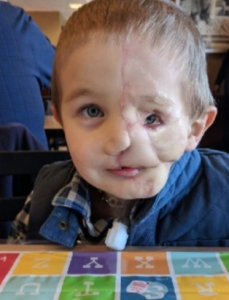
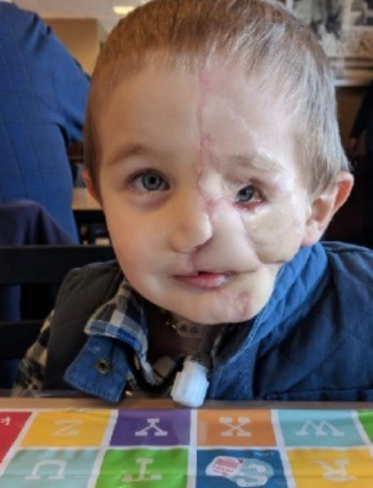
The dogs had mauled Ryder so severely that he lost his entire right cheek, the bottom of his eyelid, 75% of his lip, and most of his teeth. His arm was broken, and his lung was punctured. He was airlifted to the hospital and underwent a grueling 14-hour surgery. Doctors warned Brittany to prepare for the worst.
But Ryder defied the odds.
🏥 A Medical Miracle
Over the next few years, Ryder endured more than 50 surgeries to reconstruct his face. Skin grafts, tracheostomies, dental reconstructions—his tiny body became a battleground of healing. Despite the pain and limitations, Ryder showed remarkable resilience.
Doctors had predicted he would never eat normally. Yet, he refused a puree diet and learned to drink on his own. Today, with only eight teeth, he eats everything. Brittany calls him “fierce,” and rightly so.
“He’s been amazing how he’s adapted after what he’s been through,” she said.
But while Ryder’s body healed, society’s response to his appearance became a new source of trauma.
😢 The Cruelty of Public Judgment
As Ryder grew older and began attending preschool and kindergarten, Brittany noticed a disturbing pattern. Children—and even adults—would stare, whisper, and recoil. At playgrounds, some kids would scream “monster” and run away. In stores, strangers would shout “ew” at him.
For Brittany, the pain was unbearable:
“It breaks my heart as a parent that after everything he’s been through, people aren’t always nice over something he can’t help.”
The emotional toll of these encounters is difficult to quantify. Ryder, still just a child, has had to navigate not only physical recovery but the psychological weight of being treated as “other.”
💬 A Mother’s Message to the World
Brittany has spoken out publicly, not to seek pity, but to demand compassion. In interviews and social media posts, she’s urged people to look beyond appearances and recognize the strength and humanity in her son.
“He’s not a monster. He’s a miracle.”
Her message is clear: Ryder deserves love, respect, and inclusion—not judgment. She’s also called for greater awareness around facial differences and the impact of bullying.
🧠 The Psychology of Staring and Shaming
Ryder’s experience isn’t isolated. Children with visible differences—whether from burns, birth defects, or trauma—often face social exclusion. Psychologists note that humans are wired to notice anomalies, but cultural conditioning can turn curiosity into cruelty.
Staring, whispering, and name-calling can lead to long-term emotional damage. For children like Ryder, these experiences can shape self-esteem, social development, and mental health.
That’s why Brittany’s advocacy is so important. By sharing Ryder’s story, she’s challenging societal norms and pushing for empathy over instinct.
🧍♂️ Ryder Today: A Fighter, Not a Victim
Now five years old, Ryder continues to defy expectations. He attends school, plays with his siblings, and enjoys the same things other kids do—despite the stares and whispers. His mother says he’s developing a strong sense of self and doesn’t let negativity hold him back.
“He’s really adapted. He’s doing things beyond what anyone thought possible.”
Ryder’s story is not just one of survival—it’s one of triumph. He’s living proof that resilience can overcome even the most brutal beginnings.
🛡️ What Society Can Learn
Ryder’s journey offers a powerful lesson in empathy. It challenges us to rethink how we respond to visible differences and reminds us that kindness is a choice.
Here are a few takeaways:
- Teach children empathy early: Conversations about differences should start at home and in schools. Kids need to understand that appearance doesn’t define worth.
- Model respectful behavior: Adults must lead by example. If you see someone staring or making a comment, intervene gently and redirect the conversation.
- Support families: Parents of children with trauma or disabilities often feel isolated. Community support—emotional and financial—can make a huge difference.
- Celebrate resilience: Stories like Ryder’s should be amplified, not hidden. They remind us of the strength of the human spirit.
🌟 Final Thoughts: Ryder’s Legacy
Ryder Wells may be just a child, but his story carries the weight of a movement. He’s a symbol of courage, a challenge to cruelty, and a reminder that beauty lies in survival—not symmetry.
His mother’s words echo in every corner of this story:
“He’s not a monster. He’s a miracle.”
And perhaps that’s the message we all need to hear. In a world quick to judge, Ryder teaches us to look again—and see the strength behind the scars.