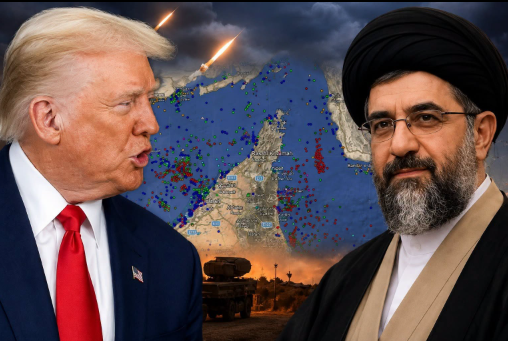
BREAKING NEWS: U.S. Officials Say Russia Is Giving Iran Intelligence — What It Means
A dramatic headline claiming that “Russia is giving Iran…” has been circulating amid the continuing conflict between the United States and Iran. The missing words in many viral posts are important: recent reporting has focused on allegations that Russia has provided Iran with intelligence and information that could help Tehran track and target U.S. military forces in the Middle East.
This is not simply an internet rumor. U.S. officials have previously confirmed that Russia has provided assistance to Iran during the conflict. But the story is more complicated than some social-media headlines suggest, and it is important to distinguish intelligence support from direct Russian participation in combat.
According to reporting by The Washington Post in March, three U.S. officials familiar with intelligence said Russia was providing Iran with targeting information concerning American forces, including the locations of U.S. warships and aircraft in the region.
That revelation raised serious questions in Washington about how far Moscow is willing to go in supporting Tehran.
What Is Russia Allegedly Giving Iran?
The most significant reports concern military intelligence.
Information about the location or movement of ships, aircraft and other military assets can be extremely valuable during a conflict. Modern warfare depends heavily on knowing where opposing forces are located, how they are moving and what defensive systems may be protecting them.
The Washington Post reported that the information provided by Russia could help Iran target American forces. PBS NewsHour separately reported that U.S. officials said Russia had provided Iran with information that could help Tehran strike American warships, aircraft and other assets in the region.
That does not necessarily mean Russia is directly controlling Iranian weapons or choosing Iranian targets.
Instead, intelligence support can give another military a clearer picture of the battlefield.
For Iran, such information could potentially help its forces identify American positions and improve the timing or accuracy of attacks.
Why Would Russia Help Iran?
The relationship between Russia and Iran has developed significantly over recent years.
Both governments oppose many aspects of U.S. foreign policy, and both have increasingly cooperated militarily and economically.
Their relationship also became closer during Russia’s war in Ukraine. Iran has provided military assistance to Russia, including drones that have been used by Russian forces.
Russia, meanwhile, has developed its own strategic interests in maintaining ties with Tehran.
The Middle East is important to Moscow for economic, military and geopolitical reasons. Iran is also an important regional power, making cooperation with Tehran potentially useful as Russia confronts pressure from the United States and its allies.
A June 2026 analysis by the Middle East Institute said U.S. officials had confirmed that Russia was aiding Iran during the 2026 war. The analysis described Moscow’s assistance as part of a broader relationship rather than evidence that Russia had openly entered the war as a combatant.
This Does Not Mean Russia Has Declared War on America
This is one of the most important distinctions.
Providing intelligence to another country is serious, but it is not the same thing as sending Russian troops to attack American forces.
There is currently a major difference between indirect assistance and direct military intervention.
Russia has its own military commitments, particularly its ongoing war in Ukraine. Directly entering another war against U.S. forces would create an enormous escalation risk.
For Moscow, providing intelligence or other forms of assistance can potentially increase pressure on Washington while avoiding some of the dangers associated with openly deploying Russian combat forces against Americans.
That ambiguity is one reason the situation is so sensitive.
The Satellite-Imagery Controversy
Another important development involves allegations that Russia supplied Iran with satellite imagery.
Ukrainian President Volodymyr Zelenskyy alleged that Russian satellites had surveyed areas containing U.S. military installations in the Gulf and that the resulting imagery subsequently appeared in Iran.
The allegations attracted considerable attention in Washington.
However, President Donald Trump publicly downplayed the significance of outside assistance to Iran, saying that any help from Russia would be unlikely to substantially improve Iran’s ability to target Americans. Fox News reported that a U.S. official similarly said outside assistance was not increasing Iran’s ability to target American forces.
This illustrates an important point: claims about Russian assistance have been reported, but the extent and effectiveness of that assistance remain subjects of debate.
Why Intelligence Matters So Much
Modern military operations depend heavily on intelligence.
A missile system may be powerful, but it is far more useful when its operators know where a target is located.
A fighter aircraft may be highly capable, but its effectiveness increases when commanders have accurate information about opposing aircraft and air-defense systems.
A warship can defend itself more effectively when it knows where threats may be approaching from.
This is why intelligence sharing can be strategically significant even without the transfer of large quantities of weapons.
Satellite imagery, electronic intelligence, reconnaissance information and other forms of surveillance can potentially help a military understand what is happening thousands of miles away.
For Iran, information concerning American naval and air forces could be particularly valuable because U.S. forces operate throughout the Middle East.
The United States Has a Large Regional Presence
The United States maintains extensive military capabilities in the Middle East.
American aircraft, warships, air-defense systems, logistics facilities and personnel operate across the region.
That presence provides Washington with considerable military power but also creates potential targets.
During a major conflict, American commanders must constantly consider threats from missiles, drones, aircraft and other weapons.
If another major military power provides intelligence to an adversary, U.S. planners must consider the possibility that information about their movements could be compromised.
That makes Russia’s alleged assistance a serious national-security issue even if Moscow does not directly participate in combat.
Russia and Iran Already Have a History of Military Cooperation
The current relationship did not appear overnight.
Russia and Iran have cooperated on military technology, weapons, energy and regional security for years.
Their partnership became especially visible during the Syrian civil war, where both countries supported the government of Bashar al-Assad.
The relationship later expanded as Russia became increasingly isolated by Western governments following its invasion of Ukraine.
Iran, meanwhile, has sought to strengthen relationships with countries willing to challenge American influence.
The result is a partnership driven largely by strategic interests.
That does not mean Russia and Iran agree on everything.
Their relationship is pragmatic.
Each government is attempting to protect its own interests and increase its leverage against opponents.
Could This Escalate?
The biggest concern for Washington is escalation.
If American officials conclude that Russian intelligence is directly helping Iranian forces attack U.S. personnel, pressure could grow for the United States to respond.
Moscow, however, would likely want to avoid a direct confrontation with American forces.
The same applies to Washington.
A direct U.S.-Russia military confrontation would carry consequences far beyond the Middle East because both countries possess enormous military capabilities, including nuclear arsenals.
That makes every step involving Russian assistance to Iran politically and strategically sensitive.
The Wider Russia-Iran-China Relationship
Russia’s relationship with Iran also exists within a broader pattern of cooperation among countries that increasingly challenge U.S. influence.
China has maintained close economic ties with Russia and Iran, although Beijing’s relationship with each country differs substantially.
Analysts sometimes describe this group as a loose strategic alignment rather than a formal military alliance.
There is no single treaty requiring Russia, Iran and China to fight together in every conflict.
Instead, cooperation can take place in specific areas where their interests overlap.
That can include trade, technology, diplomatic coordination, military cooperation and efforts to reduce dependence on Western financial systems.
What U.S. Officials Are Watching
American officials will likely continue monitoring several issues closely.
The first is whether Russia provides additional intelligence.
The second is whether Moscow supplies advanced military equipment.
The third is whether Russian assistance becomes more direct.
There is a significant difference between sharing broad intelligence assessments and providing precise, real-time targeting information.
The more directly assistance contributes to attacks on U.S. forces, the greater the potential political consequences.
Why Viral Headlines Can Be Misleading
The phrase “BREAKING NEWS: Russia is giving Iran…” is designed to create curiosity.
But without the rest of the sentence, readers may assume that Russia has suddenly decided to send weapons, troops or nuclear technology to Iran.
The documented reporting is more specific.
U.S. officials have previously said Russia provided Iran with intelligence that could help Tehran target American military assets.
That is serious, but it should not automatically be transformed into a claim that Russia and Iran have formally entered a joint war against the United States.
The Bigger Picture
The Russia-Iran relationship is becoming increasingly important as the Middle East conflict develops.
For Washington, the challenge is no longer simply dealing with Iran’s military capabilities.
U.S. officials must also consider how Russia and other outside powers might provide Tehran with information, technology or other forms of assistance.
For Moscow, supporting Iran can increase pressure on the United States while advancing Russia’s broader geopolitical interests.
For Tehran, assistance from Russia could potentially improve its ability to understand and respond to American military movements.
But none of that guarantees a direct Russia-U.S. confrontation.
The situation remains fluid, and claims circulating online should be evaluated against reporting from credible news organizations and official statements.
The Bottom Line
The headline “Russia is giving Iran…” has a real story behind it, but the details matter.
U.S. officials have previously said Russia provided Iran with intelligence that could help Tehran target American military forces, including information concerning U.S. warships and aircraft.
Other reports have examined allegations involving Russian satellite imagery and additional forms of assistance.
What has not been established by these reports is that Russia has openly entered the war against the United States or deployed Russian combat forces to attack Americans.
The most important development is therefore not a sensational declaration of a new world war.
It is the increasingly complicated network of military, intelligence and strategic cooperation surrounding the conflict.
As tensions continue, Washington, Moscow and Tehran will all face difficult decisions. The greatest danger may come not from one dramatic announcement, but from a series of smaller actions that gradually increase the risk of direct confrontation.
That is why reports of Russian assistance to Iran are being watched so closely — and why the exact nature, scale and effectiveness of that assistance matter far more than the sensational wording of a viral headline.