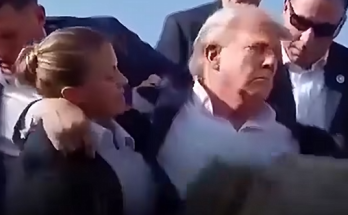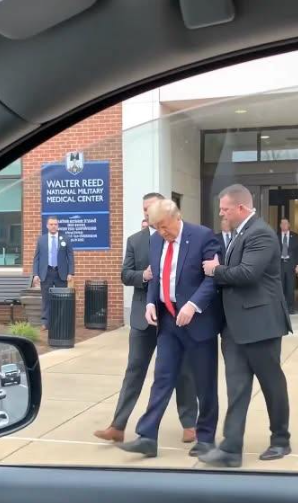
Reports concerning Donald Trump’s health have recently gained widespread attention following a series of noticeable schedule changes, prompting speculation, concern, and debate across political and media circles. While public figures—especially those with a profile as prominent as Trump—often face scrutiny over even minor deviations from routine, the current situation has reignited a familiar conversation about transparency, privacy, and the physical demands of political life.
In recent weeks, observers noted that several planned appearances and engagements were either postponed, shortened, or quietly removed from Trump’s public calendar. These shifts, while not unprecedented in political scheduling, quickly became a focal point for commentators and analysts. Given Trump’s continued influence within American politics and his active presence on the campaign trail, any perceived change in his stamina or availability tends to draw immediate attention.
Supporters of Trump have largely dismissed the speculation, framing the adjustments as routine logistical decisions rather than indicators of any underlying health issue. Campaign representatives and close allies have emphasized that modern political schedules are highly dynamic, often changing in response to travel constraints, security considerations, or strategic recalibrations. They argue that reading too deeply into such changes risks misrepresenting the realities of organizing large-scale events.
Critics, however, have taken a different stance. Some have suggested that the lack of detailed explanations surrounding the schedule changes invites legitimate questions. In an era where transparency is increasingly demanded of public officials, even small gaps in information can lead to broader speculation. For critics, the issue is less about assuming a specific health condition and more about whether the public is being given a clear and accurate picture.
Historically, presidential health has always been a sensitive topic in the United States. From Franklin D. Roosevelt’s concealed mobility challenges to John F. Kennedy’s undisclosed medical conditions, there is a long precedent of leaders managing the balance between personal privacy and public accountability. In more recent decades, expectations have shifted toward greater openness, with candidates often releasing medical summaries or undergoing publicized examinations.
Trump himself has previously addressed his health in broad terms, frequently describing his energy levels and endurance as strengths. During past campaigns and his presidency, he often highlighted his ability to maintain demanding schedules as evidence of his fitness for office. This makes the current focus on his schedule particularly notable, as it contrasts with the image he has long projected.
It is also important to recognize the broader context in which these discussions are taking place. Political polarization in the United States has reached a level where even neutral observations can quickly become partisan talking points. For some, concerns about Trump’s health are framed as legitimate inquiries tied to leadership readiness. For others, they are viewed as politically motivated narratives intended to cast doubt or create uncertainty.
Media coverage has played a significant role in amplifying the conversation. Cable news programs, online publications, and social media platforms have all contributed to the rapid spread of speculation. In some cases, minor details—such as the length of a speech or the timing of an event—have been analyzed extensively. This level of scrutiny reflects not only Trump’s prominence but also the modern media environment, where information moves quickly and narratives can take shape in real time.
At the same time, medical experts caution against drawing conclusions without concrete information. Assessing an individual’s health based solely on public appearances or schedule adjustments is inherently unreliable. Factors such as fatigue, travel demands, and even strategic decision-making can all influence how a public figure structures their time. Without official medical disclosures, much of the discussion remains speculative.
There is also a human element that often gets lost in these debates. Regardless of political affiliation, public figures are still individuals with personal boundaries and rights to privacy. While voters have a legitimate interest in the health of those seeking high office, there is an ongoing tension between that interest and the ethical considerations of medical confidentiality.
Looking ahead, the trajectory of this conversation will likely depend on how Trump and his team choose to address the speculation. A clear and direct statement—whether reaffirming his health or providing additional context for the schedule changes—could help shape public perception. Conversely, continued ambiguity may allow the discussion to persist, fueled by ongoing analysis and interpretation.
Ultimately, the attention surrounding Trump’s schedule changes underscores a broader reality of modern politics: perception often carries as much weight as reality. In a landscape where every action is observed and interpreted, even routine decisions can take on outsized significance. Whether these reports fade quickly or evolve into a larger issue will depend on the interplay between media coverage, public interest, and the responses provided by Trump and his representatives.