 U.S. Military Buildup and Tension With Iran: What’s Really Happening
In recent days and weeks, the global security situation in the Middle East has escalated significantly due to the ongoing conflict involving U.S. and allied strikes against Iran and Iranian retaliatory actions. This has prompted the United States to consider additional troop deployments and reposition forces already in the region.
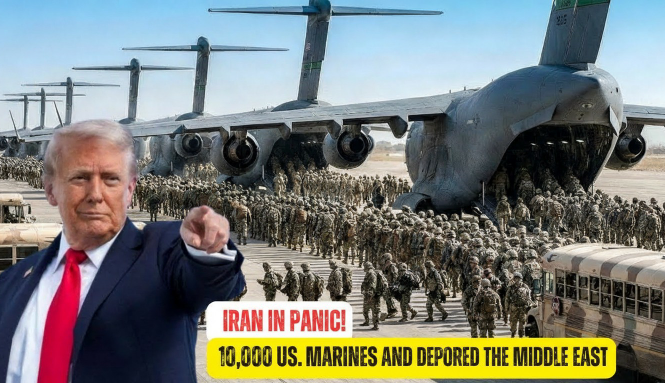
Although there are no verified reports that the United States has deployed precisely “10,000 Marines and Delta Force operators” to the region, there is substantial evidence that Washington is reinforcing its military presence with thousands of personnel, including Marines, airborne troops, and other forces.
1. Ongoing Conflict and Military Tension
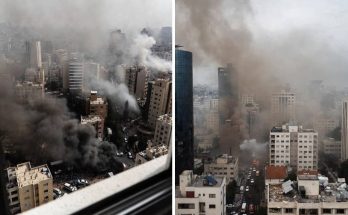
The conflict between the U.S., Israel, and Iran — which began in late February 2026 — has expanded into one of the most dangerous geopolitical flashpoints in the world. What started as coordinated strikes against Iranian targets by U.S. and Israeli forces has grown into a broader confrontation, including retaliatory missile and drone attacks launched by Tehran against regional partner states and U.S. positions.
Iran’s strategic importance lies in its geography and influence over regional politics. The country borders several U.S. allies and controls access to the Strait of Hormuz, through which approximately one‑fifth of the world’s oil supply passes. Any significant escalation between Tehran and Washington thereby carries global economic consequences.
2. U.S. Forces Already in the Region
Long before the current crisis, the United States maintained a large military footprint across the Middle East. As of early 2026, this included tens of thousands of service members in countries such as Iraq, Kuwait, Qatar, Bahrain, Jordan, Syria, and the United Arab Emirates. These forces support air defense, logistical hubs, combat air patrols, and regional security cooperation.
At the start of this year, the U.S. already had naval carrier strike groups, fighter squadrons, missile defense batteries, and support aircraft deployed in the region as part of its standing Central Command forces.
3. Recent Reinforcements Under Consideration
Recent reporting indicates that the Trump administration and Pentagon officials are actively considering and preparing additional troop deployments to bolster existing forces amid the ongoing Iran conflict.
One such plan involves sending units from the elite 82nd Airborne Division — a rapid reaction force capable of deploying within hours — to the region. According to multiple sources, 3,000 to 4,000 airborne troops are expected to be sent to the Middle East, reinforcing deterrence and providing flexible response capability.
In addition to airborne units, the U.S. military has already moved Marine Expeditionary Units — naval‑based rapid‑response forces of roughly 2,500 personnel — into the region aboard amphibious assault ships like the USS Boxer and others. These Marines serve as a forward presence and quick‑reaction force for a range of contingencies.
Altogether, these deployments — while significant — do not currently total 10,000 Marines or Delta Force operators, though the cumulative increase in U.S. forces in the region, including soldiers, Marines, sailors, and airmen, likely does amount to several thousand.
4. Why the Buildup Is Happening
The U.S. military buildup stems from several strategic concerns:
• Protecting Allied Forces and Shipping: The U.S. and allied nations are deeply concerned about attacks on commercial vessels and energy infrastructure in the Persian Gulf and Arabian Sea. Iran’s use of missiles, drones, and naval mines has disrupted global energy flows and heightened the risk to merchant ships transiting the Strait of Hormuz.
• Deterrence and Defense: By deploying rapid‑reaction forces like airborne brigades and Marine units, the U.S. aims to deter further hostile actions and reassure allies in the region. These forces are capable of securing bases, protecting key infrastructure, and responding quickly to new threats.
• Preparing Options: Pentagon planners say that additional deployments expand the range of military options available to commanders and policymakers. While instructions from the White House emphasize a defensive posture, readiness planning includes possibilities such as securing strategic locations like Kharg Island — a vital oil export hub — or reinforcing air and missile defense systems.
5. Public and Political Reaction
Americans remain divided on the idea of expanded troop deployments. Polls show that many citizens expect some form of troop involvement in Iran’s conflict but are generally opposed to a full‑scale invasion or long ground war.
In Congress and among defense analysts, opinions vary. Some argue that a robust U.S. presence is needed to deter further escalation and protect global economic stability. Others warn that increased deployments without a clear diplomatic strategy could deepen U.S. involvement and increase risks for U.S. personnel.
6. Iran’s Reaction and Regional Impact
Tehran has publicly condemned the U.S. military buildup and any suggestion of expanded ground forces. Iranian leaders have framed additional deployments as evidence of U.S. “aggression” and used such rhetoric to rally domestic support and justify retaliatory measures.
At the same time, Iranian officials have also denied certain claims about direct negotiations with the U.S., creating confusion internationally about whether there are diplomatic back channels.
The conflict’s ripple effects extend beyond military strategy. Oil markets have reacted sharply, with prices rising due to fears of prolonged disruptions to Gulf energy exports. This underscores how deeply intertwined military developments are with global economic stability.
7. What Is Not Happening
It’s important to clarify what is not supported by credible reporting at this time:
- There is no verified confirmation that Delta Force operators (U.S. Army Special Forces Tier One units) have been publicly deployed or officially announced.
- There is no confirmed report of an explicit “10,000 Marines and special operators” deployment as a single, unified force movement.
- There are no reports of U.S. ground forces entering Iran itself for combat operations.
The current reality is a significant but measured military buildup, involving dozens of amphibious vessels, Marine Expeditionary Units, airborne brigades, and support personnel — all aimed at deterrence, defense, and readiness amid uncertainty.
8. Looking Ahead
The situation remains highly fluid. U.S. forces continue to reposition assets and reinforce key strategic points in the Middle East. Diplomacy, military strategy, and economic pressures are all in play simultaneously.
Whether tensions escalate further or diplomatic channels gain traction will shape the nature of U.S. involvement and the broader regional trajectory in the coming weeks.