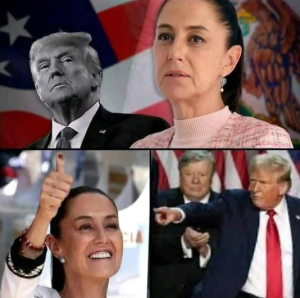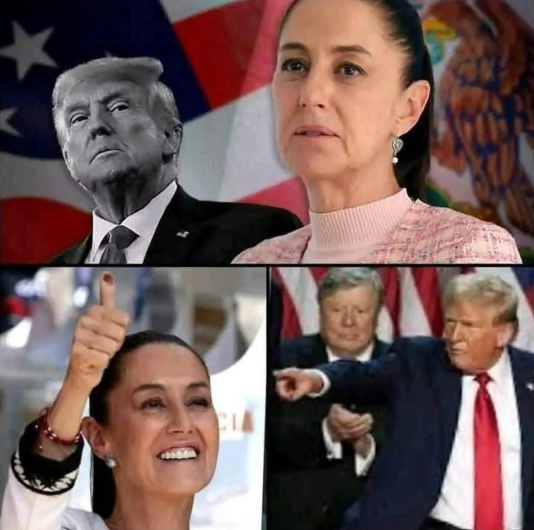
Mexican President Says Trump Is “Not the Enemy” — Calls for Cooperation
In a surprising moment that quickly captured international attention, Claudia Sheinbaum, the president of Mexico, recently addressed growing tensions between her country and the United States by stating that Donald Trump is “not the enemy.”
The statement, delivered during a press conference with reporters, was meant to cool rising political rhetoric and emphasize the importance of cooperation between the two neighboring nations. At a time when immigration, trade, and border security remain hot-button issues, Sheinbaum’s comments stood out as a call for diplomacy rather than confrontation.
Her message quickly spread across social media and news outlets, sparking debate in both countries.
A Relationship That Shapes Two Nations
The relationship between the United States and Mexico is one of the most significant partnerships in the Western Hemisphere. The two countries share a border that stretches nearly 2,000 miles, and their economies are deeply interconnected through trade agreements, manufacturing, and agriculture.
Every day, billions of dollars’ worth of goods cross the border. Millions of jobs in both countries depend on this economic relationship. In addition, cultural ties between the nations are strong, with millions of families having relatives on both sides of the border.
Because of this close connection, political disagreements between leaders often attract intense public attention.
When Donald Trump returned to the presidency, many observers expected tensions with Mexico to rise again, especially because immigration and border enforcement were major issues during his earlier political campaigns.
Yet Sheinbaum’s remarks suggested a more measured approach.
The Message Behind the Statement
During her remarks, Sheinbaum emphasized that disagreements between governments should not turn into hostility between nations.
According to her comments, the United States and Mexico must work together on major shared challenges, including:
-
Migration across the border
-
Economic development
-
Security cooperation
-
Trade and manufacturing partnerships
By saying Trump is “not the enemy,” Sheinbaum signaled that she intends to maintain open communication even when policy disagreements arise.
Political analysts say the statement was also aimed at reassuring investors and international partners that Mexico remains committed to stable relations with the United States.
Immigration Remains a Key Issue
One of the most sensitive topics in the relationship between the two countries continues to be immigration policy.
During previous political campaigns, Trump made border enforcement one of the central themes of his platform. His administration pushed for stronger border security measures and stricter immigration policies.
These proposals have often created tension with Mexican leaders, who argue that migration is a complex issue tied to poverty, violence, and economic opportunity across Latin America.
Sheinbaum’s comments suggested that instead of escalating rhetoric, both countries should focus on practical solutions.
For example, she has emphasized the need for economic development programs in Central America and southern Mexico, arguing that improving living conditions can reduce the pressure that drives migration.
Trade Ties Too Important to Ignore
Another major reason for Sheinbaum’s conciliatory tone is the enormous importance of trade between the two countries.
Under the United States–Mexico–Canada Agreement, the three North American economies are deeply integrated. Factories in Mexico produce parts used in American cars, electronics, and machinery, while U.S. farmers export large amounts of food to Mexican markets.
Economic experts say that cooperation between the two governments is essential for maintaining stable supply chains and economic growth.
Any serious diplomatic conflict could disrupt industries on both sides of the border.
That reality encourages leaders in both countries to maintain dialogue even during political disagreements.
Reactions From Both Countries
Sheinbaum’s remarks triggered a wide range of reactions.
Some political leaders in Mexico praised her statement, saying it showed maturity and a commitment to diplomacy. They argued that keeping relations stable benefits workers, businesses, and families who depend on cross-border cooperation.
Others were more skeptical, suggesting that the two governments may still clash over immigration enforcement and border policies.
In the United States, reactions were also mixed. Supporters of Trump pointed to Sheinbaum’s statement as evidence that strong leadership from Washington earns respect abroad.
Critics, however, argued that disagreements over immigration and trade policies remain unresolved.
Despite the debate, many observers agreed that the tone of the statement was significant.
Diplomacy in a Changing Political Climate
International relationships often shift depending on political leadership in each country. When new administrations take office, they must quickly establish communication and determine how they will handle existing challenges.
For Sheinbaum, maintaining stability with the United States is one of the most important responsibilities of her presidency.
The U.S. is Mexico’s largest trading partner and one of its most influential diplomatic counterparts.
By emphasizing cooperation instead of confrontation, she appears to be signaling that her administration prefers negotiation and dialogue over political conflict.
The Bigger Picture
The statement that Trump is “not the enemy” may seem simple, but it reflects a broader reality in international politics.
Countries with shared borders and intertwined economies rarely have the luxury of ignoring one another. Even when leaders disagree on policies, they must still work together on issues such as security, trade, migration, and environmental protection.
For Mexico and the United States, this partnership is especially critical.
Millions of people cross the border legally each year for work, tourism, education, and family visits. Businesses depend on the smooth movement of goods and services between the two economies.
In that context, maintaining a constructive relationship between leaders becomes essential.
What Comes Next
While Sheinbaum’s remarks may have lowered the temperature of political rhetoric for the moment, major policy debates between the two governments are likely to continue.
Issues that may shape the relationship in the coming years include:
-
Border security and immigration reform
-
Trade disputes and manufacturing policy
-
Energy cooperation and climate initiatives
-
Efforts to combat organized crime and drug trafficking
How these challenges are handled will determine the future of the U.S.–Mexico partnership.
For now, however, the message from Mexico’s president was clear: cooperation is more productive than confrontation, even when political differences remain.