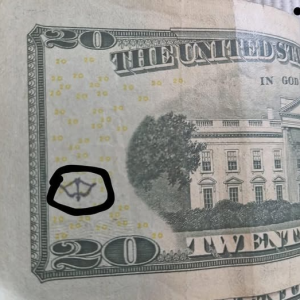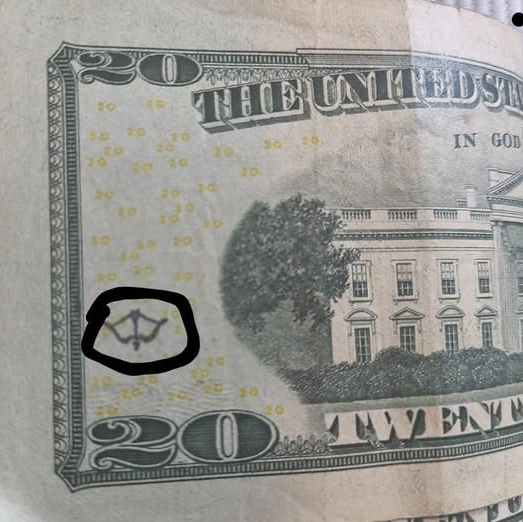
Many people handle United States currency every day without ever noticing the small symbols, hidden imagery, and historical references embedded within the designs. Among these subtle details is a symbol that often sparks curiosity: the bow and arrow. While it is not prominently displayed on every bill, imagery connected to bows, arrows, and similar weapons appears in various forms within the broader iconography of American currency and official seals. These symbols carry historical, cultural, and political meaning that traces back to the founding of the United States and even earlier influences.
To understand the meaning behind the bow and arrow symbol, it is important to recognize that much of the artwork on American money comes from the imagery of the Great Seal of the United States and other early national emblems. The seal was designed shortly after the country declared independence in 1776. Its purpose was to visually represent the new nation’s ideals, strength, and readiness to defend itself.
One of the most recognizable images connected to the seal is the bald eagle. The eagle appears on several U.S. coins and on the reverse side of certain dollar bills. In its talons, the eagle holds two objects: arrows in one claw and an olive branch in the other. The arrows symbolize the nation’s readiness for defense and war if necessary, while the olive branch represents the desire for peace and diplomacy. Together, these two elements convey a balance between strength and restraint.
Although the eagle officially holds arrows rather than a bow, the association between bows and arrows has deep historical roots in American symbolism. Arrows have long been used as a metaphor for protection, vigilance, and the ability to defend one’s homeland. In early American imagery, arrows often symbolized the combined strength of multiple states or colonies acting together.
The number of arrows carried by the eagle also carries significance. Traditionally, the eagle holds thirteen arrows. These represent the original thirteen colonies that formed the United States. The number thirteen appears repeatedly in the design of the Great Seal and other national symbols. For example, there are thirteen stars above the eagle’s head, thirteen stripes on the shield, and thirteen leaves on the olive branch. This repetition reinforces the unity of the original states.
The connection between arrows and unity is not unique to the United States. Many cultures have used bundles of arrows as symbols of strength through cooperation. The idea is simple: one arrow can easily be broken, but many arrows bound together are far stronger. Early American leaders embraced this symbolism because it represented the concept that the states were stronger when united.
Native American imagery also influenced early American symbolism. In many Indigenous cultures across North America, bows and arrows were important tools for hunting, protection, and survival. These weapons symbolized skill, resilience, and the ability to provide for one’s community. Although the United States adopted arrows into its official imagery primarily through European heraldic traditions, the presence of these weapons inevitably echoes the deeper history of the continent.
When examining U.S. bills closely, you may notice other symbolic details tied to defense and power. The shield on the eagle’s chest represents the protection of the nation. The shield has thirteen vertical stripes beneath a solid bar, which symbolizes the federal government supporting and holding together the individual states.
Another interesting aspect of U.S. currency design is that many elements are intentionally subtle. Designers often included intricate details to deter counterfeiters while also embedding historical symbolism. These hidden or less noticeable features invite closer inspection and sometimes lead to speculation or myths about secret meanings.
For example, the one-dollar bill contains numerous symbols that have fueled decades of theories and interpretations. These include the unfinished pyramid, the all-seeing eye, Latin mottos, and the eagle with arrows and an olive branch. Some people believe these symbols hide secret messages, but historians generally agree that they simply reflect the philosophical ideas of the nation’s founders.
The arrows in the eagle’s talon specifically reflect the idea that the United States must be capable of defending itself. When the seal was first created, the young nation had just emerged from a war for independence. Military readiness was not an abstract concept; it was a practical necessity for survival.
Interestingly, the direction in which the eagle faces has also been interpreted symbolically. In the modern design of the Great Seal, the eagle looks toward the olive branch rather than the arrows. This detail suggests that the country prefers peace over conflict whenever possible. However, the arrows remain present as a reminder that the nation is prepared to act if peace is threatened.
Throughout American history, currency has served not only as a medium of exchange but also as a canvas for national storytelling. The imagery on coins and bills communicates values such as liberty, unity, strength, and resilience. Symbols like arrows contribute to that narrative by reminding citizens of the struggles and sacrifices that shaped the country.
Over time, the designs of U.S. bills have changed, but many symbolic elements have remained consistent. The continued presence of arrows in American iconography reflects how deeply the idea of unity and defense is embedded in the nation’s identity.
Today, when someone notices a bow-and-arrow-like symbol or the arrows held by the eagle on U.S. currency, they are looking at more than just decoration. They are seeing a visual message that has been carried through centuries of American history. It tells a story about the founding of a nation, the importance of cooperation among states, and the balance between peace and strength.
In the end, the arrows symbolize vigilance and preparedness, while also representing the unity that holds the country together. Even though the design details are small, their meaning is powerful. Every bill in circulation carries these historical reminders, quietly reflecting the principles that guided the formation of the United States.
So the next time you hold a dollar bill or examine its intricate artwork, take a closer look at the symbols hidden within the design. What might seem like a simple illustration of arrows is actually a piece of historical storytelling—one that connects modern America to its earliest ideals of unity, defense, and the pursuit of peace.