🔍 The Skin We Live In
Skin is our largest organ. It’s our first line of defense, our canvas of identity, and our most visible storyteller. It holds our scars, our warmth, our secrets. And sometimes, it flares up in protest.
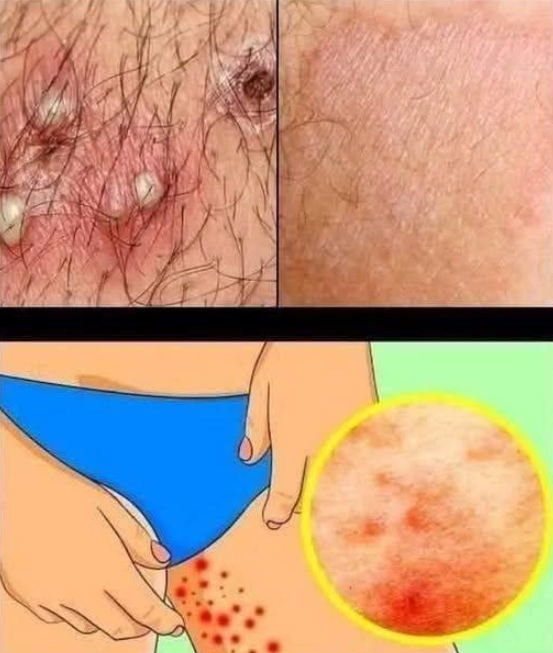
This image tells a story many know but few speak about: the aftermath of shaving, waxing, or hair removal. It’s not glamorous. It’s not filtered. It’s raw, irritated, and real.
🧬 What’s Happening Beneath the Surface?
Let’s start with the science. The top left section shows inflamed hair follicles—likely folliculitis, a condition where hair follicles become infected or irritated. It often looks like acne but feels more tender, especially in areas with friction like the inner thighs or bikini line.
The top right section shows razor burn—redness without pustules, caused by friction, dull blades, or shaving too closely. It’s the skin’s way of saying, “Too much, too fast.”
The bottom cartoon simplifies it: a person pointing to their inner thigh, where red spots bloom like tiny warnings. The magnified inset shows inflammation—an exaggerated but accurate depiction of what many experience after grooming.
🪒 The Ritual of Removal
Hair removal is a ritual. For some, it’s about hygiene. For others, it’s cultural, aesthetic, or deeply personal. But no matter the reason, it’s intimate. You’re dragging a blade across your skin, trusting it not to betray you.
And sometimes, it does.
The skin reacts. It reddens. It swells. It itches. And suddenly, what was meant to make you feel clean or confident becomes a source of discomfort.
🧠 The Psychology of Skin Irritation
Skin issues aren’t just physical—they’re emotional. They affect how we move, dress, and even how we see ourselves. A patch of redness on the inner thigh can make someone avoid intimacy, swimming, or even walking comfortably.
There’s shame, too. Because we’re taught to hide imperfections. To smooth, conceal, and pretend. But irritation is a sign of life. It’s your body speaking. And it deserves to be heard.
🧴 What Causes It?
Let’s break down the culprits:
- Dull razors: They tug instead of slice, causing microtears.
- Dry shaving: No lubrication means more friction.
- Tight clothing: Traps sweat and bacteria, worsening inflammation.
- Poor hygiene: Not cleaning the area before or after shaving invites infection.
- Ingrown hairs: When hair curls back into the skin, it triggers a reaction.
And sometimes, it’s just genetics. Some skin types are more reactive, more sensitive, more prone to protest.
🧘 The Gentle Art of Prevention
Here’s how to soothe the skin and prevent future flare-ups:
- Exfoliate gently before shaving to remove dead skin.
- Use a sharp, clean razor every time.
- Shave in the direction of hair growth to reduce irritation.
- Apply a soothing lotion afterward—look for aloe vera, witch hazel, or fragrance-free moisturizers.
- Wear breathable fabrics to reduce friction.
- Avoid shaving daily—give your skin time to recover.
And most importantly: listen to your skin. If it’s angry, don’t push it. Rest is part of care.
🎭 The Cartoon That Speaks Volumes
The cartoon in the bottom section isn’t just a visual aid—it’s a mirror. It shows a person pointing to their irritation, not hiding it. There’s honesty in that gesture. Vulnerability. Humor, even.
It says: “This is real. This is me. And I’m not ashamed.”
That’s powerful. Because so much of skincare is about hiding. But healing begins with acknowledgment.
🌍 Cultural Layers
In some cultures, hair removal is a rite of passage. In others, it’s taboo. Some see body hair as natural; others see it as something to be managed. But across the board, the aftermath—razor burn, folliculitis, irritation—is universal.
It’s a reminder that beauty rituals, no matter how personal, come with consequences. And that caring for those consequences is part of the ritual too.
🧠 The Emotional Echo
Imagine someone preparing for a date, a beach trip, or a performance. They shave, wax, or groom. They want to feel confident. But then the irritation sets in. Red spots bloom. Pain flares. And suddenly, confidence turns to self-consciousness.
That shift—from pride to discomfort—is subtle but profound. It affects posture, mood, and presence. And it’s why skin care isn’t just cosmetic—it’s emotional care.
🧵 The Threads of Empathy
This image, though clinical, invites empathy. It says: “You’re not alone.” It validates the experience of those who’ve winced at razor burn, cursed at ingrown hairs, or felt the sting of inflammation.
It’s a quiet nod to the shared human experience of managing our bodies—of trying to feel good in our skin, even when it rebels.
💬 Final Thought
Skin irritation after shaving isn’t glamorous. But it’s real. And it deserves attention, care, and compassion. This image, with its blend of clinical close-ups and cartoon honesty, tells a story of vulnerability, ritual, and resilience.
It reminds us that beauty isn’t about perfection—it’s about care. And that sometimes, the most powerful thing we can do is point to our discomfort and say, “This is me. And I’m healing.”