“The Rain Fell Hard That Day”
The rain had started just after noon—soft at first, then relentless. It drummed against the windows like a warning, like the sky itself was trying to speak. But inside the house, the storm had already begun.
Mira stood in the hallway, her newborn daughter cradled against her chest, her body still aching from childbirth. Her husband, Daniel, stood across from her, arms crossed, jaw clenched. And behind him, like a shadow that refused to leave, was his mother.
“I want her out,” his mother hissed. “She’s poisoning this house.”
Mira blinked. “I just fed your granddaughter. I haven’t said a word.”
“She’s manipulative,” the older woman snapped. “She’s always been. Ever since she got pregnant, she thinks she owns this place.”
Daniel didn’t speak. He didn’t defend. He didn’t look at Mira.
And that’s when she knew.
It wasn’t just his mother’s cruelty. It was his silence. His complicity.
“You’re kicking me out?” Mira whispered, her voice barely audible over the baby’s soft breath.
Daniel looked away. “It’s better this way. Just for a while.”
Mira laughed, bitter and broken. “You mean until she decides I’m worthy again?”
No answer.
She packed slowly. Diapers. A bottle. A blanket. Her daughter’s tiny socks. Her own clothes didn’t matter—just something dry, something warm. She didn’t cry. Not yet. The tears would come later, when the adrenaline wore off and the reality settled in.
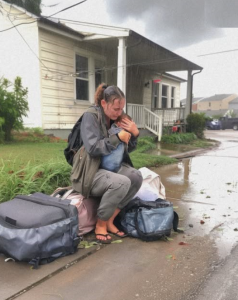
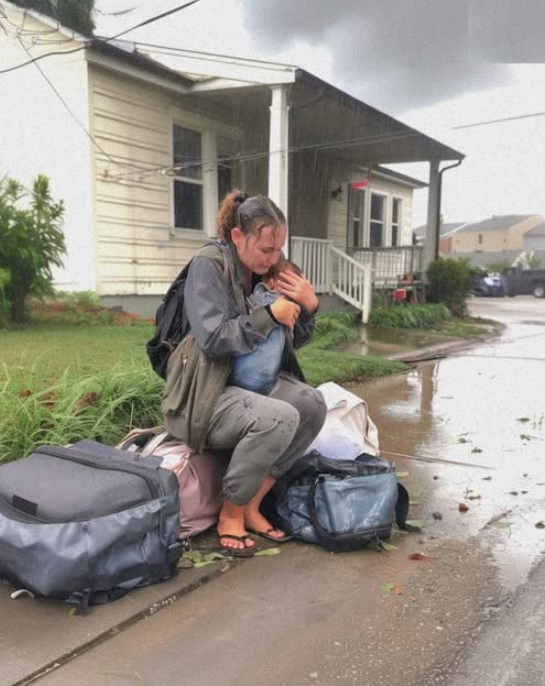
Outside, the rain had turned the sidewalk into a mirror. Mira stepped into it, her baby wrapped tightly against her chest, her bags heavy with more than just belongings. She sat on the edge of the curb, the house behind her glowing with warmth she no longer belonged to.
She didn’t know where to go.
Her parents were gone. Her friends were scattered. The shelters were full. And she couldn’t bear the thought of a motel room with flickering lights and strangers in the hallway.
So she sat.
And the rain fell.
People passed. Some glanced. Some didn’t. One woman offered an umbrella. A man gave her a bottle of water. But no one asked the question she needed to hear: Are you okay?
Her daughter stirred, eyes fluttering open, lips searching for comfort. Mira held her close, whispered lullabies through the storm. She didn’t know what tomorrow would bring. But she knew this: her child would never feel unwanted. Not by her.
Hours passed.
Eventually, a car pulled up. A familiar one. Her sister, Lila, stepped out, face pale, eyes wide.
“I saw the post,” she said. “Someone shared a photo. Said you were out here.”
Mira nodded. “I didn’t know where else to go.”
Lila didn’t speak. She just opened the car door and helped Mira inside.
That night, Mira slept on a couch in Lila’s apartment, her baby nestled beside her. The room was small, the air thick with the scent of lavender and old books. But it was safe. It was hers.
In the days that followed, Mira began to rebuild.
She filed for custody. She found a therapist. She joined a support group for women displaced by family conflict. She told her story—not just to heal, but to be heard.
And slowly, she began to understand.
Her mother-in-law hadn’t just disliked her. She had feared her. Feared her independence, her voice, her refusal to be controlled. And Daniel—he had chosen comfort over courage. Familiarity over family.
But Mira chose something else.
She chose her daughter.
She chose herself.
Months later, Mira stood in court, her baby on her hip, her voice steady. She spoke of the day she was cast out. Of the rain. Of the silence. Of the strength it took to stay gentle in the face of cruelty.
The judge listened.
And ruled in her favor.
Mira walked out of the courthouse into sunlight. Real sunlight. Not just weather, but metaphor. She was free. Not just from a house, but from a history.
She bought a small apartment with help from a women’s foundation. She painted the walls soft green. She hung fairy lights in the nursery. She planted herbs on the windowsill.
And every night, she told her daughter stories.
Stories of queens who were cast out but returned stronger. Of warriors who fought with kindness. Of mothers who never stopped loving.
And one day, when her daughter was old enough to ask, Mira would tell her the truth.
“I left the house with nothing but you,” she’d say. “And that was everything.”
Reflection
This story is a tribute to the quiet power of maternal love and the resilience of women who are forced to start over. It’s about betrayal, yes—but more importantly, it’s about reclaiming dignity, finding support, and choosing a future that honors your worth.
Would you like a follow-up story from the daughter’s perspective years later, or perhaps a poetic retelling of the rainy day Mira was cast out? I’d be honored to keep building this world with you