🦭 AMAZING SEAL! 20 Fascinating Facts About This Adorable Ocean Animal That Will Leave You Surprised ❤️
Have you ever looked closely at a seal and wondered how such an adorable animal survives in the ocean? With its round face, beautiful eyes, long whiskers, and smooth body, the seal is one of the most fascinating marine mammals in the world.
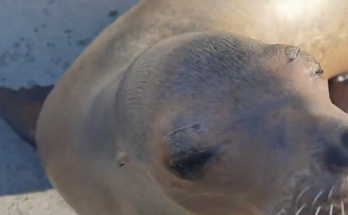
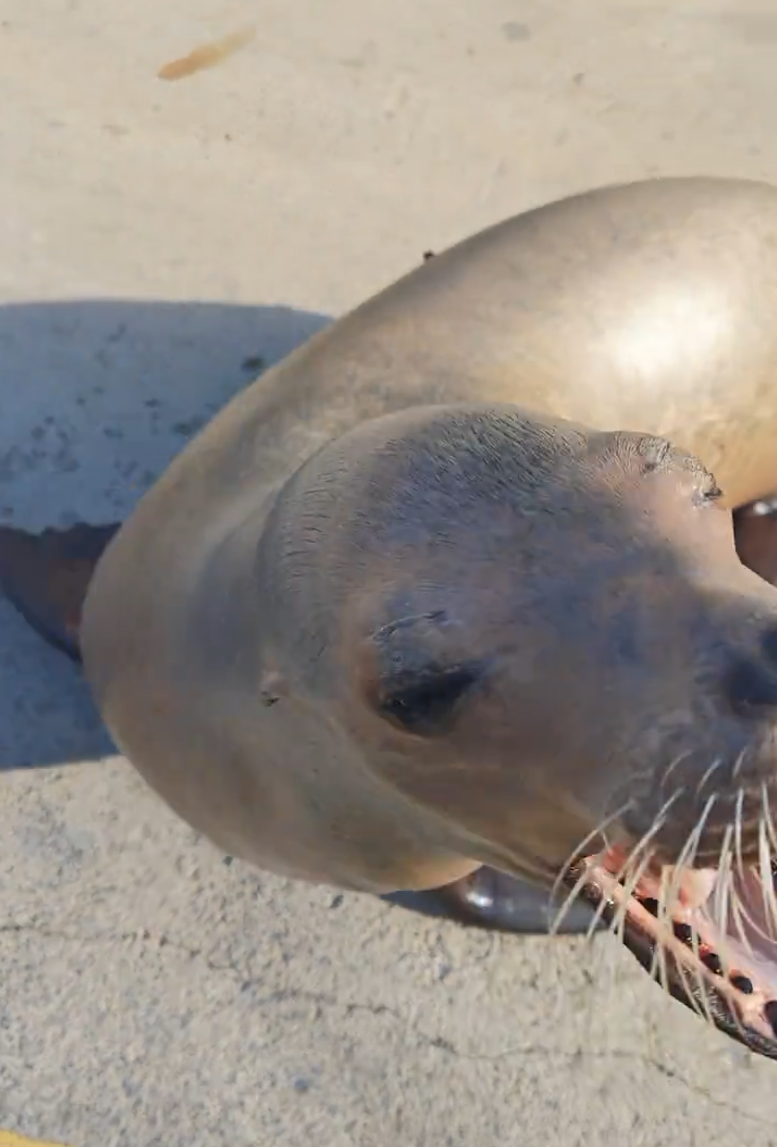
The animal shown in the photograph appears to be a seal resting on a sandy surface. Its gentle-looking face and distinctive whiskers make it particularly interesting.
But behind that adorable appearance is an incredibly capable ocean animal with remarkable adaptations for swimming, hunting, surviving cold temperatures, and raising its young.
Let’s discover more about this amazing creature!
1. What Is a Seal?
A seal is a marine mammal belonging to a group of animals called pinnipeds.
Unlike fish, seals breathe air using lungs. They must come to the surface regularly to breathe, even though they spend much of their lives in water.
Their bodies are specially adapted for swimming. Their streamlined shape helps them move through the water efficiently, while their flippers provide the power and direction needed to travel.
2. Those Beautiful Whiskers Have an Important Purpose
One of the most recognizable features of a seal is its long whiskers.
These whiskers are not simply decorative. They are highly sensitive sensory tools.
Seals can use their whiskers to detect tiny movements and vibrations in the water. This ability helps them locate fish and other prey, even when visibility is poor.
Imagine being able to sense the movement of a fish without seeing it clearly!
That is one of the extraordinary abilities that makes seals such successful hunters.
3. Seals Are Excellent Swimmers
Seals are built for life in the water.
Their bodies are streamlined, and their flippers help them move with impressive speed and control.
Different seal species use their front and rear flippers in different ways. True seals generally rely heavily on their rear flippers for propulsion, while sea lions use their front flippers more prominently.
Their swimming abilities allow them to travel long distances in search of food.
4. They Need Air to Breathe
Although seals spend considerable time underwater, they are mammals.
They breathe through their nostrils and must return to the surface for oxygen.
Their bodies have special adaptations that help them hold their breath while diving.
Depending on the species and circumstances, some seals can remain underwater for surprisingly long periods.
5. What Do Seals Eat?
Seals are carnivorous animals.
Their diets depend on their species and habitat, but many eat:
- Fish
- Squid
- Octopus
- Shrimp
- Crabs
- Other small marine animals
Their sensitive whiskers help them find prey, while their teeth help them catch and eat their food.
6. Why Do Seals Rest on Beaches?
Seeing a seal resting on a beach might make you wonder why it leaves the water.
Seals regularly come onto land or ice to rest, sleep, warm themselves, give birth, and care for their young.
These resting places are important parts of their natural life cycle.
A seal resting on a beach is not necessarily sick or injured. However, it should always be observed from a safe distance.
7. Their Bodies Are Designed for Cold Water
Many seal species live in extremely cold environments.
They have a thick layer of fat beneath their skin called blubber.
Blubber helps insulate their bodies and reduces heat loss in cold water.
It also serves as an energy reserve when food is difficult to find.
This natural adaptation allows certain species to survive in challenging marine environments.
8. Baby Seals Are Called Pups
Baby seals are known as pups.
Depending on the species, pups are born on beaches, ice, or other protected locations.
Mother seals provide milk and care for their babies during an important early stage of development.
Some seal pups grow very quickly because their mothers’ milk contains a high amount of fat.
9. Mothers Recognize Their Babies
Mother seals and their pups develop important bonds.
In many species, mothers use smell and distinctive vocalizations to recognize their young.
This recognition is especially important in crowded breeding colonies, where many animals may gather in the same area.
10. Seals Have Excellent Hearing
Seals have remarkable hearing abilities.
They can hear sounds both above and below the water, although their hearing systems are adapted differently from those of humans.
Communication can involve calls, growls, and other sounds.
These sounds may be used during mating, territorial interactions, and communication between mothers and pups.
11. They Can Sleep in Water
Some seals can rest while floating in the water.
Their ability to regulate breathing and remain aware of their surroundings helps them survive in an environment where they cannot simply sleep like land mammals.
Different species have different sleeping behaviors.
12. Seals Have Different Personalities
Like many animals, individual seals can behave differently.
Some may appear curious, while others are cautious and prefer to avoid humans.
Their behavior depends on their environment, experiences, age, and circumstances.
It is important not to assume that a seal is friendly simply because it looks calm.
13. Seals Are Not the Same as Sea Lions
Many people confuse seals and sea lions.
There are some noticeable differences.
True seals generally have no visible external ear flaps, while sea lions have small external ears.
Sea lions can rotate their rear flippers underneath their bodies and move more easily on land.
True seals usually move on land by wriggling their bodies.
Both belong to the pinniped group.
14. They Are Important to Marine Ecosystems
Seals play an important role in ocean food webs.
As predators, they help influence populations of fish and other marine animals.
They are also part of a larger ecosystem involving sharks, whales, seabirds, and other marine predators.
A healthy marine environment helps support healthy seal populations.
15. Seals Face Environmental Threats
Despite their remarkable abilities, seals face several challenges.
These include:
- Ocean pollution
- Entanglement in fishing equipment
- Habitat loss
- Climate change
- Disturbance from human activities
- Reduced food availability in some regions
Plastic pollution is particularly concerning because marine animals can become entangled in discarded materials or accidentally ingest plastic.
Protecting oceans is essential for their survival.
16. Why You Should Never Touch a Wild Seal
A seal may look adorable and approachable, but it is still a wild animal.
Getting too close can cause stress, interrupt resting, or disturb a mother caring for her pup.
Seals can also bite when frightened or threatened.
If you encounter one on a beach, keep your distance, control pets, and never attempt to feed it.
If it appears injured or in danger, contact local wildlife authorities or a qualified marine mammal rescue organization.
17. Are Seals Dangerous?
Seals generally avoid unnecessary contact with humans.
However, they are powerful wild animals with strong jaws and sharp teeth.
A frightened seal may defend itself.
The safest approach is to admire these animals without approaching or touching them.
18. How Long Do Seals Live?
Lifespan varies considerably by species.
Many seals can live for approximately 20 to 30 years, although some species and individuals may live longer.
Their survival depends on food availability, habitat conditions, disease, predators, and human-related threats.
19. Can Seals Recognize Humans?
Seals have impressive sensory abilities and can learn to associate certain experiences with people.
However, this does not mean a wild seal considers a human its friend.
Wildlife should always be treated with respect, and interactions should be left to trained professionals.
20. Why This Animal Deserves Our Protection
Seals are more than beautiful faces in photographs.
They are intelligent, adaptable marine mammals that have survived in some of the world’s most challenging environments.
Their sensitive whiskers, powerful swimming abilities, remarkable diving adaptations, and caring relationships with their pups make them truly special.
Protecting seals means protecting the oceans and the natural habitats they depend on.
❤️ FINAL THOUGHT
The next time you see a seal resting on a beach, remember that you are looking at one of nature’s remarkable marine mammals.
Its little whiskers help it navigate underwater, its body is designed for swimming, and its natural instincts help it survive in the ocean.
Sometimes the smallest-looking details reveal the most extraordinary abilities.
Let’s protect these beautiful animals and give them the peaceful, safe oceans they deserve. 🦭🌊❤️
Have you ever seen a seal in real life? Would you love to see one swimming in the ocean? Share your thoughts!