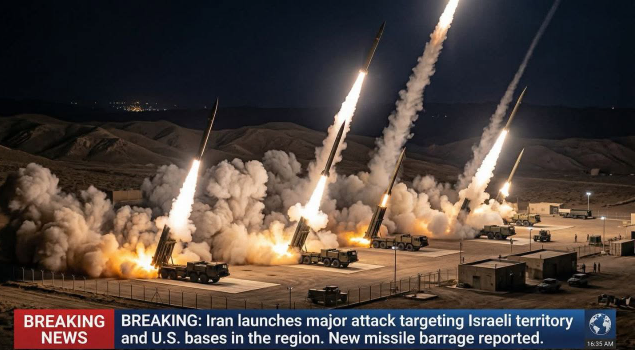
🔴 BREAKING: Iran Tensions Rise as Israeli and U.S. Targets Face Renewed Threats — What We Know
The Middle East is once again facing a period of heightened uncertainty as tensions involving Iran, Israel, and the United States continue to raise concerns about the possibility of renewed military confrontation.
Reports circulating online claim that Iran has launched a major attack against Israeli targets and U.S. positions. The headline has attracted attention, but the precise scope of the alleged operation remains unconfirmed. It is important to distinguish verified military developments from claims that have not yet been independently established.
With regional security already under pressure, any confirmed attack could have consequences extending well beyond the immediate battlefield.
🚨 Why the Latest Developments Matter
The confrontation involving Iran, Israel, and the United States has created a complicated security environment across the Middle East. Military facilities, shipping routes, diplomatic missions, and civilian infrastructure have all become subjects of heightened concern.
Recent reporting indicates that Iranian officials have warned of retaliation if Washington resumes major strikes against Iran. U.S. intelligence officials have also raised concerns about threats to American personnel and diplomatic staff. These developments have contributed to fears that the confrontation could intensify again.
However, warnings about possible attacks are not the same as confirmation that a new large-scale operation has begun.
For that reason, the central question remains whether the specific claim circulating online can be supported by official statements and independent reporting.
🇮🇷 What Is Iran Signaling?
Iranian leaders have repeatedly emphasized that they would respond to further military action against their country. Their statements have included warnings about American military assets and other interests in the region.
Such declarations can serve several purposes. They may be intended to deter an opposing government, demonstrate resolve to domestic audiences, or signal that any future confrontation could carry broader regional consequences.
At the same time, statements from government officials do not necessarily reveal the timing, scale, or actual outcome of military operations.
Understanding the difference between a threat, an announced operation, and a verified attack is essential when evaluating breaking news.
🇮🇱 Israel Remains on Alert
Israel’s security situation remains closely connected to developments involving Iran and other armed groups in the region.
Any confirmed missile or drone attack could prompt emergency procedures, including air-defense operations, public warnings, and assessments of potential damage. Depending on the location and severity of an incident, authorities might also restrict access to affected areas or issue instructions to residents.
But reports of incoming weapons do not automatically mean that targets have been hit. Some projectiles may be intercepted, while others may miss their intended destinations. The consequences can only be assessed once reliable information becomes available.
For civilians, uncertainty itself can be deeply stressful. Families may be concerned about relatives serving in the military, people living near potential targets, and loved ones traveling through affected areas.
🇺🇸 What About American Military Targets?
American forces maintain a significant presence across parts of the Middle East, supporting military operations, regional partnerships, logistics, and other security activities.
These installations can become important considerations during a confrontation involving Iran and its regional partners.
Recent reports have highlighted concerns about threats to American personnel and facilities. Nevertheless, a warning that U.S. forces could be targeted should not be mistaken for evidence that a particular base has been struck.
If an attack were confirmed, officials would need to establish where it occurred, whether military equipment was damaged, and whether anyone was injured.
They would also need to assess whether the incident represented an isolated event or part of a wider series of coordinated attacks.
Until those details are confirmed, claims about destroyed bases, large numbers of casualties, or a new military campaign should be treated with caution.
🛡️ Could the Conflict Spread Further?
One major concern is that a new exchange of attacks could involve additional countries or armed groups.
The Middle East contains several strategically important locations, including military installations, energy infrastructure, major airports, and vital maritime routes. An escalation affecting these areas could create economic and security consequences beyond the countries directly involved.
Shipping through the Strait of Hormuz is particularly important because the waterway connects the Persian Gulf with international markets. Disruptions could affect energy deliveries, shipping costs, insurance rates, and global oil prices.
Regional governments therefore have strong reasons to seek greater stability, even when political disagreements remain unresolved.
Nevertheless, a wider conflict is not inevitable. Diplomatic communication, negotiated arrangements, and efforts to prevent misunderstandings can all influence what happens next.
🌍 The Possible Impact on Ordinary People
Military confrontations affect far more than political leaders and armed forces.
Civilians may face interrupted travel, temporary evacuations, damaged infrastructure, and concerns about food, fuel, electricity, and communications. Families separated by borders may struggle to receive reliable information about their loved ones.
Businesses can also experience uncertainty as airlines change routes, shipping companies reconsider journeys, and investors respond to changing assessments of regional risk.
Even people living far from the Middle East may feel the consequences if energy prices or transportation costs rise.
These potential effects are reasons to follow developments carefully, but they should not be confused with confirmation that every feared consequence has already occurred.
📱 Why Verification Is Essential During Breaking News
During fast-moving international crises, dramatic claims often spread before journalists and authorities have established the facts.
Old videos may be presented as new footage. Images from unrelated incidents can be given misleading captions. Claims about casualties or the destruction of military equipment may circulate without credible supporting evidence.
Before sharing a report, readers should check its publication date, identify the original source, and compare the details with established news organizations.
Official announcements from the relevant governments and military authorities can provide important information, although independent reporting is also valuable for assessing disputed claims.
A responsible report should clearly explain what is known, what remains uncertain, and which statements have not been independently verified.
📰 What Happens Next?
The next important developments will be reliable confirmation of any reported attacks, assessments of potential damage, and statements from the governments involved.
If a major operation is confirmed, attention will turn to its targets, the consequences for military personnel and civilians, and whether additional action follows.
Diplomatic responses will also matter. Governments may seek negotiations, strengthen defensive measures, issue warnings, or consider other steps depending on the circumstances.
It is too early to draw conclusions about the outcome of the situation based solely on a dramatic social media headline.
🔴 Final Update: The World Is Watching
Tensions involving Iran, Israel, and the United States remain a serious international concern. Recent reporting documents threats, military activity, and fears of renewed confrontation, but the specific claim that a major Iranian attack has begun against Israeli and U.S. targets requires further confirmation.
The most important questions remain unanswered: What locations were allegedly targeted? When did the reported operation begin? Were any weapons intercepted? Has damage or injury been confirmed? And what have the relevant authorities said?
Those details matter more than speculation.
Stay informed, verify breaking reports before sharing them, and remember that behind every headline are real people whose safety may be affected by events on the ground.
What are your thoughts on the rising tensions in the Middle East? Share your views respectfully in the comments as reliable updates become available.