I Went to Pick Up My Wife and Newborn Twins from the Hospital — I Found Only the Babies and a Note
The hospital smelled of antiseptic and roses. A strange combination, but fitting for the day I was supposed to bring my family home. I had rehearsed the moment in my mind: my wife, radiant and exhausted, cradling one twin while I held the other. We’d walk out together, a trio reborn into something bigger than ourselves.
Instead, I was met by silence.
The nurse at the front desk looked up when I arrived. Her smile faltered.
“Mr. Vann,” she said, “please follow me.”
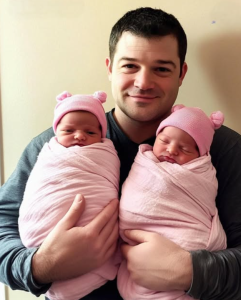
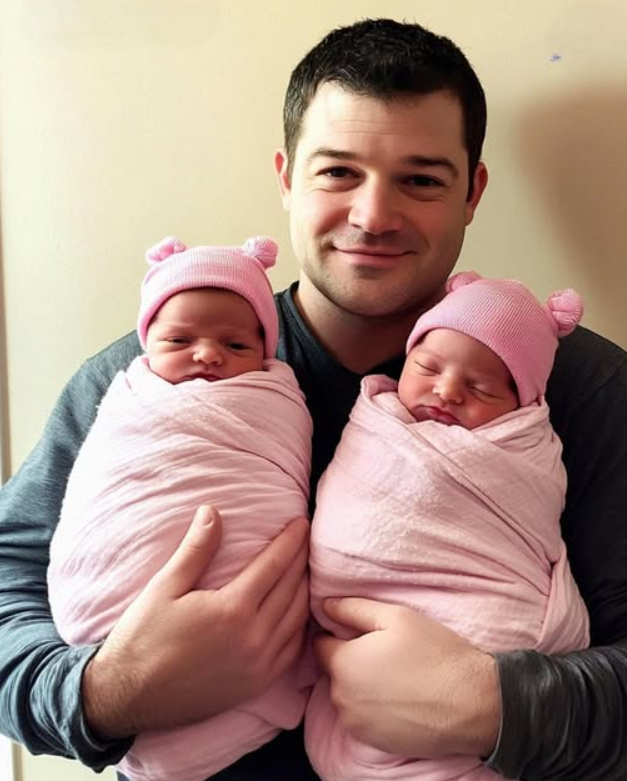
I did, heart thudding. The corridor felt longer than usual, the fluorescent lights too bright. We reached the maternity ward, and she opened the door to a small room. Inside, two bassinets sat side by side. My daughters—tiny, perfect, swaddled in pink—slept peacefully.
But my wife, Dara, was nowhere to be seen.
On the table beside the bassinets lay a folded note. My name was written on the front in her handwriting—elegant, deliberate, unmistakable.
I picked it up with trembling fingers.
Phirun, I’m sorry. I had to go. Please take care of them. You’ll be a better parent than I ever could be. I love you. —Dara
I read it three times before I could breathe again. The nurse placed a gentle hand on my shoulder.
“She left early this morning,” she said quietly. “We tried to reach you.”
I nodded, numb. My mind raced through possibilities—postpartum depression, fear, regret. But Dara had been so excited. She’d painted the nursery herself, humming lullabies as she worked. She’d cried when she first felt the twins kick. She’d chosen their names: Lina and Soriya, light and sun.
This didn’t make sense.
I took the babies home that afternoon, their car seats feeling too big for their tiny bodies. The house was quiet, the nursery untouched. I laid them down gently and sat on the floor beside them, the note still clutched in my hand.
That night, I didn’t sleep. I fed them, changed them, rocked them. I whispered stories to them about their mother—how she loved mangoes and hated thunderstorms, how she once danced barefoot in the rain just to make me laugh.
But I didn’t know where she was. And I didn’t know why she’d left.
Days passed. Then weeks.
I filed a missing person report. The police were kind but skeptical. “Sometimes people just leave,” one officer said. “Especially after childbirth. It’s not uncommon.”
But Dara wasn’t just anyone. She was a fighter. She’d survived war, poverty, and the loss of her parents. She wouldn’t abandon her children. Not unless something had gone terribly wrong.
I searched. I called friends, family, old colleagues. No one had seen her. Her phone was off. Her bank account untouched.
And yet, every morning, I found small signs that she’d been there.
A fresh flower on the porch.
A lullaby CD slipped into the mailbox.
A note tucked into Lina’s blanket: You’re doing great.
She was watching. Somewhere, somehow, she was watching.
I began to write back.
Dara, I don’t understand, but I trust you. The girls are growing fast. Lina smiles in her sleep. Soriya has your stubborn brow. I miss you. Come home.
I left the note on the porch. The next morning, it was gone.
This became our ritual. I’d write. She’d respond. Never directly, never in full. But enough to know she was alive. Enough to know she still loved us.
One night, I found a longer letter.
Phirun, I wish I could explain. I wish I could be the mother they deserve. But I’m not well. I’ve been hiding it for months. The darkness crept in slowly, like a fog. I didn’t want to scare you. After the birth, it got worse. I felt like I was drowning. I knew if I stayed, I might hurt them. Or myself. So I left. I’m getting help now. I promise. I’ll come back when I’m strong enough. Please don’t hate me. —Dara
I cried for hours.
Not out of anger, but out of relief. She hadn’t abandoned us. She was fighting—for herself, for us. And she trusted me to hold the line until she returned.
So I did.
I became father and mother. I learned to braid hair and sing lullabies. I memorized feeding schedules and pediatric appointments. I built a life around two tiny hearts and the hope that one day, Dara would walk through the door again.
And one morning, she did.
It was raining. The girls were playing with blocks in the living room. I turned to close the window and saw her standing on the porch—thin, tired, but unmistakably her.
I opened the door. She stepped inside, soaked and silent.
“I’m sorry,” she whispered.
I pulled her into my arms.
“You came back,” I said.
She knelt beside the girls. Lina stared at her, wide-eyed. Soriya reached out and touched her face.
Dara cried.
We didn’t speak much that day. We didn’t need to. The note had said it all. The silence had said even more.
She stayed.
Not perfectly. Not without struggle. But she stayed.
And every time I look at our daughters, I remember that love isn’t always loud. Sometimes, it’s a whisper in the dark. A folded note. A promise kept.