Women in the 1970s: What Do You Notice? The Beauty, Fashion, and Confidence of a Different Era ✨
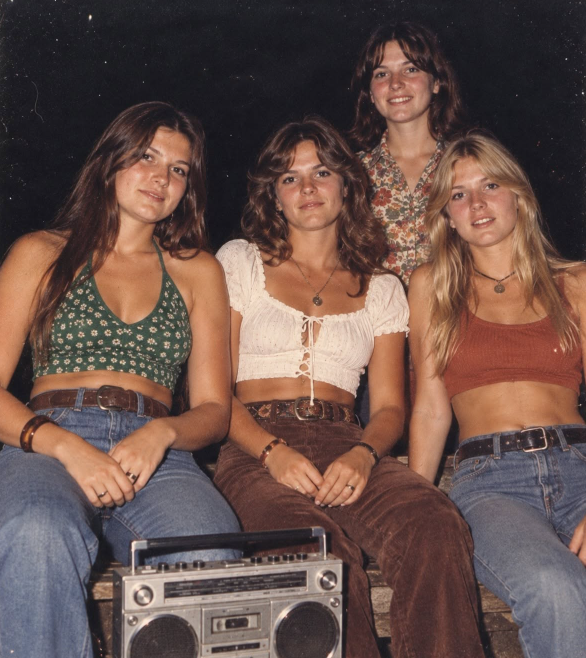
Take a moment to look at photographs of women from the 1970s. At first glance, you might notice the hairstyles, colorful clothing, and distinctive fashion trends. But if you look a little closer, you may discover something more interesting: a glimpse into a time when society was changing, women were challenging expectations, and personal style was becoming an important form of self-expression.
The 1970s were unlike any other decade. From music and movies to everyday life, women were finding new ways to express their personalities, explore opportunities, and define what beauty meant to them. Their photographs tell stories that go far beyond the clothes they wore.
So, what do you notice first?
1. The Hairstyles Were Full of Personality 💇♀️
One of the most recognizable features of the 1970s was the hair. Many women embraced long, flowing hairstyles, natural waves, feathered layers, and dramatic volume.
The famous feathered look became especially popular, with layers swept away from the face to create movement. Other women preferred straight hair with a center part, while some embraced curls and natural textures.
Hair was more than a practical part of getting ready. It could be a statement of individuality. Some women followed the latest celebrity trends, while others preferred styles that reflected their own personalities.
Looking at old photographs today, you may notice how much attention was given to shape, texture, and volume. These styles helped define the decade and continue to inspire modern fashion.
2. Fashion Was Colorful and Fearless 👗
The 1970s offered an incredible variety of clothing styles. Bell-bottom trousers, flowing skirts, denim, patterned blouses, platform shoes, and wide belts were all part of the era’s fashion landscape.
Some women preferred a relaxed, natural look with jeans and simple tops. Others embraced glamorous dresses, bold prints, and accessories that made their outfits stand out.
Earth tones such as brown, mustard yellow, orange, and olive green appeared alongside bright colors and eye-catching patterns. Clothing often reflected the decade’s interest in individuality and freedom of expression.
One particularly interesting detail is how differently people combined their clothes. Rather than following one uniform style, women could choose from many looks, ranging from bohemian and casual to sophisticated and glamorous.
The result was a decade with a distinctive visual identity.
3. Natural Beauty Had Its Own Charm 🌸
When people look at photographs from the 1970s, they sometimes notice that beauty routines could look different from those commonly seen today.
Some women wore relatively simple makeup, while others preferred dramatic eyeliner, colorful eyeshadow, glossy lips, or defined lashes. Beauty trends varied by location, age, culture, and personal preference.
There was no single way that all women looked. Some followed the glamorous styles popular in magazines and movies, while others embraced a more natural appearance.
What makes these photographs interesting is their variety. They remind us that beauty standards have always changed and that individual preferences have never disappeared.
A photograph can capture a particular hairstyle or makeup trend, but it cannot tell us everything about a person’s confidence, happiness, or character.
4. Women Were Challenging Traditional Expectations
Perhaps one of the most important things to notice about the 1970s is the social change taking place behind the fashion.
Women’s rights movements were drawing attention to equal opportunities, workplace discrimination, education, reproductive rights, and the division of responsibilities at home.
More women were entering professions and pursuing educational opportunities that had historically been harder for them to access. Women were also speaking more openly about independence, equality, and their right to make decisions about their own lives.
Progress was uneven, and many barriers remained. Women from different backgrounds experienced these changes in very different ways.
Nevertheless, the decade helped bring important conversations into public life. For many women, independence meant having greater freedom to choose their careers, relationships, clothing, and personal goals.
A photograph from that era may look simple, but it can represent a moment in a much larger cultural transformation.
5. The Confidence in Old Photographs
Have you ever looked at a vintage photograph and wondered what the person was thinking?
A woman standing confidently in front of a camera might have been celebrating a birthday, attending a family gathering, preparing for a night out, or simply enjoying an ordinary afternoon.
Her expression may tell you something about the moment, but it cannot reveal her entire story.
Perhaps she was ambitious. Perhaps she was shy. Perhaps she was balancing work, family, friendships, and responsibilities that no photograph could capture.
That is part of the fascination of vintage pictures. They preserve small fragments of people’s lives while leaving much of their personal history unknown.
The confidence we sometimes associate with women in these photographs may come from their posture, expressions, clothing choices, or the way they presented themselves. Yet it is important to remember that women in the 1970s, just like women today, had different personalities and experiences.
6. Everyday Life Looked Different
Photographs from the 1970s also reveal changes in everyday life.
Family gatherings, community celebrations, school events, workplaces, and vacations often looked different from their modern equivalents. People relied on film cameras, and photographs were frequently printed and kept in albums.
Without smartphones and instant social-media sharing, taking a photograph was often a more deliberate activity. Someone might wait days to see the developed pictures, then place the best ones in a family album.
That does not mean everyone lived more slowly or enjoyed life more than people do today. It simply means that technology shaped how memories were recorded and shared.
Vintage photographs can make ordinary moments feel special because they offer a visual record of people, places, and styles that have since changed.
7. The Influence of Music and Movies 🎶
Popular culture had a powerful influence on women’s fashion during the decade.
Music stars, television personalities, and movie actresses introduced hairstyles and outfits that audiences wanted to imitate. Rock, disco, soul, and other musical movements each influenced different styles.
Disco fashion brought shimmering fabrics, jumpsuits, dramatic silhouettes, and glamorous evening looks. Meanwhile, the bohemian aesthetic favored flowing garments, natural textures, and expressive accessories.
Women did not all follow the same trends, of course. Fashion differed between cities and rural communities, and what was popular in one social group might not be common in another.
Still, the connection between entertainment and fashion helped make the 1970s an especially memorable decade.
8. What Has Changed Since Then?
Comparing women from the 1970s with women today can be fascinating.
Modern fashion includes an enormous range of styles, and social media allows trends to spread around the world almost instantly. Cosmetic products, hair treatments, photography, and digital editing have also changed how people present themselves.
But many elements remain familiar.
Women still experiment with clothing, borrow inspiration from celebrities, celebrate their individuality, and use personal style to express how they feel.
In fact, many 1970s trends have returned repeatedly. Flared trousers, vintage denim, platform shoes, layered haircuts, and retro prints continue to appear in contemporary fashion.
The past never disappears completely. Sometimes it returns in a new form.
9. Why These Photographs Still Matter
Vintage photographs are more than reminders of old-fashioned clothing. They preserve details about culture, family, work, entertainment, and changing social expectations.
They also encourage us to think about the people behind the images.
Every woman in an old photograph had a life that extended far beyond the camera’s frame. She may have experienced love, disappointment, achievement, uncertainty, or unexpected changes.
We cannot know those details simply by looking at her appearance, but we can appreciate the photograph as a small piece of history.
The most interesting observation may not be the makeup, clothing, or hairstyle. It may be the realization that every generation has its own standards, struggles, dreams, and ways of expressing itself.
Final Thoughts: What Do You Notice First? ❤️
The women of the 1970s left behind a remarkable visual legacy. Their hairstyles, fashion choices, and photographs help us understand a decade of creativity and social change.
Some people will notice the bell-bottoms first. Others will admire the hairstyles, the colorful outfits, or the timeless appeal of vintage photography.
Still others may think about their mothers, grandmothers, aunts, or older relatives and remember how they looked during that period.
There is no single correct answer. What catches your attention depends on your experiences, memories, and personal taste.
Now it’s your turn!
What do you notice most about women in the 1970s?
Is it their fashion, their hairstyles, their natural beauty, their confidence, or the way everyday life appears in these photographs?
Share your thoughts in the comments. And if these pictures remind you of someone special, tell us who comes to mind. Sometimes, a single vintage photograph can open the door to an entire lifetime of memories. 🌷