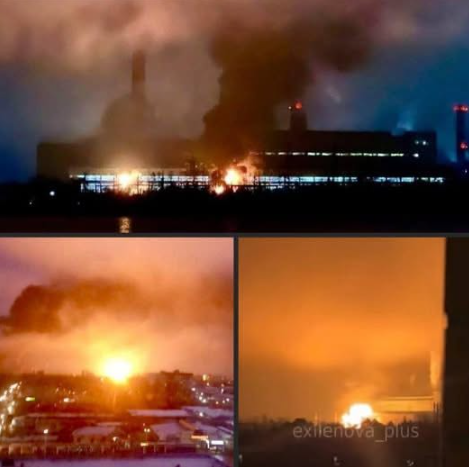
🚨 BREAKING NEWS: “Maximum Worldwide Alert — The War Begins?” Rising Global Tensions Raise Serious Questions About What Happens Next
A dramatic headline claiming that a “maximum worldwide alert” has been issued and that a war has begun is circulating online, prompting questions about international security and the possibility of a wider conflict. But what is actually happening, and should people be worried?
The most important thing to understand is that a frightening headline does not automatically mean a world war has started. International conflicts are real, diplomatic relationships remain complicated, and military tensions can change quickly. However, claims of a worldwide emergency require reliable confirmation from official sources.
As of October 11, 2026, international attention remains focused on several major security concerns, including the war between Russia and Ukraine and continuing tensions in the Middle East. Recent developments have also demonstrated how quickly political announcements can create confusion when governments have not confirmed the same information.
🌍 Why the World Is Watching International Developments
Around the world, governments are monitoring conflicts that could have consequences beyond the countries directly involved.
The war between Russia and Ukraine continues to affect European security, while military and diplomatic developments in the Middle East remain a major concern for regional governments and international observers.
These situations are serious because conflicts can affect civilian safety, energy supplies, international trade, and diplomatic relationships.
However, several regional conflicts occurring at the same time do not necessarily mean that a global war is underway.
Understanding the difference is essential. A regional war involves fighting within a particular geographical or political context. A worldwide war would involve a much broader confrontation among major powers and their allies.
The distinction matters because dramatic online headlines can make a complicated international situation appear more immediate or conclusive than the available evidence supports.
⚠️ Russia and Ukraine: A Critical Moment for Diplomacy
One of the latest developments attracting international attention involves a proposed pause in attacks on energy infrastructure in the Russia-Ukraine war.
On October 11, President Donald Trump announced what he described as an energy ceasefire between Russia and Ukraine. Ukrainian President Volodymyr Zelenskyy said the announcement was unexpected, explaining that Ukraine would support such a pause if Russia agreed to the same conditions. Russia had not publicly confirmed the arrangement in the reporting available at the time. <Cite refs={[“turn767036news12″,”turn767036news13”]}/>
This distinction is important.
An announcement by one leader does not necessarily mean that every party has accepted or implemented an agreement. For a ceasefire to work, the parties involved need to establish what activities are prohibited, when the arrangement begins, how compliance will be assessed, and what happens if violations occur.
Energy infrastructure is especially significant because electricity, heating, and fuel supplies are essential to civilian life.
Damage to these systems can affect hospitals, homes, businesses, and public services. A genuine, mutually accepted pause in attacks could therefore have important humanitarian consequences.
But until the terms are confirmed and implemented, it would be premature to describe the announcement as a completed peace agreement.
🌐 Could Regional Conflicts Become a Global War?
This is one of the questions that frequently appears whenever international tensions rise.
The possibility of escalation is a legitimate subject for security analysts, particularly when countries with powerful militaries become involved in overlapping disputes.
Nevertheless, the possibility of a wider conflict is not the same as confirmation that one has begun.
Several factors influence whether a regional confrontation escalates. These include decisions made by political leaders, military movements, alliance commitments, diplomatic communication, and the ability of governments to prevent misunderstandings.
A military incident can increase tensions without automatically triggering a wider war. Similarly, a diplomatic disagreement can be serious without meaning that negotiations have permanently ended.
Governments often prepare for different scenarios precisely because they want to prevent dangerous developments rather than allow them to occur.
That is why news reports must distinguish between confirmed military action, precautionary measures, political warnings, and speculation about what might happen next.
🕊️ Why Diplomacy Still Matters
During periods of international tension, diplomatic communication can be just as important as military preparedness.
Leaders and diplomats may use private discussions, public statements, negotiations, and international organizations to reduce misunderstandings and explore possible agreements.
These efforts are not always successful, and negotiations can break down. But communication can help governments understand one another’s positions and reduce the risk that an incident will be misinterpreted.
History demonstrates that international crises can have several possible outcomes. Some lead to prolonged conflict, while others eventually produce agreements or temporary pauses in fighting.
No responsible report should declare that a worldwide catastrophe is inevitable simply because several governments are experiencing serious disagreements.
The future depends on events and decisions that cannot be determined from a sensational headline alone.
📱 How Social Media Can Amplify Fear
The phrase “maximum worldwide alert” sounds like an official emergency designation. Yet a headline using those words does not establish that an international organization or government has issued such an alert.
Online posts can spread rapidly because dramatic language encourages people to click, comment, and share.
Sometimes, an article begins with a frightening headline but offers a much more cautious explanation in the body of the text. In other cases, an old report is recirculated without its original date, making it appear to describe a new event.
Images and videos can also be separated from their original context.
For readers, the solution is not to ignore international news. It is to verify the information before drawing conclusions.
Look for a publication date, a named source, a clear location, and confirmation from reliable news organizations or relevant authorities. If a post claims that a worldwide alert has been issued, look for the official announcement that supposedly supports it.
If no such confirmation can be found, the claim should not be presented as established fact.
🛡️ What Should Ordinary People Do?
When alarming international headlines appear, the most useful response is to remain informed without allowing unverified claims to create unnecessary panic.
People can take several practical steps:
- Follow reputable news organizations for confirmed updates.
- Check official emergency announcements for their own location.
- Keep basic household emergency supplies appropriate to local needs.
- Avoid sharing dramatic claims that have no identifiable source.
- Follow instructions from local authorities if a genuine emergency occurs.
These are sensible general preparedness measures, not evidence that a global emergency is underway.
Most importantly, people should not make major decisions based solely on an anonymous social media post or a headline that provides no verifiable details.
📰 What Is Actually Confirmed?
The available reporting supports a more measured picture than the headline suggests.
The Russia-Ukraine war remains a serious international security issue. A proposed energy ceasefire was announced by Trump on October 11, but Ukraine expressed surprise at the announcement, and confirmation from Russia remained outstanding in the reports available at that time. <Cite refs={[“turn767036news12″,”turn767036news13”]}/>
These are significant developments, but they do not establish that a new worldwide war has begun or that a maximum global alert has been declared.
Readers should continue checking reliable sources as the situation develops.
Final Thoughts: Stay Informed, Not Afraid
The words “BREAKING NEWS — Maximum Worldwide Alert — The War Begins” are designed to capture attention. But the strength of a headline does not determine the accuracy of its message.
International conflicts deserve serious attention because their consequences can be devastating for civilians and families. At the same time, responsible reporting requires clear distinctions between facts, political announcements, possible scenarios, and unverified rumors.
There is a real difference between a dangerous international situation and a confirmed global war.
For now, the most useful approach is to follow verified developments, understand what governments have actually announced, and avoid spreading claims that cannot be substantiated.
Before sharing any post claiming that a worldwide alert has been issued, ask one important question: Which official authority confirmed it?
In moments of uncertainty, accurate information matters more than frightening headlines. Staying informed, thinking critically, and preparing sensibly are better responses than allowing unverified claims to create panic.