The Old Man Who Bought Two Movie Tickets Every Day
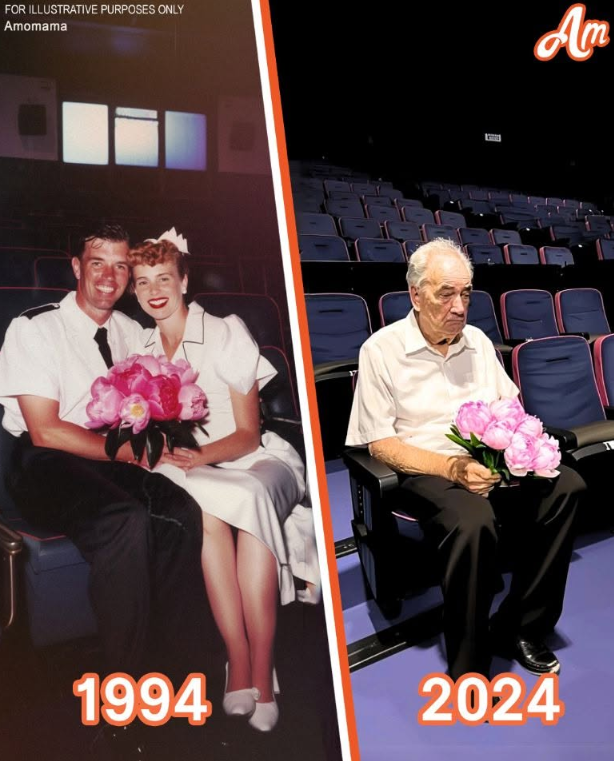
Every afternoon, almost at the same time, an elderly man would walk quietly into the local cinema.
He never arrived with a group of friends.
He never seemed to be meeting anyone.
And he never appeared to be in a hurry.
He would approach the ticket counter, smile politely, and ask for two tickets.
The first few times, nobody thought much of it.
Perhaps his wife was waiting outside. Maybe a friend would join him later. Maybe one of his children would meet him at the theater.
But the second ticket was always unused.
Day after day, week after week, month after month, the same thing happened.
The old man would buy two tickets, walk into the theater, and take his usual seat.
One seat remained empty beside him.
For years, people began to recognize him.
Employees knew his face. Ushers knew where he liked to sit. The ticket clerk could almost predict what he was going to order before he reached the counter.
“Two tickets,” he would say.
Then he would disappear into the darkness of the theater.
Nobody asked questions.
Perhaps they were afraid of invading his privacy.
Perhaps they assumed there was a simple explanation.
But the empty seat beside him became part of the cinema’s daily routine.
And then, one day, someone finally sat there.
It was a quiet afternoon.
The theater was not particularly crowded. Most people had chosen seats farther away from the elderly man, as they usually did.
He had already purchased his two tickets and was sitting in his familiar place.
The second seat remained empty.
Until a stranger walked in.
Instead of choosing a seat across the room, the stranger looked at the old man, noticed the empty seat beside him, and asked politely:
“Is anyone sitting here?”
The old man looked at the empty seat.
For a moment, he didn’t answer.
Then he smiled.
“No,” he said softly.
The stranger sat down.
The old man looked almost surprised.
Perhaps after all those years, he had become so accustomed to sitting beside an empty seat that having someone there felt unusual.
They watched the movie together.
Neither spoke much.
But something about that simple act—someone choosing to sit beside him—seemed to matter.
After the movie ended, the stranger turned toward him.
“You come here often?” he asked.
The old man nodded.
“Every day.”
The stranger smiled.
“Do you always buy two tickets?”
The old man’s expression changed.
He looked down at his hands.
For several seconds, he said nothing.
Then he finally explained.
The second ticket wasn’t for another person.
At least, not anymore.
It was for someone who had once sat beside him every single day.
His wife.
They had shared movies together for decades.
They had laughed at comedies, cried during sad films, argued about which movies were worth watching, and sometimes sat through terrible movies simply because they wanted to spend time together.
The cinema had been part of their relationship.
It was where they went when they wanted to escape from the ordinary routines of life.
They didn’t need expensive vacations.
They didn’t need elaborate plans.
Sometimes, they just needed two tickets, a box of popcorn, and two seats in the dark.
Then she died.
And suddenly, the seat beside him was empty.
But the old man couldn’t bring himself to stop going.
So he continued.
Every day, he bought two tickets.
One for himself.
And one for the woman who could no longer join him.
The stranger listened quietly.
There was nothing clever to say.
No perfect sentence could erase years of grief.
So instead, the stranger simply stayed there.
And perhaps that was exactly what the old man needed.
Someone to sit beside him.
Someone to acknowledge that the empty seat represented more than an unused ticket.
It represented a lifetime.
A marriage.
Memories.
Love.
Loss.
And a promise that had never really disappeared.
The story of the old man is a reminder that grief doesn’t always look the way we expect.
Some people cry openly.
Some people withdraw.
Some people talk constantly about the person they lost.
Others continue performing the small routines they once shared.
They keep buying the favorite food.
They visit the familiar restaurant.
They listen to the same music.
They sit in the same chair.
They walk the same route.
And sometimes, they buy two movie tickets.
To an outsider, it may seem strange.
But to someone grieving, these rituals can provide a connection to a life that changed forever.
The empty seat may hurt.
But it can also represent love.
Years later, the old man still remembered exactly what it felt like to sit beside his wife.
He remembered her reactions.
He remembered how she laughed.
He remembered which movies she loved.
He remembered the ordinary moments that had seemed insignificant at the time but became priceless after she was gone.
And every ticket reminded him of those memories.
What makes the story especially powerful is what happened when someone finally sat beside him.
The stranger didn’t fix his loneliness.
They didn’t bring his wife back.
They didn’t magically remove his grief.
They simply chose not to leave him alone.
Sometimes compassion is that simple.
We often imagine that helping someone requires a grand gesture.
We think we need money, advice, solutions, or the perfect words.
But sometimes people need something much smaller.
They need company.
They need someone willing to listen.
They need someone to say, “I see you.”
The old man had probably sat in that theater hundreds of times surrounded by other people while still feeling completely alone.
A crowded room can be lonely.
A packed theater can be lonely.
A busy street can be lonely.
Loneliness isn’t always about being physically alone.
Sometimes it is about feeling that nobody notices your absence.
That is why the stranger’s decision to sit beside him mattered.
For those two hours, the old man didn’t have an empty seat beside him.
He had company.
Perhaps he talked about his wife afterward.
Perhaps he shared memories.
Perhaps he simply watched the movie without saying another word.
It doesn’t really matter.
What matters is that someone noticed.
And maybe that is the lesson we should carry with us.
There are people around us every day who are quietly carrying enormous stories.
The elderly person sitting alone at a restaurant.
The neighbor who rarely leaves the house.
The person who always shops alone.
The coworker who never talks about their family.
The person sitting quietly at the bus stop.
We may see only what is visible.
We don’t see the memories they carry.
We don’t know who they have lost.
We don’t know what they are missing.
We don’t know how many nights they’ve spent wishing someone would simply ask how they are doing.
The old man’s two tickets were never really about the movie.
They were about remembering.
They were about love continuing after loss.
And when someone finally sat beside him, perhaps the greatest gift wasn’t conversation.
It was presence.
One empty seat had finally been filled.
Not because the past had been replaced, but because someone had decided that the old man deserved not to sit alone.
Sometimes the smallest kindness can become an unforgettable moment.
A seat.
A conversation.
A smile.
A few hours of company.
We may never know how much those things mean to someone.
So if you ever notice someone sitting alone, don’t immediately assume they want to be left alone.
Respect their boundaries, of course.
But when appropriate, a simple hello can mean more than you realize.
Because behind every lonely face may be a story.
Behind every empty chair may be a memory.
And behind every quiet person may be someone hoping, just for a moment, that another human being will choose to sit beside them.
The old man bought two tickets for years.
Then, one day, someone finally understood that the second seat wasn’t empty at all.
It was filled with memories.
And for one afternoon, it was filled with something else too