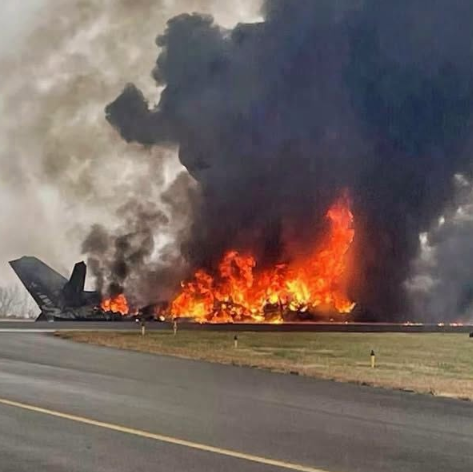
🚨 RIGHT NOW? Plane With More Than 244 Onboard Just Crash — What We Actually Know
A terrifying headline is circulating online:
“RIGHT NOW, PLANE WITH MORE THAN 244 ONBOARD JUST CRASH… SEE MORE.”
Within minutes, a headline like this can spread across social media, leaving people frightened and searching for answers.
A passenger aircraft carrying more than 244 people sounds like a catastrophe of enormous proportions. Families may immediately wonder whether someone they know was on board. Travelers may wonder where the aircraft was flying. And readers may begin sharing the headline before they even know the airline, flight number, location, or whether the event actually happened.
But there is an important problem with this particular claim.
The wording appears to be recycling information associated with a real aviation tragedy from 2025 rather than reporting a newly confirmed crash happening right now.
That distinction is extremely important.
✈️ The 244-Person Figure Has a Real History
The number 244 is strongly associated with Air India Flight AI171, a Boeing 787 that crashed shortly after departing Ahmedabad, India, on June 12, 2025, while bound for London Gatwick.
That aircraft was carrying 232 passengers and 12 crew members—244 people in total. Reports at the time said the aircraft lost contact shortly after departure and crashed in Ahmedabad.
Because the number is so specific, it can easily be copied into a new social-media headline.
A reader who sees:
“Plane with more than 244 onboard just crash!”
may naturally assume that a brand-new aircraft has gone down.
But the number alone does not prove that.
🚨 The Missing Details Matter
A genuine breaking aviation disaster involving a large passenger jet would normally generate a number of identifiable details.
We would expect to see information such as:
- The airline
- The flight number
- The aircraft type
- The departure airport
- The destination
- The approximate crash location
- Statements from aviation authorities
- Emergency-service information
- Information from the airline
- Reports from established news organizations
Yet the viral headline provides almost none of these details.
Some websites currently carrying the headline repeat dramatic descriptions of emergency crews, flames, smoke, and rescue operations, but they do not establish a clear airline, flight number, route, or independently verified location.
That should immediately make readers cautious.
📱 Why “Right Now” Headlines Are So Powerful
The words “RIGHT NOW” are designed to create urgency.
They tell the reader:
Stop what you’re doing. Something enormous is happening.
Then comes:
“MORE THAN 244 ONBOARD.”
That number increases the emotional impact.
Finally:
“JUST CRASH.”
The combination creates a powerful psychological reaction.
People don’t necessarily stop to investigate.
They click.
They comment.
They share.
They tag friends.
And before reliable information can catch up, the story may already have traveled across thousands of social-media accounts.
This is one of the biggest problems with modern breaking-news misinformation.
📰 A Real Tragedy Can Become a New False Story
One of the easiest ways for misleading news to spread is by taking a real tragedy and changing the date.
The original event happened.
The photographs may be real.
The number of passengers may be real.
The aircraft may be real.
But suddenly the same information is presented as though it happened today.
That’s especially dangerous with aviation disasters because photographs and videos can be difficult for ordinary viewers to date.
A picture of wreckage doesn’t automatically tell you when the photograph was taken.
A video of emergency crews doesn’t automatically tell you which accident they’re responding to.
And a dramatic headline doesn’t prove that the event described occurred when the post claims it did.
💔 Remember the People Behind the Numbers
One of the saddest things about aviation disasters is that headlines often reduce people to numbers.
“244 onboard.”
But those weren’t simply 244 passengers and crew.
They were individuals.
They had families.
They had jobs.
They had plans.
Some were traveling for business.
Some were going home.
Some were beginning vacations.
Some were returning to loved ones.
Every seat represented a person with a life outside the aircraft.
That’s why responsible reporting matters so much.
When a disaster really happens, families deserve accurate information—not speculation.
They deserve confirmed passenger lists, reliable updates, and communication from authorities.
They don’t need rumors spreading across social media before officials can notify relatives.
🛫 Why Aviation Investigations Take Time
When an aircraft accident occurs, investigators don’t simply look at the wreckage and announce a cause.
They examine enormous amounts of information.
Investigators may study flight-data recorders, cockpit voice recordings, maintenance records, weather conditions, air-traffic-control communications, aircraft components, airport operations, and witness accounts.
They may reconstruct the aircraft’s final moments.
They may examine engines and flight-control systems.
They may determine whether there were technical problems, environmental factors, operational issues, or a combination of circumstances.
That process takes time.
This is why responsible aviation reporting avoids immediately declaring:
“The plane crashed because of X.”
unless investigators have actually established it.
⚠️ Be Careful With “Officials Confirmed” Claims
Another common feature of viral stories is a phrase such as:
“Officials have confirmed…”
That phrase sounds authoritative.
But readers should ask:
Which officials?
Is there a named aviation authority?
Is there a government statement?
Is there an airline announcement?
Is there an established news organization independently confirming the report?
If the answer is unclear, the claim deserves skepticism.
A website repeating another website does not create independent confirmation.
Ten social-media pages repeating the same sentence do not make it true.
🌍 The Importance of Checking the Date
One of the simplest fact-checking techniques is also one of the most effective:
Check the date.
Aviation stories are frequently republished because major crashes remain relevant for years.
A photograph may be used in anniversary coverage.
An investigation may produce a new report months later.
A video may resurface after a completely unrelated incident.
A headline may be rewritten to make an old event sound new.
That’s why the date attached to the original report matters.
In this case, the specific 244-person figure points strongly toward the June 2025 Air India AI171 disaster, not automatically toward a new crash occurring today.
🙏 Don’t Turn Fear Into Misinformation
If you see this headline on Facebook or another platform, you don’t have to ignore it.
But you also shouldn’t immediately present it as confirmed news.
Instead, pause.
Search the flight number if one is provided.
Look for statements from the airline.
Check established news organizations.
Look for information from aviation authorities.
And if the only evidence is a sensational post saying “SEE MORE,” be extremely careful.
The people involved in genuine disasters deserve better than speculation.
✈️ The Bigger Lesson
Air travel remains one of the most carefully regulated forms of transportation, and major aviation accidents receive extensive investigation precisely because the industry constantly looks for ways to prevent future tragedies.
When an accident occurs, the world wants answers.
But answers require evidence.
The headline “RIGHT NOW, PLANE WITH MORE THAN 244 ONBOARD JUST CRASH” is powerful, frightening, and highly shareable.
However, the evidence currently available does not establish that a new crash involving more than 244 people has just occurred. The wording closely resembles coverage of the 2025 Air India AI171 tragedy, while the newer pages repeating the headline do not provide the identifying details needed to independently verify a new event.
So before sharing that frightening headline, remember one simple rule:
A breaking-news headline is not the same thing as confirmed breaking news.
When lives may be involved, accuracy matters more than speed.
And sometimes the most responsible thing you can do is stop for a moment, check the facts, and wait for reliable confirmation before pressing Share. 🙏✈️