Shock in Washington: Viral Claim Says Trump Was Shot Again—What We Know
A dramatic headline claiming that President Donald Trump was “shot again” in Washington, D.C., has been spreading online, leaving readers shocked and concerned about the president’s safety.
The wording is designed to create an immediate sense of urgency: “30 MINUTES AGO IN WASHINGTON” followed by the claim that Trump was shot again.
But there is an important problem with the story.
There is currently no credible confirmation that Donald Trump has been shot in Washington, D.C.
No verified report from the White House, Secret Service, or other authoritative federal source has confirmed the claim. Major news organizations are also not reporting a new shooting involving the president.
That distinction is extremely important because an attack on a sitting U.S. president would be a major national and international event. Such an incident would ordinarily produce immediate statements from federal authorities and extensive coverage from multiple major news organizations.
Instead, current reporting from Washington is focused on other events and unrelated shootings.
That does not mean there have been no shootings in the nation’s capital. Local authorities have reported several shooting incidents in the Washington area. For example, police recently investigated a shooting involving two people in Northwest D.C. who were transported to a hospital after being found with gunshot wounds.
But that incident did not involve President Trump.
This distinction illustrates how easily real events can become mixed with misleading social-media headlines.
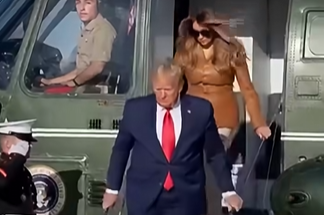
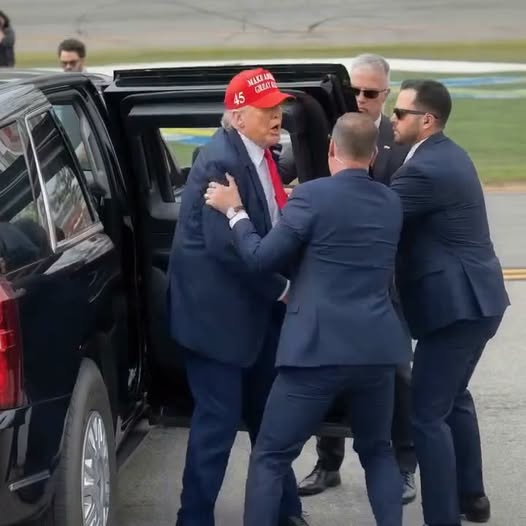
A dramatic photograph, an old video, or footage from an unrelated security incident can be paired with a sensational caption claiming something entirely different happened. Once shared repeatedly, the claim can begin to look legitimate simply because so many people are discussing it.
That is one of the biggest problems with breaking-news misinformation.
The phrase “30 minutes ago” is especially effective at creating urgency. Readers may feel that they need to click immediately before the information disappears or before everyone else knows what happened.
But urgency should never replace verification.
When a claim involves an attempted assassination or shooting of a president, readers should pause before sharing it.
The first question should be simple:
Where did this information come from?
Is there an official statement?
Is the Secret Service confirming it?
Are reputable national news organizations reporting the same thing?
Are there statements from local law enforcement?
Is there independently verified video or photographic evidence?
If the answer to those questions is no, the headline should be treated as unverified.
This is especially important because President Trump has previously been the target of serious security incidents and assassination attempts. Those real events have understandably made audiences particularly sensitive to headlines involving threats against him.
The history also makes sensational false claims more believable.
People remember previous attacks and may immediately assume that another incident has occurred.
That emotional reaction is exactly what misleading headlines can exploit.
A reader sees “Trump shot again” and may immediately experience fear, anger, disbelief, or sadness. Before they have time to check the facts, they may send the story to friends or post it on social media.
Within minutes, the rumor can spread far beyond its original source.
The result is a chain reaction in which repetition starts to look like confirmation.
But ten social-media posts repeating the same claim do not equal ten independent confirmations.
In fact, they may all be copying the same original unverified post.
This is why responsible news consumption requires looking for independent reporting.
It is also worth remembering that headlines can be deliberately incomplete.
A phrase such as “Trump shot again” may refer to an old event, a hypothetical statement, a security exercise, a fictional video, or an unrelated person. Without reading the full story and checking its source, readers cannot know whether the headline accurately describes a current event.
The words “See more” can add another layer of mystery.
On social platforms, these phrases encourage people to click through to another page. Sometimes the information behind the headline does not match the impression created by the headline itself.
Readers should therefore be especially careful with posts that combine:
- “BREAKING” or “URGENT”
- A precise number of minutes ago
- A dramatic claim about a famous person
- “See more”
- An emotional photograph
- A request to read the comments
- A warning that the information is being “hidden”
These elements do not prove that a story is false, but together they are strong reasons to stop and verify before sharing.
For a story involving the president, the standard should be even higher.
A genuine shooting involving President Trump would have enormous consequences. The White House, Secret Service, law enforcement agencies, Congress, foreign governments, and major news organizations would all be expected to respond.
The lack of such confirmation is therefore significant.
At the moment, readers should not treat the viral claim that Trump was “shot again” in Washington as established fact.
That does not mean people should ignore genuine security threats or real violence. It means that real events deserve accurate reporting rather than sensational rumors.
There is another important lesson here.
Social media is extremely fast, but speed and accuracy are not the same thing.
A story can reach thousands of people before anyone has verified it.
Sometimes the first version of a breaking story is wrong. Details can be misunderstood. Images can be misidentified. Old footage can resurface. Rumors can become detached from their original context.
That is why professional journalism relies on confirmation from multiple sources.
Readers can do something similar on a smaller scale.
Before sharing a shocking political story, take a minute to search for confirmation from several reputable sources. Look at the date. Check whether the photograph is actually from the event being described. Look for official statements rather than relying exclusively on screenshots or social-media posts.
Most importantly, do not allow a frightening headline to make the decision for you.
The claim that Donald Trump was shot again is precisely the kind of story that demands verification.
As of the available reporting, there is no credible confirmation of a new shooting involving Trump in Washington, D.C.
There are real shootings and real public-safety incidents occurring in the Washington area, but those incidents should not be falsely attributed to the president.
For now, the responsible conclusion is simple: treat the viral “Trump shot again” headline as an unverified claim, not confirmed breaking news.
If credible authorities later announce a genuine incident, the facts will become available through reliable reporting.
Until then, sharing an alarming headline without verification can do more harm than simply waiting for the truth.
In an era when information travels around the world in seconds, sometimes the most responsible thing a reader can do is pause.
Check the source.
Check the date.
Check the facts.
And only then decide whether the story deserves to be shared.