🧨 A Presidential First: Trump’s Live Confrontation
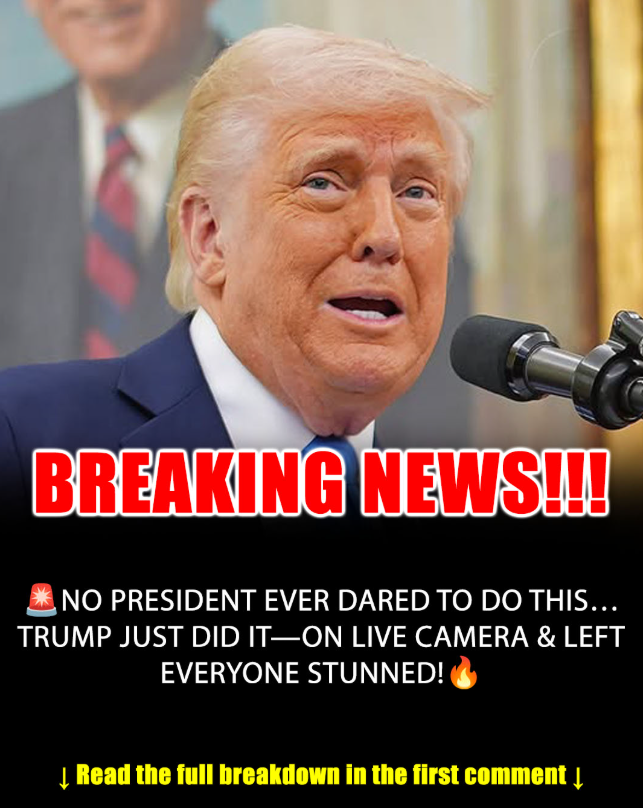
In a moment that stunned viewers and political analysts alike, Donald Trump publicly confronted the President of Ukraine during a live televised meeting. The interaction wasn’t just diplomatically tense—it was a full-on dressing-down, delivered in real time for the world to see.
While past presidents have certainly had tough conversations with foreign leaders, those moments typically happen behind closed doors. Trump, however, chose to air grievances and assert dominance in front of cameras, breaking with decades of diplomatic protocol. This wasn’t just a breach of etiquette—it was a calculated spectacle.
🎥 What Happened on Camera
The meeting took place during a multilateral summit, where Trump was seated alongside several European leaders. As the Ukrainian president began to speak, Trump interrupted, challenging his statements and questioning his leadership. The tone was sharp, the body language assertive, and the message unmistakable: Trump was not there to play nice.
Observers noted that Trump’s remarks were not only unusually direct but also laced with political undertones. He referenced past U.S. aid, criticized Ukraine’s handling of internal corruption, and suggested that future support would be contingent on “real accountability.” The Ukrainian president, visibly taken aback, responded diplomatically but firmly.
🧭 Breaking Presidential Norms
What makes this moment historic isn’t just the content—it’s the context. No sitting or former U.S. president has ever publicly reprimanded a foreign leader in such a direct and theatrical fashion. Diplomacy, by its nature, relies on subtlety, discretion, and mutual respect. Trump’s approach flipped that script.
This wasn’t the first time Trump has challenged norms. From his unconventional press conferences to his use of social media as a political weapon, he’s consistently redefined what presidential behavior looks like. But this live confrontation marked a new chapter—one where diplomacy becomes performance art.
🔍 Why Did He Do It?
There are several theories circulating among analysts:
- Political Theater: Trump thrives on spectacle. By confronting a foreign leader live, he reinforces his image as a bold, unapologetic nationalist.
- Strategic Messaging: The confrontation may have been aimed more at domestic audiences than international ones. It sends a message to voters that Trump is tough on foreign aid and corruption.
- Power Play: By asserting dominance in a public forum, Trump positions himself as a global power broker, not just a participant.
Whatever the motive, the impact was immediate. Social media lit up with reactions, news outlets scrambled to analyze the footage, and foreign diplomats reportedly expressed concern over the precedent it sets.
🌍 Global Reactions
Internationally, the move drew mixed responses. Some praised Trump’s candor, arguing that too much diplomacy happens behind closed doors. Others warned that such public confrontations could destabilize alliances and undermine trust.
European leaders at the summit appeared visibly uncomfortable during the exchange. While none openly criticized Trump, several later emphasized the importance of “constructive dialogue” and “respectful engagement” in their own remarks.
🇺🇸 Domestic Fallout
Back home, Trump’s supporters hailed the moment as a “MAGA victory” and proof that he’s unafraid to speak truth to power. Conservative commentators praised his refusal to “play the globalist game,” while critics accused him of grandstanding and jeopardizing international relationships.
The incident also reignited debates about presidential decorum. Should leaders be held to traditional standards of diplomacy, or is it time to embrace a more transparent, confrontational style? Trump’s actions force that question into the spotlight.
🧠 Psychological Playbook
From a psychological standpoint, Trump’s move fits a familiar pattern: dominance display. By publicly challenging another leader, he asserts control and frames himself as the alpha in the room. This tactic isn’t new—it’s common in business, negotiation, and even animal behavior. But applying it in international diplomacy? That’s the Trump twist.
📜 Historical Comparisons
While no president has done exactly what Trump did, there are echoes in history:
- Teddy Roosevelt famously said, “Speak softly and carry a big stick.” Trump, by contrast, speaks loudly and waves the stick on camera.
- Richard Nixon used back-channel diplomacy to reshape global alliances, but he kept the drama off-screen.
- Barack Obama was known for his calm, measured tone—even when addressing contentious issues.
Trump’s approach is a radical departure, one that redefines presidential engagement in the 21st century.
🧩 What Comes Next?
The long-term implications of this moment are still unfolding. Will other leaders follow suit, turning diplomacy into live theater? Or will Trump’s move be seen as a one-off, a flashpoint in an already unconventional career?
One thing is certain: the boundaries of presidential behavior have shifted. Whether that shift leads to greater transparency or deeper division remains to be seen.
🗣️ Final Thoughts
Trump’s live confrontation with the Ukrainian president wasn’t just a headline—it was a seismic moment in political communication. It challenged norms, sparked debate, and reminded the world that in the age of livestreams and viral clips, diplomacy is no longer confined to back rooms and briefing papers.
It’s now a performance—and Trump, like it or not, knows how to command the stage.