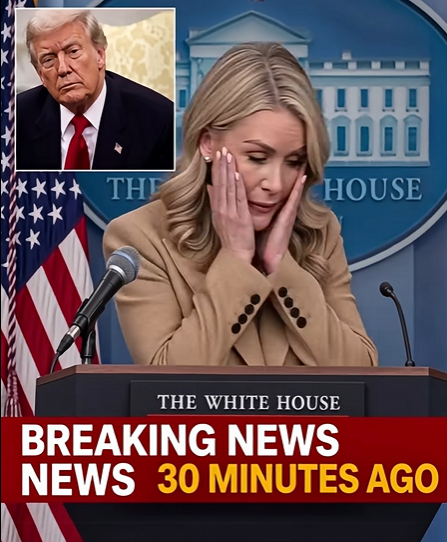
🚨 SAD NEWS — JUST IN: Emergency Claims About President Trump Spread Online
A dramatic headline is spreading rapidly across social media, claiming that an “emergency” has been declared involving President Donald Trump and suggesting that a major announcement may be coming.
The wording has understandably caused concern.
Whenever a headline begins with phrases such as “SAD NEWS,” “JUST IN,” or “EMERGENCY DECLARED,” many people immediately assume that something serious has happened. Within minutes, posts can be shared thousands of times, comments can fill with questions, and people begin asking the same thing:
What happened to President Trump?
But there is an important problem with the viral wording: the headline does not explain what emergency has supposedly occurred, when it happened, where it happened, or which official source confirmed it.
That matters.
As of the latest available reporting, there is no reliable confirmation that President Trump has suffered a newly reported personal medical emergency today. Current reporting instead shows Trump continuing to conduct presidential business and make public statements. Reuters reported on September 14 that Trump was publicly discussing artificial-intelligence policy and other matters involving his administration.
The White House also continues to issue official presidential communications and press information. Its published schedule shows normal press operations for the week of September 14 through September 20.
So what could be behind the confusing headline?
One possibility is that social-media posts are referring to a national emergency rather than a medical emergency involving Trump personally.
That distinction is extremely important.
A national emergency is a formal government action that can involve executive powers, economic measures, national security concerns, foreign threats, energy issues, or other circumstances. It does not automatically mean that the president himself is in danger or has been hospitalized.
In fact, the Trump administration has recently continued an existing national emergency related to terrorist threats. A September 8 presidential notice continued the national emergency originally declared following the September 11, 2001 terrorist attacks. The notice states that the emergency would continue for another year.
There have also been other emergency declarations during Trump’s second administration.
Earlier this month, the administration declared a national emergency concerning foreign-made components used in America’s electrical power grid. The action was presented as a response to concerns involving critical infrastructure, national security, and dependence on foreign equipment.
That is very different from saying that an emergency has suddenly happened to President Trump personally.
Unfortunately, social-media headlines sometimes leave out those important details.
A post may take a government announcement, remove the context, and replace it with dramatic language designed to make people click “See More.”
The result can be frightening.
People see:
“SAD NEWS — JUST IN…”
Then they see:
“Emergency Declared as President Trump Will Be…”
And the natural reaction is to wonder whether the president has become seriously ill, been rushed to a hospital, or encountered some other unexpected crisis.
But without the rest of the sentence, there is simply not enough information to know what the headline is actually describing.
That is why readers should avoid assuming the worst.
Trump’s health has been the subject of intense public attention before, especially because of his age and because presidential medical information receives extraordinary scrutiny. But a dramatic social-media post by itself is not evidence of a medical emergency.
When an important event involving the president actually occurs, credible reporting generally provides specific details.
Where did it happen?
When did it happen?
Who confirmed it?
Was there a statement from the White House?
Did the president’s physician issue information?
Are multiple established news organizations reporting the same facts?
Those are the questions that matter.
The current situation also demonstrates why the word “emergency” can be confusing.
An emergency declaration can be a legal or governmental action. It can remain in effect for months or years. It does not necessarily mean that something happened suddenly that day.
For example, the national emergency connected to the September 11 terrorist attacks has existed for decades and was recently renewed for another year.
That renewal is a government action—not evidence that a new terrorist attack has suddenly occurred or that Trump personally is facing an emergency.
Likewise, an emergency involving America’s electrical grid would concern national infrastructure and security rather than automatically indicating a crisis involving the president’s health.
This distinction is especially important for anyone sharing political content on Facebook.
Political stories can travel faster than almost any other category of news. A headline that creates fear or shock can attract enormous attention before anyone checks whether the underlying claim is accurate.
Once thousands of people have shared something, correcting it becomes much harder.
That’s why the safest approach is simple:
Stop. Read the entire story. Check the source. Check the date. Look for official confirmation.
Do not assume that an alarming headline tells the whole story.
Do not assume that an old photograph represents today’s events.
And do not treat a phrase such as “sources say” as proof unless the sources are identified and independently credible.
At the moment, the available information does not establish that President Trump has experienced a newly reported personal emergency today.
What is confirmed is that his administration continues to deal with a number of significant national issues, while Trump continues making public statements and carrying out presidential activities. Reuters reported on September 14 that Trump was actively addressing the debate surrounding artificial intelligence and regulation.
Meanwhile, official White House communications continue as normal.
That does not mean that every viral headline should be ignored.
It means the public deserves to know exactly what an emergency refers to before drawing conclusions.
If a new development involving President Trump is officially confirmed, credible news organizations and government sources should provide details.
Until then, the responsible headline is much less dramatic but much more accurate:
Reports of an emergency are circulating online, but the nature of the alleged emergency must be verified before it can be presented as confirmed news.
In an era when one misleading sentence can reach millions of people within minutes, accuracy matters more than ever.
So before sharing that frightening “SAD NEWS” post, take a moment to check the facts.
Because sometimes the most important part of a breaking-news story is not what the headline says.
It is what the headline leaves out.