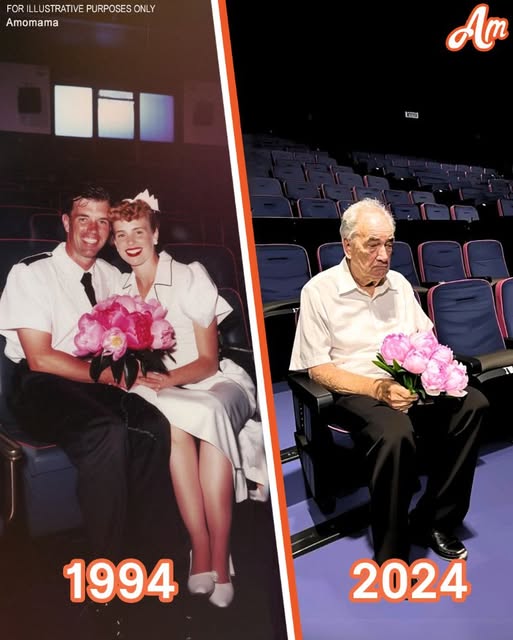
The Old Man Came to the Cinema Alone Every Day for Years, Buying Two Tickets and Waiting—One Day, Someone Finally Sat Beside Him
Every afternoon, shortly before the first movie began, the old man would walk through the glass doors of the small neighborhood cinema.
He always arrived at nearly the same time.
He always wore the same dark coat, carried the same worn leather wallet, and approached the ticket counter with a quiet smile.
“Two tickets, please.”
The first few times, the young cashier thought nothing of it.
Perhaps his wife was meeting him inside.
Perhaps he had a friend who preferred to enter separately.
Perhaps someone was simply running late.
But as the weeks became months, the employees began noticing something unusual.
The old man always bought two tickets.
And he always sat alone.
He never complained.
He never asked for a refund.
He simply took the two tickets, walked into the theater, chose the same pair of seats, and waited.
One ticket was always used.
The other remained untouched.
Nobody knew why.
The cinema was an old-fashioned place that had survived despite the arrival of giant multiplexes and streaming services. It had faded red seats, brass lights, a small concession stand, and a lobby that smelled faintly of popcorn.
The employees came to recognize the old man.
His name, they eventually learned, was Arthur.
He was seventy-eight years old.
He lived only a few blocks away and had been coming to the cinema for years.
Sometimes he watched comedies.
Sometimes dramas.
Sometimes movies he had already seen.
But regardless of the film, he always purchased two tickets.
One afternoon, a new employee finally gathered enough courage to ask him.
“Sir, may I ask you something?”
Arthur smiled.
“Of course.”
“Why do you always buy two tickets?”
The old man looked toward the theater entrance.
For a moment, he said nothing.
Then he quietly replied, “I’m keeping a seat for someone.”
The employee assumed the answer was a joke.
But Arthur wasn’t smiling anymore.
He took his tickets and walked away.
The mystery remained.
Over time, the employees noticed other things.
Arthur never sat anywhere else.
He never ate popcorn.
He rarely bought a drink.
During emotional scenes, he sometimes looked toward the empty seat beside him.
And when the credits rolled, he always remained seated for a few extra minutes.
It was almost as if he were waiting for someone to say something.
One rainy afternoon, Arthur arrived later than usual.
He purchased his two tickets and slowly entered the theater.
There were only a handful of people inside.
As he walked toward his usual seats, he stopped.
Someone was sitting in one of them.
It was a young woman, perhaps in her twenties, holding a bag of popcorn.
She looked up.
“Oh, I’m sorry,” she said. “I didn’t realize these seats were taken.”
Arthur looked at the empty seat beside her.
Then he looked at the ticket in his hand.
For the first time in years, he seemed unsure what to do.
“You can stay,” he finally said.
The young woman smiled.
“Are you sure?”
Arthur nodded.
And then something remarkable happened.
He sat down beside her.
For the first time in years, the second seat wasn’t empty.
At first, neither of them spoke.
The movie began.
About twenty minutes later, the woman quietly offered him some popcorn.
Arthur hesitated before taking a handful.
“Thank you,” he whispered.
After a while, she asked, “Do you come here often?”
Arthur laughed softly.
“Every day.”
“Every day?”
“Almost.”
She smiled.
“That’s a lot of movies.”
Arthur looked toward the screen.
“I had someone who loved movies.”
The woman’s expression changed.
“Your wife?”
Arthur nodded.
Her name was Margaret.
They had been married for fifty-one years.
They had met when they were young, married before either had much money, raised children, worked through difficult years, celebrated good ones, and eventually grew old together.
Going to the cinema had been one of their favorite traditions.
Every Friday night, they would see a movie.
Sometimes it was a wonderful movie.
Sometimes it was terrible.
But Margaret always said that the movie didn’t matter.
Being together did.
Then, several years earlier, Margaret became seriously ill.
Their Friday movie nights stopped.
Arthur stayed beside her through the illness.
When she died, the house became unbearably quiet.
The first week afterward, Arthur couldn’t sleep.
He wandered from room to room, encountering memories everywhere.
Then he remembered their old tradition.
So he went to the cinema.
He bought two tickets.
He sat in their usual seats.
And he watched a movie alone.
The next day, he returned.
And the day after that.
The two tickets became his way of keeping Margaret’s place.
“I know she’s not coming back,” Arthur said quietly. “I know that.”
The young woman listened.
“Then why do you keep buying the second ticket?”
Arthur smiled sadly.
“Because for a little while, it feels like we’re still going somewhere together.”
The young woman didn’t know what to say.
She simply reached over and placed her hand gently on his arm.
For the rest of the movie, they watched in silence.
When the credits appeared, Arthur didn’t immediately stand.
Neither did she.
Finally, she asked, “Would it be okay if I sat here again tomorrow?”
Arthur looked at her.
“Tomorrow?”
She nodded.
“I’d like to see the next movie.”
For the first time in years, Arthur’s eyes filled with tears.
“I’d like that.”
The following afternoon, Arthur arrived at the cinema.
As usual, he approached the counter.
“Two tickets, please.”
But this time, the cashier noticed something different.
Arthur wasn’t looking toward the empty seat.
He was looking toward the entrance.
A few minutes later, the young woman walked through the doors.
She waved.
Arthur waved back.
And together they entered the theater.
Their friendship grew slowly.
She learned about Margaret.
Arthur learned about her life, her dreams, her worries, and the challenges she was facing.
They weren’t replacing anyone.
They weren’t pretending that grief could simply disappear.
They had simply found something unexpectedly valuable: companionship.
Arthur still bought two tickets.
But now, both were used.
The employees began looking forward to seeing them arrive.
Sometimes they talked before the movie.
Sometimes they argued about which film to watch.
Sometimes they said almost nothing.
But they were no longer sitting alone.
Months passed.
One evening, after the movie ended, the young woman asked Arthur why he had continued coming to the cinema for so many years.
Arthur thought for a moment.
“Because love doesn’t always know where to go after someone dies,” he said. “Sometimes you have to give it somewhere to stay.”
The young woman smiled through tears.
“And now?”
Arthur looked at the empty hallway behind them.
“Now I think it found a new place.”
The story of the old man and the second ticket eventually became something of a legend among the cinema employees.
But Arthur never considered himself remarkable.
He simply missed someone.
He simply wanted to keep a promise to himself.
And then, unexpectedly, another person sat beside him.
Perhaps that is the lesson hidden inside his story.
Loneliness does not always announce itself.
Sometimes it looks like an elderly man buying two tickets.
Sometimes it looks like someone sitting quietly in a crowded room.
And sometimes, the smallest act—choosing to sit beside someone—can change everything.
Arthur had spent years keeping a seat for someone he loved.
He never expected that one day, someone else would choose to fill it.
Not to erase the past.
Not to replace Margaret.
But simply to remind him that even after profound loss, life can still contain unexpected moments of connection.
And sometimes, all it takes is one person asking,
“Can I sit here?”
For someone who has been waiting a very long time, that question can mean everything.