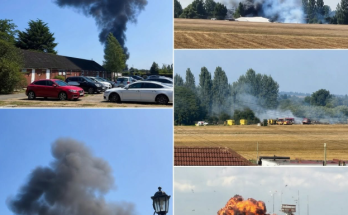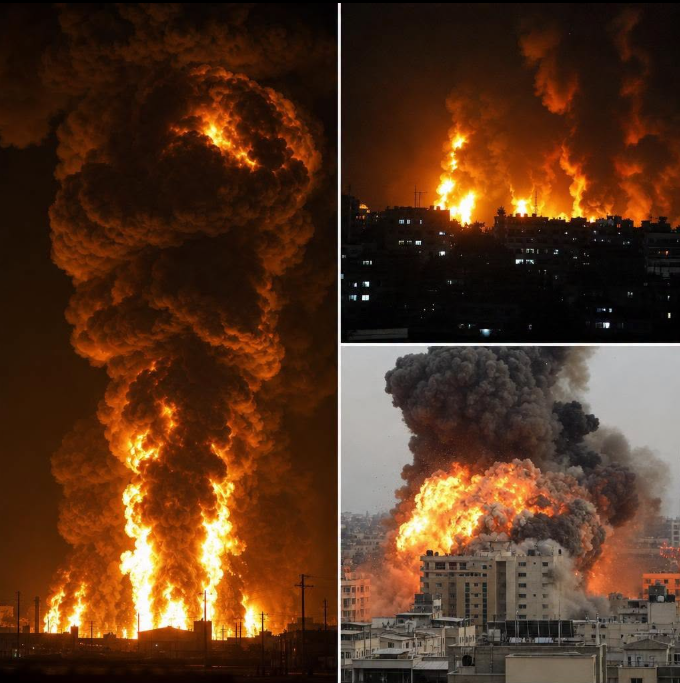
BREAKING NEWS: Maximum Worldwide Alert — What Does “The War Begins” Really Mean?
A dramatic headline has been spreading rapidly across social media:
“BREAKING NEWS. Maximum worldwide alert. The war begins… See more.”
The wording is designed to create an immediate sense of fear and urgency. It suggests that a major military conflict has suddenly erupted and that the entire world is now facing an unprecedented crisis.
But before accepting such a headline as fact, there is an important question to ask: What exactly happened, where did it happen, and when?
Versions of this same headline have appeared repeatedly online, including social-media posts published weeks and months apart. That means the phrase itself cannot be treated as confirmation that a new global war has begun today.
In an era when information travels around the world within seconds, dramatic headlines can spread much faster than verified facts.
Why “Maximum Worldwide Alert” Sounds So Alarming
Words matter during an international crisis.
Phrases such as “maximum alert,” “war begins,” and “breaking news” immediately attract attention. People may stop what they are doing, open the post, and begin searching for additional information.
For families with relatives serving in the military, such a headline can be especially frightening.
For travelers, investors, businesses, and governments, uncertainty can have immediate consequences.
But a dramatic headline does not necessarily mean that authorities have issued a worldwide emergency.
A genuine major international escalation would normally generate extensive reporting from governments, military authorities, international organizations, and multiple established news agencies.
That is why readers should look beyond a single social-media post before concluding that a global conflict has begun.
The World Already Faces Serious Conflicts
The caution surrounding this headline does not mean that the world is peaceful.
Several regions have experienced serious military tensions and armed conflicts, and developments in one part of the world can have consequences far beyond national borders.
The Middle East, Eastern Europe, and other strategically important regions remain areas of significant international concern.
Military confrontations can affect energy supplies, shipping routes, financial markets, diplomatic relationships, and civilian populations.
That reality makes sensational claims particularly powerful.
When people already know that international tensions are high, a headline announcing that “the war begins” can feel immediately believable.
But there is a difference between serious geopolitical tension and confirmation that a new worldwide war has begun.
How Viral Headlines Create Panic
Social media has transformed the way people receive news.
In the past, a major international crisis would typically be reported through newspapers, television networks, radio, and official announcements.
Today, information can begin with a short post from an unknown account.
Someone sees it.
They share it.
Another person shares it again.
Within minutes, the original wording may appear thousands of times.
The problem is that repetition can create the illusion of confirmation.
If someone sees the same headline twenty times, they may assume twenty different sources have reported the event.
In reality, all twenty posts may have copied the same original claim.
That is one reason readers should always look for the original source and publication date.
The Importance of the Date
One of the biggest warning signs surrounding the headline is its repeated appearance over time.
Search results show versions of “BREAKING NEWS. Maximum worldwide alert. The war begins…” appearing on social-media pages at different dates.
A genuine breaking-news report cannot remain “breaking” indefinitely.
If the exact same wording appears again weeks later, readers should ask whether an old story has simply been repackaged.
This is especially common with dramatic news involving war, disasters, plane crashes, celebrity deaths, and political emergencies.
The headline may be old.
The photograph may be old.
The video may be old.
Only the caption is new.
What Would Confirm a Genuine Global Crisis?
If an enormous military escalation were actually underway, several types of information would be important.
First, the location would need to be identified.
Which countries are involved?
What military action occurred?
When did it happen?
Who confirmed it?
Were missiles launched?
Were military bases attacked?
Were civilian areas affected?
Have governments issued official statements?
Are international organizations responding?
These questions help separate genuine reporting from speculation.
A credible breaking-news report should provide enough information for readers to understand what has actually happened.
A headline that simply says “the war begins” without identifying the participants or event leaves far too much unanswered.
The Human Cost Behind Any War
Regardless of where a conflict occurs, the human consequences are serious.
Wars are not simply stories about armies and military equipment.
They affect families.
They affect children.
They disrupt hospitals, schools, transportation, businesses, and essential services.
People may be forced to leave their homes with little warning. Families can become separated. Communities can lose homes and livelihoods.
For soldiers, war can mean injury, trauma, or death.
For civilians, even distant fighting can produce shortages, displacement, fear, and economic uncertainty.
That is why responsible reporting matters.
Sensationalizing a conflict may generate clicks, but it can also cause unnecessary fear among people who are already anxious about world events.
The Economic Consequences
Even rumors of major international conflict can influence financial markets.
Investors may react to concerns about oil supplies, shipping routes, military spending, and economic instability.
Energy prices can become particularly sensitive when conflict threatens major producing regions or important transportation routes.
Businesses may also reconsider travel, shipping, manufacturing, and supply-chain decisions.
Ordinary households can eventually feel the effects through fuel prices, food costs, transportation expenses, and market volatility.
This is another reason why inaccurate breaking-news claims can have consequences beyond social media.
Why Readers Should Stay Calm
When people encounter a headline claiming that the world has entered a new war, the first instinct may be to panic.
A better response is to pause.
Check the date.
Look for the location.
Search for confirmation from reputable news organizations.
Check official government or military statements when appropriate.
And most importantly, do not immediately share an alarming claim simply because it sounds urgent.
Waiting a few minutes to verify information can prevent thousands of other people from receiving a false impression.
A New Era of Information
The modern information environment has created an unusual challenge.
People can receive important information faster than ever before, but they can also receive inaccurate information faster than ever before.
The solution is not to ignore breaking news.
It is to become more careful about evaluating it.
A responsible reader asks:
Who reported this?
When was it reported?
What evidence is available?
Are independent sources confirming it?
Is the headline describing an actual event or simply predicting one?
Those questions can make an enormous difference.
The Bottom Line
The headline “BREAKING NEWS. Maximum worldwide alert. The war begins…” is certainly dramatic, but its repeated appearance across social media means it should not automatically be interpreted as confirmation that a new worldwide war has started today.
The world faces genuine conflicts and serious geopolitical tensions, and those developments deserve careful attention.
But fear should never replace verification.
Before sharing a dramatic claim, readers should establish the basic facts: who, what, where, and when.
A headline can make the world appear to change in an instant.
The truth is usually more complicated.
And when the subject is war, getting that truth right matters more than ever.