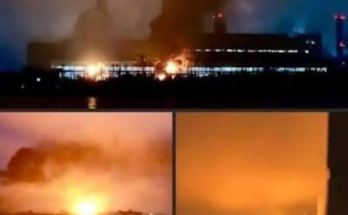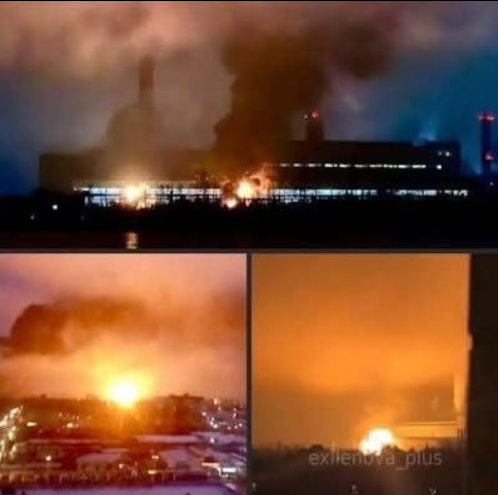
BREAKING NEWS: “Maximum Worldwide Alert — The War Begins” — What Is Really Happening?
A dramatic headline reading “BREAKING NEWS. Maximum worldwide alert. The war begins… See more” is circulating across social media, immediately creating the impression that a completely new global war has just erupted.
The wording is designed to sound urgent and frightening. However, the headline itself does not identify which countries are supposedly involved, what happened, or what “maximum worldwide alert” actually means. Searches for the exact phrase show that it has circulated repeatedly on social-media pages for months, including posts from June and July 2026, which strongly suggests that the wording is being recycled rather than representing a newly issued worldwide emergency alert.
That does not mean there is no serious conflict happening in the world. There are major and dangerous conflicts underway. But it is important to separate those verified developments from sensational social-media language.
A serious international situation is unfolding
As of September 7, 2026, the most significant current escalation involves the continuing conflict between the United States and Iran.
Reuters reports that tensions have intensified following fresh military confrontations. Iran has warned that American energy infrastructure across the Gulf could be vulnerable to retaliation, while fighting has affected oil shipments and raised concerns about the Strait of Hormuz, one of the world’s most important energy corridors.
That is a serious international development.
It can affect military forces, shipping, energy markets and governments far beyond the immediate battlefield.
But describing this situation as proof that “the whole world is now at war” would go beyond what the evidence establishes.
Why the phrase “maximum worldwide alert” is misleading
The words “maximum worldwide alert” sound as though an official international organization has announced a universal emergency.
But the viral posts located in the search results do not provide evidence of such an official declaration.
Instead, the exact wording appears repeatedly on Facebook and other social-media posts. One Facebook result dates the phrase to June 24, while another uses essentially the same wording in July.
This is an important clue.
If a headline remains unchanged while being reposted for months, readers should be suspicious of claims that it represents a brand-new event.
True breaking news changes as events develop.
Viral clickbait often doesn’t.
The Strait of Hormuz is a major concern
One of the most important developments right now involves the Strait of Hormuz.
The narrow waterway connects the Persian Gulf with the Gulf of Oman and is critical to global energy transportation.
Reuters reports that Iran is planning a new restricted zone in the Gulf, while U.S. forces and Iranian forces remain involved in military confrontations. The conflict has already disrupted energy flows and increased pressure on global fuel markets.
The consequences can therefore extend far beyond the Middle East.
When oil transportation is disrupted, energy prices can rise.
When energy prices rise, transportation and manufacturing costs can increase.
Those costs can eventually affect consumers.
That is why governments around the world are watching the situation closely.
Oil prices are already responding
The international energy market is reacting to the worsening situation.
Reuters reported on September 7 that oil prices had climbed to six-week highs as the conflict intensified. Brent crude reached about $97 per barrel, while U.S. West Texas Intermediate moved above $92.
Analysts are concerned that further attacks on shipping could create even greater disruptions.
This is one reason the conflict matters internationally.
A regional war does not need to become a literal world war to have global consequences.
Modern economies are interconnected.
Fuel, shipping, food production, manufacturing and transportation all depend on stable international supply chains.
The UAE is preparing for disruption
The United Arab Emirates is also taking steps to reduce its vulnerability.
Reuters reported that the UAE is developing alternative routes for energy exports and trade because of concerns that the ongoing conflict could interfere with transportation through the Strait of Hormuz.
That is significant because it shows governments are preparing for the possibility that the conflict could continue affecting commerce.
But again, preparation does not automatically mean that a global war has been declared.
Countries routinely prepare for different scenarios during periods of heightened tension.
Israel and Lebanon are also experiencing escalation
The wider Middle East situation is not limited to the United States and Iran.
The Associated Press reported that Israeli airstrikes on the Lebanese village of Kfar Rumman killed at least 12 civilians, including two children, amid continuing clashes involving Iran-backed Hezbollah.
Other developments have occurred in Yemen and around the Gulf.
The accumulation of these events explains why international observers are deeply concerned.
Several interconnected conflicts and military confrontations are occurring simultaneously.
But calling every escalation part of a single officially declared “world war” would oversimplify a complicated situation.
Ukraine remains another major conflict
The world is also continuing to watch the war between Russia and Ukraine.
On September 7, U.S. envoys Steve Witkoff and Jared Kushner left Kyiv following discussions aimed at finding a path toward ending the conflict. According to reporting from The Guardian, the meetings did not produce a breakthrough, although discussions concerning air defense and future negotiations continued.
Ukraine and Russia remain locked in a serious war, with continued attacks involving drones, missiles and other weapons.
That conflict is separate from the U.S.-Iran confrontation, even though geopolitical relationships connect many of the countries involved.
This distinction is important when reading posts suggesting that several conflicts have suddenly merged into one worldwide war.
Fear spreads faster than facts
The phrase “The war begins” is particularly effective because it triggers fear.
A reader might immediately wonder:
Is my country involved?
Are flights being canceled?
Should people prepare for an emergency?
Is the military being mobilized?
Are nuclear weapons involved?
Those are serious questions.
But social-media headlines frequently provide none of the answers.
Instead, they use suspense:
“See more.”
The reader is encouraged to click before receiving the essential information.
This is one of the oldest techniques used in viral content.
What should readers do?
When you encounter a headline claiming that a massive international emergency has begun, take a moment to verify it.
Look for reports from multiple established news organizations.
Check official government announcements.
Look for statements from international organizations.
Pay attention to the date.
And most importantly, identify exactly what has happened.
If the headline does not tell you who attacked whom, where the incident occurred, when it happened, and which authorities confirmed it, there may not be enough information to support the dramatic claim.
Don’t confuse “war” with “world war”
This distinction is especially important.
There are currently serious wars and military conflicts around the world.
But a world war generally refers to a conflict involving many major powers and multiple theaters of warfare.
A dangerous regional conflict can have worldwide consequences without becoming a world war.
That is essentially what makes the current situation so concerning.
The fighting in the Middle East is already affecting energy markets, international shipping and diplomatic relations. Reuters has reported that the UAE is building alternative trade routes, while global oil prices have risen amid concerns over the Strait of Hormuz.
Those developments deserve serious attention.
They do not require exaggerated headlines to make them important.
The real story is serious enough
There is no need to manufacture a fictional “maximum worldwide alert” to make current events sound frightening.
The verified developments are already significant.
The United States and Iran remain involved in a dangerous confrontation.
Iran has threatened further retaliation.
The Strait of Hormuz is under increasing pressure.
Energy markets are reacting.
Gulf countries are preparing alternative trade routes.
Israel and Hezbollah remain involved in violence.
And the Russia-Ukraine war continues.
These are real events with real consequences.
Final thoughts
The viral headline “BREAKING NEWS. Maximum worldwide alert. The war begins…” should therefore be approached carefully.
The exact phrase has been repeatedly circulated online, including months before today, making it unreliable as evidence of a newly declared worldwide emergency.
At the same time, the underlying international situation is genuinely serious.
The ongoing U.S.-Iran conflict is creating military, economic and diplomatic consequences far beyond the immediate region. Oil prices have risen, shipping through the Strait of Hormuz has been disrupted, and governments are preparing for further instability.
So the responsible conclusion is neither “nothing is happening” nor “World War III has officially begun.”
The reality is more complicated.
Major conflicts are underway, international tensions are extremely high, and the situation deserves close attention—but a sensational social-media headline should not be treated as an official worldwide alert.
Before sharing a post that says “The war begins,” check the date, identify the source and find out exactly what has been confirmed.