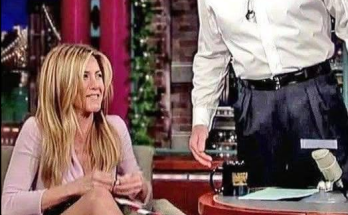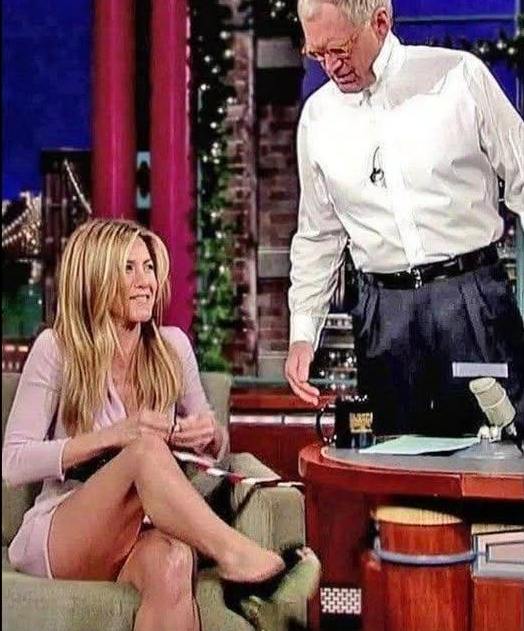
“The Photo Is Not Manipulated.” Look Closer Before You Believe What You See
Every day, thousands of photographs appear online with captions designed to make us stop scrolling.
“The photo is not manipulated.”
“Look closer.”
“You won’t believe what you’ll see in the first comment.”
These phrases are incredibly effective because they create a mystery before the viewer has even examined the picture. Instead of simply looking at a photograph, you’re immediately encouraged to search for something hidden.
Maybe there’s an unusual reflection.
Maybe two objects appear to merge into one.
Maybe someone in the background seems to be doing something impossible.
Or perhaps the photograph captures a perfectly ordinary moment that looks extraordinary because of perspective.
That’s the fascinating thing about visual illusions: sometimes nothing has been digitally changed at all. Your eyes simply interpret the scene differently from what is actually happening.
Your Eyes Can Trick You
Human vision is remarkably sophisticated, but it isn’t perfect.
When you look at a photograph, your brain doesn’t process every single detail independently. It quickly tries to understand the entire scene.
It identifies people, objects, shapes, colors, distances, and relationships between things.
Usually, this works beautifully.
But occasionally, two unrelated objects line up in precisely the right way, creating an illusion that makes the photograph appear impossible.
A person’s head might seem to belong to someone else’s body.
An object in the background might appear to be floating.
A reflection might look like another person.
A shadow can appear to have a completely different shape from the object creating it.
Nothing needs to be edited.
The camera simply captured a strange moment from a particular angle.
The Power of Perspective
Perspective is one of the most common explanations behind photographs that look manipulated.
Imagine someone standing several feet behind another person.
If the camera is positioned correctly, the person in the background might appear to be sitting on the first person’s shoulders.
Move the camera slightly to the left, and the illusion disappears.
Move it slightly to the right, and the objects separate visually.
Photography freezes one particular viewpoint.
Our brains normally use movement and changing perspectives to understand three-dimensional space. A still image removes that information.
As a result, a photograph can make two objects that are physically separated appear connected.
That’s why looking at the image carefully — rather than immediately accepting the caption — can be so rewarding.
Reflections Create Another Layer of Confusion
Mirrors, windows, polished surfaces, and bodies of water can create some of the most convincing visual puzzles.
A reflection doesn’t always appear where viewers expect it to be.
Depending on the angle of the camera and the reflective surface, something behind the photographer can appear inside the frame.
This can create the impression that an object exists in two places simultaneously.
A person reflected in a window might initially appear to be standing inside a building.
A reflection in water might make the landscape seem upside down.
A shiny vehicle can reflect people and buildings in ways that are difficult to interpret at first glance.
The photograph isn’t necessarily fake.
It’s simply showing information from a perspective our brains aren’t immediately prepared to decode.
Shadows Can Tell a Different Story
Shadows are another major source of optical illusions.
A long shadow can make a small object appear enormous.
A person standing near an unusual light source can appear to have an oddly shaped silhouette.
Two shadows can overlap and create what looks like one strange figure.
And when sunlight comes from a low angle, familiar objects can cast dramatically distorted shadows.
The brain tends to assume that a shadow corresponds directly to the shape of the object producing it.
When that assumption fails, confusion follows.
That’s when someone looks at a picture and thinks:
“Wait… what am I looking at?”
Why Viral Captions Work
The wording of a viral post is often just as important as the photograph itself.
Consider the difference between:
“Interesting optical illusion.”
and:
“THE PHOTO IS NOT MANIPULATED. LOOK CLOSER. YOU WON’T BELIEVE WHAT YOU SEE.”
The second version creates suspense.
It tells you that something extraordinary is hiding inside the image.
It also challenges you.
Now you aren’t simply looking at a photograph. You’re trying to solve a puzzle.
This psychological trick encourages people to zoom in, read comments, tag friends, and share the post.
That’s one reason seemingly simple photographs can generate enormous engagement.
The “First Comment” Trick
Another common feature of viral posts is the promise that the explanation is hidden in the comments.
“See the first comment.”
This encourages users to interact with the post.
People become curious.
They open the comments.
They search for an explanation.
They tag friends.
And sometimes they share the post before they’ve even discovered whether the claim is accurate.
The technique isn’t unique to photographs. Similar captions appear with riddles, celebrity rumors, emotional stories, and supposed breaking news.
The lesson is simple:
A caption can influence how you interpret an image before you’ve actually examined it.
Look Before You Decide
When you encounter a photograph that appears impossible, take a moment to analyze it.
Start with the edges.
Look at the background.
Then examine where objects overlap.
Ask yourself where the light is coming from.
Look for shadows.
Check reflections.
Pay attention to perspective.
And most importantly, ask whether two separate objects might simply be aligned in an unusual way.
Sometimes the explanation is hiding in plain sight.
The object that looks strange may actually belong to something completely ordinary nearby.
Don’t Automatically Trust “Unedited”
There’s another important lesson.
A caption claiming that a photograph is “not manipulated” doesn’t prove that it isn’t.
Anyone can write those words.
A trustworthy conclusion requires evidence.
Modern image-editing software can make extremely convincing alterations. Artificial intelligence can also generate or modify photographs that look realistic at first glance.
That doesn’t mean every unusual photograph is fake.
It means viewers should avoid two extremes:
“It looks impossible, so it must be fake.”
and
“The caption says it’s real, so it must be real.”
Neither assumption is reliable.
The best approach is curiosity combined with skepticism.
Sometimes Reality Is Stranger Than Editing
One reason optical-illusion photographs remain so popular is that real life can produce moments that look more unbelievable than anything a computer could create.
A bird can fly directly across a photograph at precisely the right moment.
A person can jump while another person appears to hold them in the air.
A reflection can create an unexpected duplicate.
A cloud can resemble a recognizable object.
A perfectly timed photograph can capture an extraordinary coincidence that lasts for only a fraction of a second.
The photographer may have done nothing except press the shutter at exactly the right moment.
That’s what makes some photographs so fascinating.
They don’t require special effects.
They require timing.
The Beauty of Looking Twice
Perhaps the greatest lesson behind these viral photographs is surprisingly simple:
Slow down and look again.
We’re living in an age of endless images.
We scroll past hundreds of photographs every day.
Our brains become accustomed to processing information quickly.
But occasionally, a picture deserves more than one glance.
Look at it from the top.
Then the bottom.
Follow the lines.
Examine the shadows.
Check the reflections.
Notice what’s happening in the background.
You may discover that the thing that initially looked shocking has a perfectly ordinary explanation.
Or you may find something even more fascinating.
A genuine coincidence.
A remarkable moment.
A visual trick created entirely by perspective.
The Final Reveal
The next time you see a caption promising that a photograph is “not manipulated” and challenging you to look closer, don’t immediately believe the hype.
Instead, treat the image like a puzzle.
Take your time.
Examine every corner.
Question your first impression.
And remember that photographs don’t always show reality in the way our brains expect.
Sometimes the image is fake.
Sometimes it has been edited.
But sometimes — and this is what makes photography so fascinating — the camera really did capture exactly what you’re seeing.
No Photoshop.
No special effects.
No elaborate trick.
Just an extraordinary combination of timing, perspective, light, and human perception.
And occasionally, the strangest thing in the photograph isn’t what you’re looking at.
It’s the fact that you didn’t notice it the first time.