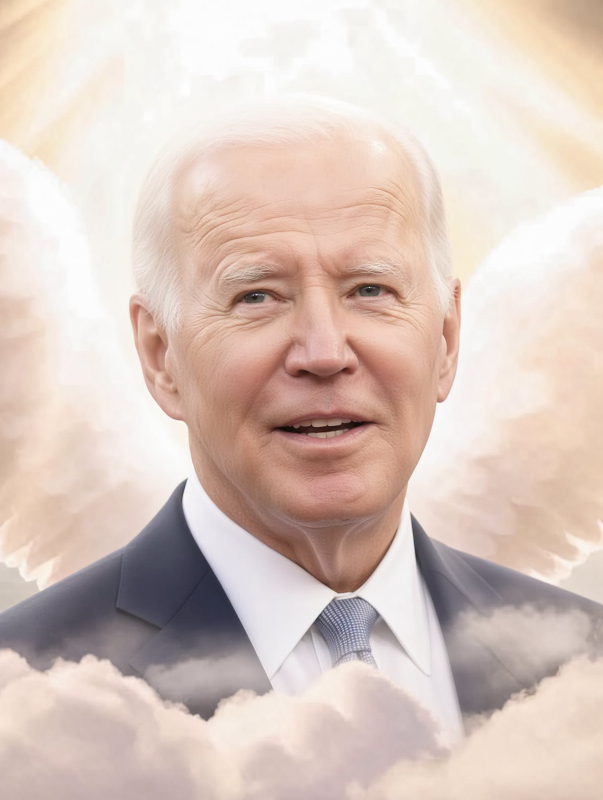
Farewell to a Legend: Joe Biden and the End of an Era
There are moments in political history when a chapter closes so quietly that people do not immediately recognize its significance. Then, years later, they look back and realize they were witnessing the end of an era. For Joe Biden, the conclusion of his presidency represented one of those moments.
After more than five decades in American public life, Biden became one of the most recognizable figures in modern American politics. His journey from a young senator to vice president and ultimately president was marked by extraordinary victories, painful personal losses, political battles, changing national moods, and an enduring determination to remain in public service.
Calling Biden a “legend” is ultimately a matter of perspective. Political supporters and critics have sharply disagreed about his record, his policies, and his leadership. Yet few could deny the extraordinary length and significance of his career.
Biden entered the United States Senate in 1973, beginning a political career that would span generations. At the time, America was a very different country. The internet did not exist as we know it today, social media was unimaginable, and political communication depended largely on newspapers and television. Over the decades, Biden witnessed enormous changes in American society and remained a participant in national politics throughout them.
His career was also shaped by tragedy. Biden experienced devastating personal losses that became an important part of the story he told about himself. Those experiences influenced the way he spoke about grief, family, resilience, and the responsibilities of public service.
For many Americans, that personal history helped create an image of Biden as a politician who understood sorrow not merely as an abstract concept but as something deeply personal.
His eight years as vice president under Barack Obama elevated him onto the international stage. Serving alongside Obama, Biden became involved in major domestic and foreign-policy decisions while developing a public identity of his own. The Obama-Biden years eventually became one of the defining political partnerships of the early twenty-first century.
But Biden’s political story was far from over.
In 2020, after a deeply divided and turbulent election campaign, Biden defeated Donald Trump and became the 46th president of the United States. His inauguration in January 2021 came at a particularly difficult moment in American history, following a bitter election, intense political divisions, and the devastating COVID-19 pandemic.
Biden entered office promising to restore stability and unity. His administration focused on pandemic recovery, infrastructure, manufacturing, climate policy, healthcare, international alliances, and other major priorities.
His presidency also faced enormous challenges.
Inflation became a major concern for American families. Immigration and border security became intensely controversial political issues. The chaotic withdrawal of American forces from Afghanistan generated fierce criticism. Russia’s invasion of Ukraine created another major international crisis, while tensions involving China and other global powers required difficult decisions.
At home, Biden’s administration pursued major legislation, including the bipartisan infrastructure law and measures designed to encourage investment in American manufacturing and technology. Supporters argued that these policies would strengthen the country’s economic foundations. Critics questioned their costs, effectiveness, and broader consequences.
Like virtually every modern president, Biden left office with a record that inspires both praise and criticism.
But beyond individual policies, perhaps the most important part of his story is the extraordinary length of his journey.
Imagine entering the Senate in the early 1970s and eventually becoming president decades later. Biden’s political career stretched across the presidencies of Richard Nixon, Gerald Ford, Jimmy Carter, Ronald Reagan, George H. W. Bush, Bill Clinton, George W. Bush, Barack Obama, Donald Trump, and his own administration.
Few American politicians have witnessed so much history from such a close distance.
His final years in the White House also brought renewed discussions about age and leadership. Biden became the oldest president in American history, and questions about his age and fitness for office became central to political debate. His defenders pointed to his decades of experience, while critics argued that the demands of the presidency required a younger leader.
Eventually, Biden’s political future became the subject of intense national attention, particularly as the 2024 election approached.
Whatever one’s political views, the end of Biden’s presidency marked the conclusion of an unusual political journey.
A farewell to Biden, therefore, does not have to mean a farewell caused by death. It can instead mean farewell to a presidency, farewell to a particular chapter of American politics, and farewell to a generation of leadership.
History will ultimately determine how Biden’s presidency is remembered.
Some will remember him as the president who helped guide America out of the pandemic-era crisis and invested heavily in infrastructure and domestic industry. Others will remember inflation, immigration controversies, foreign-policy challenges, and the political divisions that continued throughout his administration.
Both perspectives will become part of the historical record.
Perhaps the most human way to view Biden’s career is to remember that behind the political arguments was an individual who spent an extraordinary portion of his life serving in public office.
Politics can make people into symbols. Supporters see heroes; opponents see villains. Campaigns reduce complicated careers to slogans, advertisements, and viral moments. But a political life lasting more than half a century cannot easily be summarized in a single sentence.
Joe Biden’s story contains ambition, resilience, triumph, controversy, grief, family, failure, recovery, and perseverance.
That is why a farewell to his political era can be both reflective and respectful without pretending that something happened that did not.
The years ahead will provide greater distance from his presidency. Historians will examine his decisions with records, statistics, interviews, and hindsight. Americans will continue debating which achievements mattered most and which mistakes carried the greatest consequences.
Eventually, the political noise surrounding his administration will fade.
What will remain is the record of a man who entered national politics in another age and remained there long enough to become part of several generations of American history.
Joe Biden’s political journey is therefore more than a story about one presidency. It is a story about endurance.
It is a reminder that political careers can last far longer than expected, that public service can take unexpected turns, and that history is often made by people who simply continue moving forward through periods of extraordinary change.
Whatever judgment history ultimately delivers, Joe Biden’s place in American political history is already secure.
His presidency was one chapter. His decades of public service were the larger story.
And as one political era gives way to another, the appropriate farewell is not a fabricated goodbye to a life, but a genuine acknowledgment of a remarkable career.
For supporters, it may be a farewell filled with gratitude.
For critics, it may be a moment for reflection and evaluation.
For historians, it is another chapter to study.
And for the American public, it is an opportunity to look beyond the headlines and remember the extraordinary journey of a man who spent more than half a century at the center of the nation’s political life.
