There are some actors whose names become bigger than the characters they play. Their performances become part of the cultural memory of generations, their voices become instantly recognizable, and their presence on screen carries a weight that few performers ever achieve. Denzel Washington is one of those rare artists.
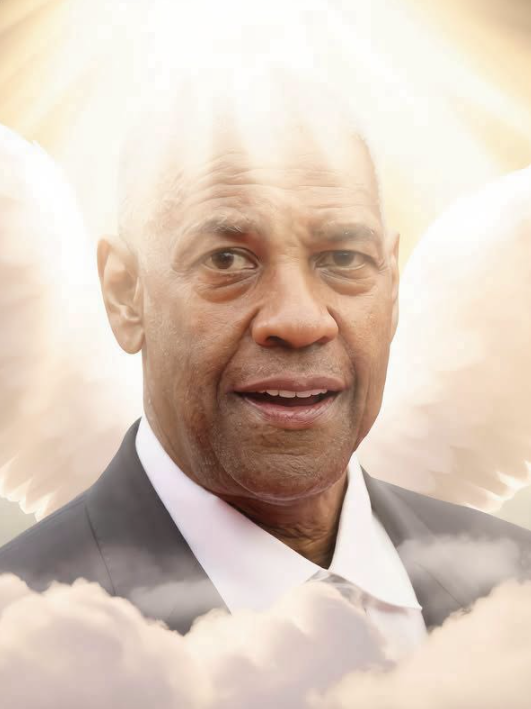
At a time when social media can turn an unverified rumor into apparent “breaking news” within minutes, it is important to separate a tribute from a false obituary. Recent online claims suggesting that Denzel Washington has died are not supported by credible reporting. Current sources continue to identify Washington as alive at 71, while reports circulating about his supposed death have been described as a hoax.
But the fact that the rumor is false does not make the desire to celebrate his life and career any less meaningful. If anything, it offers an opportunity to pause and appreciate the remarkable legacy of an actor who has spent decades demonstrating what extraordinary talent, discipline, and perseverance can accomplish.
Denzel Hayes Washington Jr. was born on December 28, 1954, in Mount Vernon, New York. His journey into acting eventually took him from the stage to television and then to some of the most important films in modern American cinema. His career has included acting, directing, and producing, allowing him to influence the entertainment industry in several different ways.
For many audiences, Washington became synonymous with powerful performances. He has portrayed soldiers, detectives, lawyers, athletes, leaders, fathers, criminals, mentors, and deeply complicated men. Yet despite the variety of his roles, there has always been something recognizable about his performances: intensity.
Washington has a way of commanding attention without needing to exaggerate. A look, a pause, a change in his voice, or a single sentence can transform the atmosphere of an entire scene. That ability is one of the reasons his work has remained relevant for so many years.
His performances in films such as “Malcolm X,” “Training Day,” “Philadelphia,” “Glory,” “Remember the Titans,” “The Hurricane,” and “Fences” helped establish him as one of the defining actors of his generation. Each role revealed a different dimension of his abilities.
“Malcolm X” demonstrated the extraordinary demands of portraying a historical figure whose life contained enormous transformation and controversy. Washington’s performance earned widespread acclaim and remains one of the most celebrated portrayals of a real person in American film.
Then came “Training Day,” where Washington demonstrated that he could completely alter the audience’s expectations of him. His portrayal of Alonzo Harris was charismatic, frightening, manipulative, and unforgettable. The role earned him the Academy Award for Best Actor and became another landmark in his career.
But Washington’s legacy cannot be measured only by awards.
Awards are important because they recognize achievement, but the deeper measure of an actor’s impact is what audiences remember years later. People remember lines, scenes, characters, emotions, and the feeling they experienced while watching a performance. Washington has created many of those lasting memories.
His influence also extends beyond acting.
Washington has directed films and taken an active role behind the camera, demonstrating that his artistic ambitions were never limited to performing someone else’s words. His work as a filmmaker showed an interest in stories about family, identity, responsibility, history, and human struggle.
One of the most important aspects of Washington’s career has been his longevity. The entertainment industry is notoriously difficult, and maintaining a successful career for several decades requires more than talent. It requires adaptability, professionalism, resilience, and the ability to continue finding meaningful challenges.
Washington has managed to remain relevant while generations of actors have entered and left Hollywood.
His career also represents something larger for audiences who have followed the changing landscape of American cinema. Washington became one of the most prominent Black actors of his generation at a time when opportunities for Black performers were considerably more limited than they are today.
Rather than allowing stereotypes or industry limitations to define his career, he built a body of work based on complexity. His characters could be heroic, flawed, angry, compassionate, ambitious, frightened, brilliant, or morally conflicted.
That complexity helped expand expectations of what a leading man could be.
It also inspired countless younger performers.
Actors who came after Washington have frequently spoken about the importance of seeing someone like him succeed at the highest levels of the industry. His career demonstrated that excellence could create opportunities where opportunities did not previously exist.
Yet perhaps the most enduring part of Washington’s legacy is not a particular movie.
It is the standard.
He has represented a level of seriousness about the craft of acting that audiences recognize immediately. He approaches characters as people rather than simply as opportunities for dramatic moments. Even when his performances are larger than life, there is usually a human center underneath them.
That is what makes his work endure.
Today, at 71, Washington’s career remains a remarkable example of artistic longevity. Current sources continue to list him as living, and there is no credible basis for announcing his death.
That distinction matters because celebrity death hoaxes can cause genuine distress. Fans may see a dramatic headline, an “RIP” image, or a social-media post claiming that a beloved performer has died and immediately believe it. Before sharing such information, it is always wise to check established news organizations and official representatives.
Instead of saying farewell to Denzel Washington, perhaps the better message today is thank you.
Thank you for the characters that made audiences think.
Thank you for the performances that made people cry, laugh, question themselves, or reconsider the world around them.
Thank you for proving that an actor can remain powerful without constantly chasing attention.
And thank you for building a career that has influenced generations.
Legends are not created by a single movie. They are built over time, through hundreds of choices, performances, risks, successes, failures, and moments of perseverance.
Denzel Washington’s career is a testament to that idea.
So, rather than mourning a man who is still with us, this is an opportunity to celebrate him while he is here. His story is not a finished obituary. It is an ongoing legacy.
And when future generations look back at the great performers of American cinema, Denzel Washington’s name will undoubtedly remain among them—not because of a viral rumor, but because of decades of work that earned a permanent place in film history.