Dolly Parton: From the Mountains of Tennessee to the Heart of the World
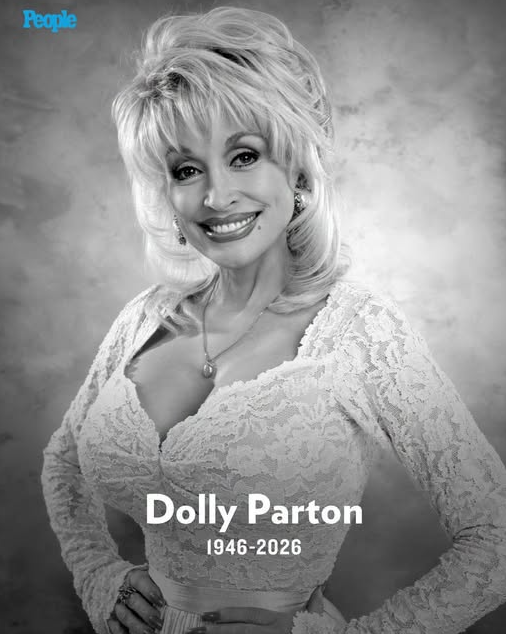
Dolly Parton’s story is one of the most remarkable journeys in American entertainment. She was born into a large, hardworking family in the mountains of East Tennessee, where money was scarce but love, music, faith, and family were abundant. From those humble beginnings, she built a career that transformed her into the “Queen of Country” music, a celebrated songwriter, actress, entrepreneur, philanthropist, and one of the most recognizable personalities in the world.
Her story is more than a tale of fame and fortune. It is a reminder that extraordinary dreams can emerge from the most ordinary circumstances.
Parton grew up in Sevier County, Tennessee, in a family with twelve children. Her parents worked hard to provide for their children, but the family had very little financially. Their home was small, and life in the Great Smoky Mountains was not easy.
Yet Parton has consistently spoken about her childhood with warmth rather than bitterness.
The family may not have had much money, but they had something she considered priceless: each other.
Music was an important part of that environment. Songs were part of family life, and Parton discovered early that music could express emotions that ordinary conversation sometimes could not.
She began writing songs while still very young.
Even as a child, she understood that songwriting could become more than a hobby. It could become a way of telling stories.
Those early experiences eventually shaped the songwriter she would become.
After finishing school, Parton moved to Nashville, Tennessee, determined to pursue music professionally. Nashville was already the center of country music, but success was not guaranteed. She had to work, perform, write, and wait for opportunities.
Her breakthrough came when country singer Porter Wagoner invited her to join his television program and musical partnership.
The opportunity introduced Parton to a much larger audience. Her distinctive voice, songwriting ability, personality, and appearance quickly made her stand out.
But Parton wanted more than simply becoming known as another country singer.
She wanted control over her own music and creative identity.
That determination became one of the defining characteristics of her career.
She wrote songs that became classics, including “Jolene” and “I Will Always Love You.” The latter became one of the most famous songs ever written, gaining another enormous wave of popularity when Whitney Houston recorded it for the film The Bodyguard.
The success of those songs demonstrated Parton’s extraordinary ability to turn personal emotions into universal stories.
“Jolene” was a song about fear, jealousy, vulnerability, and desperation.
“I Will Always Love You” was about love and letting go.
The themes were deeply personal, yet millions of listeners could recognize themselves in them.
That is the magic of a great songwriter.
Parton eventually became one of the most successful artists in country music, but her ambitions expanded beyond recording studios and concert stages.
She entered Hollywood and proved that her talents extended to acting.
Her performance in 9 to 5 introduced her to audiences who may not have previously followed country music. The movie became a major success, and Parton contributed the title song, which became another signature hit.
She continued appearing in films such as The Best Little Whorehouse in Texas, Steel Magnolias, and Rhinestone.
Her acting career demonstrated another side of her personality: humor.
Parton possessed a remarkable ability to laugh at herself while simultaneously maintaining tremendous confidence. Her famous style, quick wit, and unmistakable voice became part of her public identity.
But beneath the glamorous costumes and larger-than-life personality was a woman who remained deeply connected to her roots.
That connection became particularly meaningful through her philanthropic work.
One of Parton’s most celebrated achievements is the Dolly Parton’s Imagination Library, a literacy program that provides free books to young children.
The program began in her home state of Tennessee and eventually expanded far beyond it.
The idea reflected something fundamental about Parton’s own childhood: books and education could open doors to worlds beyond the circumstances in which someone was born.
She understood what it meant to grow up without financial advantages.
Rather than allowing that experience to become simply a chapter in her personal history, she used it to help children and families.
Her generosity has become an important part of her legacy.
Parton has also supported educational initiatives, disaster relief, medical research, and communities in need.
One of her most notable contributions came during the COVID-19 pandemic, when she donated $1 million toward vaccine research at Vanderbilt University Medical Center.
The gesture was another example of how she has repeatedly used her wealth and influence to support causes she believes can improve people’s lives.
Yet Dolly Parton’s legacy cannot be reduced to philanthropy.
She is also an extraordinary businesswoman.
She helped create Dollywood, the popular theme park in the Smoky Mountains of Tennessee. The park became both a major tourist attraction and a celebration of the culture and traditions of the region where Parton grew up.
In many ways, Dollywood represents the journey of Dolly Parton herself.
It connects the world of her childhood with the enormous success she achieved later in life.
The mountains that once represented a place of limited opportunity became the setting for one of her greatest business achievements.
Parton has never seemed embarrassed by her humble beginnings.
Instead, she has embraced them.
She has spoken openly about poverty, family struggles, hard work, and ambition.
Her message has often been simple: where you begin does not have to determine where you end.
That message has resonated far beyond country music.
People who know little about Nashville or country music still recognize Dolly Parton.
She has become a global cultural figure.
Her music has crossed generations. Her songs have been recorded by artists from different genres. Her films remain popular. Her personality has become instantly recognizable.
And her sense of humor has made her unusually approachable for someone who has achieved such enormous fame.
Perhaps one of the most enduring qualities of Parton’s public image is her refusal to take herself too seriously.
She has frequently joked about her appearance, her glamorous clothing, and the stereotypes surrounding her.
But behind the humor is a sharp understanding of who she is.
She knows her image.
She knows her audience.
And she knows how to turn expectations into opportunities.
That combination of intelligence, talent, confidence, and humor has helped her remain relevant for decades.
Dolly Parton’s influence is also visible in the artists who followed her.
She helped demonstrate that women in country music could be successful songwriters, performers, business leaders, and creative decision-makers.
Her career challenged the idea that an artist had to fit neatly into one category.
She could be a country singer, pop songwriter, actress, entrepreneur, television personality, and philanthropist—all while remaining unmistakably Dolly.
That authenticity may be the secret behind her longevity.
People do not simply admire Dolly Parton because she is famous.
They admire the story behind the fame.
They see a girl from the Tennessee mountains who dreamed of something bigger.
They see someone who worked relentlessly to turn those dreams into reality.
They see someone who achieved enormous wealth but continued talking about family, kindness, education, and helping others.
And they see someone who never completely abandoned the identity of the little girl who grew up surrounded by mountains and music.
That is why Dolly Parton’s story feels almost larger than life.
It is not simply the story of a country singer.
It is the story of perseverance.
It is the story of creativity.
It is the story of ambition meeting opportunity.
Most importantly, it is the story of remembering where you came from.
For many people, Dolly Parton has become a symbol of hope—the idea that poverty does not have to determine your destiny and that success can be used to lift others.
Her songs will continue to be performed.
Her movies will continue to entertain new audiences.
Her books will continue reaching children.
And the institutions she helped build will continue reflecting the values she has promoted throughout her life.
A person does not need to be born into wealth or privilege to leave a lasting mark on the world.
Dolly Parton’s life demonstrates that talent can emerge from humble surroundings, that determination can overcome obstacles, and that generosity can make success mean something more.
From a small home in the mountains of East Tennessee to some of the biggest stages in the world, Dolly Parton has created a legacy few entertainers could ever match.
She became the “Queen of Country,” but her influence ultimately reached far beyond country music.
She became a storyteller, an actress, a businesswoman, a philanthropist, and an inspiration.
And perhaps that is the greatest lesson of her remarkable journey.
You can come from very little and still dream enormously.
You can become successful without forgetting your roots.
And you can turn your own struggles into opportunities to help someone else.
That is the enduring legacy of Dolly Parton—a woman whose voice became famous around the world, but whose greatest contribution may be the kindness, hope, and possibility she continues to represent.
Her story is not merely one of fame.
It is a story about what can happen when talent meets determination, when dreams survive hardship, and when success is shared with others.
And that is why Dolly Parton remains not only a country music legend, but an American cultural icon whose story continues to inspire generations.