Plane Crash Claims: What We Know, What We Don’t, and Why Viral Posts Need Verification
A dramatic headline claiming that a plane carrying more than 244 people has “just crashed” can spread across social media within minutes. Such reports are understandably frightening, particularly when they suggest that hundreds of passengers may be involved. But when a story is presented without a confirmed airline, flight number, location, date, or official statement, it is important to pause before treating the claim as fact.
Aviation emergencies are among the most closely monitored events in the world. When a large passenger aircraft is involved in a serious accident, information usually begins appearing through multiple independent channels, including aviation authorities, emergency services, airports, airlines, and reputable news organizations. Early reports can still be incomplete or contradictory, but major details are generally confirmed as authorities begin responding.
The phrase “more than 244 onboard” is particularly striking because passenger numbers can vary significantly depending on the aircraft, airline configuration, crew requirements, and route. A headline that gives a precise number while providing no identifiable flight information should therefore be approached carefully.
Why the First Reports Can Be Confusing
In the immediate aftermath of an aviation incident, information often develops rapidly. A report may initially describe an aircraft as missing, overdue, diverted, experiencing technical difficulties, or involved in an emergency. Social media users may then transform that information into a much more dramatic claim.
For example, an aircraft making an emergency landing can be incorrectly described online as having crashed. An aircraft experiencing turbulence can become the subject of posts claiming it “nearly went down.” Old photographs can also be reposted alongside new claims, creating the impression that the images show a current disaster.
This is why responsible reporting requires more than simply repeating a viral headline.
The first questions should be straightforward: Which aircraft is involved? What airline operates it? What is the flight number? Where did the incident occur? When did it happen? Which authority has confirmed the event?
Without answers to those questions, there is not enough information to establish that the reported crash actually occurred.
Passenger Numbers Matter
When a report claims that an aircraft had more than 244 people aboard, that number could include both passengers and crew. However, the exact total should come from an airline, aviation authority, airport, emergency agency, or another credible source.
Passenger manifests are particularly important following an accident because initial numbers can change. Airlines may first provide an approximate figure and later release a confirmed manifest. Authorities may also distinguish between passengers, pilots, cabin crew, and other personnel.
This is why responsible news organizations often use cautious language in the earliest stages of an emergency.
Instead of immediately declaring that hundreds of people have died, reputable reporting generally identifies what has actually been confirmed. That distinction matters enormously. An aircraft can be involved in a frightening incident without every person aboard being killed.
The Difference Between an Emergency and a Crash
Aviation terminology is also important.
An emergency can involve many situations, including mechanical problems, medical emergencies, severe weather, smoke warnings, engine issues, or problems with landing gear. Pilots are trained to respond to these circumstances, and emergency declarations do not automatically mean that an aircraft has crashed.
A crash, by contrast, involves the aircraft striking terrain, water, another aircraft, or an object in a way that constitutes an accident or serious incident.
Social media posts frequently blur these distinctions because dramatic wording attracts attention. A headline saying “PLANE IN EMERGENCY” may receive fewer clicks than “PLANE WITH 244 PEOPLE CRASHES.” Unfortunately, the more dramatic version may not be accurate.
Why Old Images Can Mislead
One of the most common problems during breaking news events is the reuse of old photographs and videos.
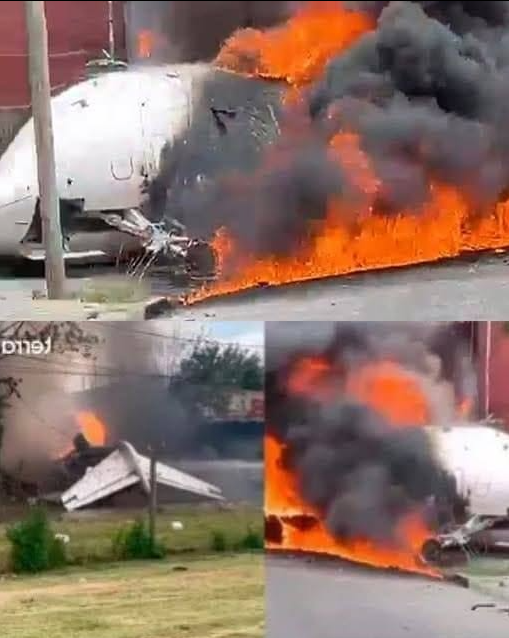
A picture of wreckage from an accident years ago can suddenly circulate again with a caption claiming it shows a crash that happened “right now.” Because aviation accidents often produce visually striking images, these photographs can receive thousands of shares before anyone checks their origin.
The same problem occurs with videos. A clip from a previous accident may be reposted as though it were live footage. Sometimes the video comes from another country or even another type of aircraft.
Readers should therefore avoid assuming that an image proves a current claim.
A reverse-image search, an examination of the original upload date, and comparison with reports from established news organizations can help determine whether visual material is genuine and current.
What Authorities Usually Do After a Major Accident
If a large passenger aircraft actually crashes, the response is normally extensive.
Emergency responders are dispatched to the scene. Firefighters, police officers, medical teams, airport authorities, and aviation investigators may become involved. Depending on the location, national transportation or aviation agencies may also send investigators.
The airline usually establishes communication with authorities and begins working to identify passengers and crew. Airports may activate emergency procedures, while officials may establish a command center to coordinate the response.
In the United States, the National Transportation Safety Board and Federal Aviation Administration may become involved in investigating serious aviation accidents and incidents. Other countries have their own aviation safety and accident-investigation organizations.
A major accident involving an aircraft carrying hundreds of people would therefore be expected to generate substantial official activity and reporting.
Why You Should Be Careful With “Breaking News” Posts
The words “RIGHT NOW,” “BREAKING,” and “SEE MORE” are commonly used to encourage people to click or share a post. They do not prove that the underlying claim is true.
Some viral posts deliberately use incomplete information to create curiosity. Others may be based on genuine events but exaggerate what happened. Still others recycle old stories because they continue to attract attention.
A particularly important warning sign is a headline that claims an enormous tragedy while withholding basic information.
If a post says an aircraft with more than 244 people has crashed but does not identify the airline, flight number, location, or credible source, readers should not immediately share it.
Instead, look for independent confirmation.
The Human Side of Aviation Emergencies
Behind every passenger number are individual people: families traveling for holidays, workers returning home, students beginning journeys, parents traveling with children, and crew members doing their jobs.
That is why accuracy matters so much.
False reports of mass casualties can cause genuine distress. Relatives may see a social media post and fear that someone they love was aboard the aircraft. People may begin calling family members, airlines, or authorities before reliable information is available.
Even when a crash is confirmed, early casualty figures should be treated carefully. Rescue operations may continue for hours, and officials may need time to establish accurate numbers.
Reporting responsibly means allowing authorities to do their work before declaring the worst.
What Readers Should Look For
Anyone encountering a claim about a major plane crash should check for several basic details.
First, identify the aircraft and airline.
Second, determine the flight number and route.
Third, establish the location and approximate time of the incident.
Fourth, look for confirmation from aviation authorities, emergency services, the airline, or multiple reputable news organizations.
Fifth, examine photographs and videos independently rather than assuming they are current.
Finally, pay attention to the difference between confirmed facts and speculation.
These simple steps can prevent misinformation from spreading.
A Story Still Needs Confirmation
A headline claiming that a plane carrying more than 244 people has “just crashed” is understandably alarming. But without verified information identifying the aircraft, location, operator, and official response, the claim should not be presented as an established fact.
Breaking-news situations develop quickly. Details may change as investigators and emergency responders establish what happened. The most responsible approach is therefore to report confirmed information while clearly labeling unverified claims as unconfirmed.
For readers, the lesson is equally important: do not let urgency replace verification.
A shocking headline may be only the beginning of a story, not proof of what happened. Before sharing a claim involving hundreds of lives, take a moment to check reliable sources and wait for confirmation.
In aviation emergencies, accuracy is more than a journalistic principle. It can protect families from unnecessary fear, prevent misinformation from spreading, and ensure that genuine tragedies are reported with the seriousness and respect they deserve.
Until the aircraft, flight, location, and passenger information are independently confirmed, the claim that a plane carrying more than 244 people has “just crashed” should be treated as unverified, rather than as established breaking news.