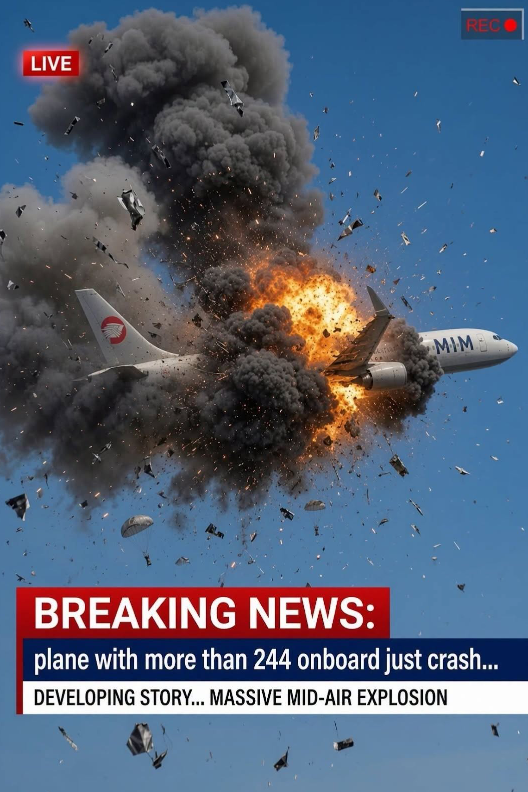
BREAKING NEWS: “Plane With More Than 244 Onboard Just Crashed” — What We Actually Know
A frightening headline claiming that a passenger plane carrying more than 244 people has “just crashed” is circulating online, prompting concern among readers and travelers. The wording is dramatic and suggests that a major aviation disaster has happened moments ago. However, there is currently no reliable confirmation that a new crash matching that description has occurred today, August 19, 2026.
That distinction is extremely important.
A search of current reporting shows that versions of the exact headline have been repeatedly published online throughout 2026. Similar posts appeared in February, June, July and August, often using almost identical language: “RIGHT NOW, PLANE WITH MORE THAN 244 ONBOARD JUST CRASH…” The repetition is a strong warning sign that readers should not automatically interpret the headline as a newly confirmed breaking-news event.
Why the Headline Is So Alarming
Few words can create more immediate fear than “plane crash.” Commercial aviation accidents involving large passenger aircraft are rare, but when they happen, they can generate worldwide attention within minutes.
A headline claiming that more than 244 people were aboard an aircraft therefore sounds like an enormous international emergency. Readers may immediately wonder where the aircraft crashed, which airline operated the flight, whether passengers survived and whether rescue operations are underway.
But the headline itself provides none of those essential details.
There is no clearly identified airline, flight number, airport, aircraft registration, destination or crash location in the viral wording. Those omissions matter. A genuine major aviation emergency would normally be accompanied by specific information from aviation authorities, airports, airlines, emergency services or established news organizations.
Instead, many versions of this headline use the phrase “See more”, encouraging users to click through before providing meaningful information.
That is a classic feature of click-driven viral content.
The Claim Has Appeared Repeatedly
The same or nearly identical headline has been appearing on low-credibility websites for months.
One February report specifically discussed the viral claim and warned that headlines describing a plane carrying more than 244 people as having crashed were spreading without verified information. Another publication similarly noted that the headline lacked the basic details required to establish that an actual disaster had occurred.
More versions appeared during the summer. One July article even acknowledged that there was no confirmed report matching the claim at the time it was published.
That pattern suggests that the headline is not necessarily reporting one newly developing accident. Instead, it appears to be a recycled viral headline, sometimes republished with different dates and additional dramatic language.
Could It Be Confusing a Real Aviation Disaster With an Older Story?
That is another possibility.
Some websites have connected the “244 onboard” wording to previous aviation disasters, while others have used unrelated aircraft accidents to create a sense of immediacy.
One particularly important example is the 2025 crash of Air India Flight 171, a Boeing 787-8 that crashed shortly after takeoff from Ahmedabad. Because the aircraft had more than 240 people aboard, references to “more than 244 onboard” can easily become mixed together with older aviation stories and recycled images.
This is why a photograph of wreckage or emergency responders should not automatically be treated as evidence of a crash occurring today.
Images can be copied from previous disasters and reposted with entirely different headlines.
What Would Happen After a Genuine Major Crash?
If a commercial aircraft carrying hundreds of people really crashed, the response would involve multiple agencies.
Emergency crews would normally be dispatched to the crash location. Firefighters, police, paramedics and aviation authorities would become involved. The airline would likely issue an emergency statement, while airports would provide information about the flight.
Depending on the country, national aviation authorities and accident investigators would also become involved.
In the United States, agencies such as the Federal Aviation Administration and National Transportation Safety Board can play important roles in aviation investigations. International incidents may involve the aviation authority and accident-investigation organization of the country where the accident occurred.
A major crash would therefore produce a large trail of independently verifiable information.
That is what makes the absence of specific confirmation significant.
Why “244” Gets Attention
The number itself may also contribute to the headline’s effectiveness.
An aircraft carrying approximately 244 passengers represents a large commercial flight. The Federal Aviation Administration has documentation showing that some aircraft configurations can accommodate roughly that number of passengers.
But the fact that an aircraft can carry around 244 passengers does not mean an aircraft with that exact number of passengers has crashed.
This is an important distinction that viral posts often blur.
A number can make a story sound precise without actually proving anything.
The Importance of Waiting for Confirmation
When people see a frightening aviation headline, the natural reaction is to share it with friends and family.
That can become a problem when the original claim is unverified.
A person might see the headline and immediately send it to someone who is traveling. Another person may repost it on Facebook or X. A third account might copy the same wording and publish it as its own “breaking news.”
Within a short period, hundreds of posts can appear to confirm one another even though they all originated from the same unverified claim.
This is known as the echo effect of social media.
Repetition does not equal confirmation.
Ten websites repeating the same unsupported statement do not necessarily provide ten independent sources.
What Readers Should Look For
Anyone encountering this headline should ask several basic questions.
What airline was involved?
What was the flight number?
Where did the crash happen?
When exactly did it happen?
Which airport did the plane depart from?
Where was it supposed to land?
Which authority confirmed the accident?
Are established news organizations independently reporting it?
If these questions cannot be answered, caution is warranted.
A legitimate breaking-news story may initially contain incomplete information, especially during the first few minutes of an emergency. But as time passes, credible reporting should normally begin identifying the aircraft, location and authorities involved.
Aviation Safety Remains Strong
It is also important not to let a viral headline create the impression that commercial flying has suddenly become unsafe.
The International Air Transport Association’s 2025 safety report showed that aviation accidents remain relatively uncommon compared with the enormous number of flights operated worldwide, even though several serious accidents contributed to an increase in fatalities that year.
Every serious accident is investigated because even a single preventable failure can provide important lessons for the industry.
Investigators examine aircraft maintenance, weather, crew decisions, air traffic control, airport conditions, mechanical systems and many other factors.
Those investigations can result in safety recommendations, changes to procedures and improvements in aircraft design.
The Human Cost of False Breaking News
There is also a human side to sensational aviation rumors.
Families who have relatives traveling by air can experience genuine panic when they encounter an alarming headline. A person may be unable to reach a loved one immediately because the traveler is in the air, has no phone service or has not yet turned on their device after landing.
A misleading headline can therefore cause unnecessary distress.
There is also a danger in using real photographs from previous disasters to illustrate false or recycled claims. Such images may involve victims, survivors and communities that have already experienced tremendous trauma.
Responsible reporting should avoid turning those tragedies into clickbait.
So, Did a Plane With More Than 244 People Just Crash?
Based on the information currently available, there is not enough credible evidence to confirm the viral claim as a new aviation disaster occurring today.
The exact wording has circulated repeatedly online during 2026, including on websites that themselves acknowledge the absence of official confirmation.
That means the safest conclusion is not to treat the headline as established fact.
Readers should wait for confirmation from credible aviation authorities, the airline involved and established news organizations before sharing the story as a real event.
Final Thoughts
The headline “Plane With More Than 244 Onboard Just Crashed” is deliberately written to create urgency and fear. It sounds like a developing catastrophe, but the evidence currently available does not establish that a new crash matching the headline has occurred today.
The repeated appearance of nearly identical versions over several months is especially significant.
In the age of instant social media, the fastest headline is not always the most accurate one.
When the subject is a potential aviation disaster, accuracy matters even more. Before sharing a shocking claim, readers should stop, check the date, identify the source and look for independent confirmation.
A few extra minutes of verification can prevent a false rumor from becoming a worldwide panic.
For now, the viral “244 onboard” headline should be treated as unverified rather than as confirmed breaking news.