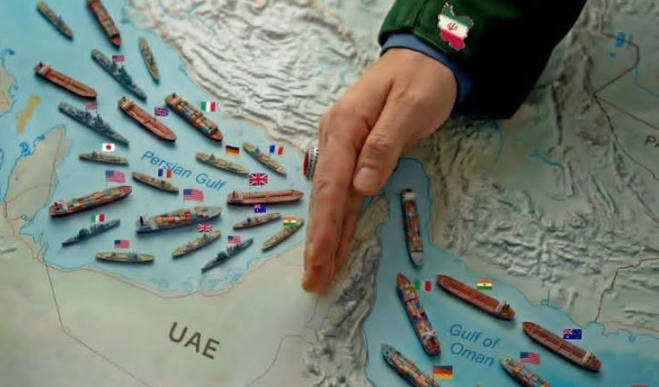
Breaking News: “13 Countries Join Forces to Attack” — What We Actually Know
A dramatic headline claiming that “13 countries join forces to attack…” has been circulating across social media, prompting questions, concern, and plenty of speculation. The wording sounds like an announcement of a major international military operation, but there is an important problem: the posts currently circulating do not provide enough credible information to establish that thirteen countries have actually formed an alliance to launch an attack.
Several Facebook posts and videos using almost identical wording can be found online, including posts published in 2026. However, the available posts largely repeat the sensational headline without clearly identifying the countries involved, the alleged target, the date of an attack, or an official government announcement.
That distinction matters. In an era when geopolitical tensions can change quickly, a headline suggesting that thirteen nations are preparing for war can spread around the world within minutes. But a viral post is not the same thing as confirmation from governments, militaries, or established news organizations.
Why the Headline Is Getting Attention
The phrase “13 countries join forces to attack” is designed to create immediate curiosity. It leaves out the most important information—who is attacking whom—and encourages readers to click “See more.”
This type of headline is particularly effective because it creates a sense of urgency. People naturally want to know whether a major conflict has begun, whether their country is involved, and what could happen next.
Social media algorithms can amplify such content rapidly. Once users begin commenting, sharing, and reacting, a post can reach thousands of people even when the original information is incomplete.
A search for the exact phrase shows numerous Facebook posts and videos repeating essentially the same wording. Some of these posts appeared in May, June, and July 2026, suggesting that the headline has been repeatedly recycled rather than representing a single newly confirmed breaking event.
What Is Missing From the Claim?
A genuine announcement that thirteen countries were preparing a coordinated military attack would normally contain substantial details.
For example, credible reporting would be expected to identify the participating countries, explain the purpose of the coalition, identify the target, describe the military operation or diplomatic agreement, and quote officials or reference formal statements.
The viral headline does none of these things.
Instead, it stops at “attack” and directs readers toward additional content. That is a major warning sign because the missing information is precisely what would allow readers to determine whether the claim is real.
There are certainly multinational military exercises, defense partnerships, security agreements, and international coalitions around the world. But cooperation among countries does not automatically mean those countries have agreed to launch an attack.
International Military Cooperation Is Common
Countries frequently conduct military exercises together for defensive purposes, maritime security, disaster response, peacekeeping, and training.
Nations can also cooperate to protect shipping routes or respond to regional security threats. Such cooperation may involve many countries without meaning that those countries are preparing for a conventional war.
This distinction is important when interpreting dramatic social-media headlines.
For example, recent online material has also referred to multinational maritime defense cooperation involving numerous countries. Such coalitions may focus on protecting shipping, maintaining freedom of navigation, or responding to threats rather than preparing a general attack on another country.
Consequently, seeing the phrase “13 countries” connected with military cooperation should not automatically be interpreted as evidence that thirteen nations have decided to start a war.
Why Verification Matters
War-related misinformation can have consequences beyond ordinary internet rumors.
A false claim about a military attack can create unnecessary fear, encourage people to share inaccurate information, and distort public understanding of a genuine international crisis. It can also make it harder to distinguish authentic emergency announcements from sensational social-media content.
For this reason, major claims involving war should be checked against multiple reliable sources.
Government statements, military announcements, major international news organizations, and official diplomatic communications are generally more useful for verification than anonymous social-media accounts.
If an enormous military operation involving thirteen nations were actually underway, it would be extremely difficult for such an event to remain limited to vague Facebook posts. A major international attack would almost certainly generate extensive reporting from multiple independent sources.
The Larger Geopolitical Picture
Although the specific viral claim remains unsubstantiated, the broader world is experiencing significant geopolitical tension.
International competition has increasingly involved military power, technology, cyber capabilities, space, maritime security, and strategic partnerships. China and Russia, for example, have expanded cooperation in several strategic areas, while European countries and other nations continue to assess changing security challenges.
A 2025 analysis by the Mercator Institute for China Studies described growing Chinese-Russian cooperation in areas including the Arctic and outer space, noting that these regions are becoming increasingly important arenas of geopolitical competition.
These real developments can create an environment in which exaggerated claims appear believable.
A genuine military exercise, diplomatic meeting, or defense agreement can be transformed into a sensational headline suggesting that a massive attack is imminent.
The Difference Between an Alliance and an Attack
Another important point is that countries can cooperate militarily without agreeing to attack another nation.
Defense alliances may exist primarily to deter aggression. Countries can share intelligence, conduct exercises, protect trade routes, or coordinate emergency responses.
Even when several countries are involved in a military operation, the legal and political circumstances can be complicated. Nations may have different objectives, different rules of engagement, and different levels of participation.
Therefore, the simple phrase “13 countries join forces” tells readers almost nothing about what those countries are actually doing.
The word “attack” is especially significant because it implies offensive military action. Such a claim requires strong evidence.
What Readers Should Watch For
Anyone encountering the viral headline should ask several basic questions.
Who are the thirteen countries?
If the post cannot identify them, that is an immediate reason for caution.
Who are they allegedly attacking?
A credible report should clearly identify the target.
When is the attack supposed to happen?
Vague references to an imminent attack without a date or location are another warning sign.
Which government announced it?
Official statements are much stronger evidence than anonymous posts.
Are multiple reputable news organizations reporting it?
A major international conflict would normally be covered broadly by independent media organizations.
Does the original post provide evidence?
A dramatic photograph, video, or headline alone does not establish that an event occurred.
Why “See More” Headlines Can Be Misleading
The structure of the headline is also worth noticing.
“Breaking News: 13 countries join forces to attack…see more” creates a deliberate information gap. Readers are given enough information to become curious but not enough to understand the story.
This technique is common in viral content because curiosity encourages clicks.
The same strategy can be used with celebrity rumors, political stories, military claims, crime stories, and supposed emergency announcements.
The headline itself may technically avoid making a complete claim because the crucial details are hidden. But readers can easily interpret it as confirmation that a major attack is already happening.
The Bottom Line
The claim that “13 countries join forces to attack” should not currently be treated as confirmed breaking news based solely on the social-media posts circulating with that wording.
Search results show multiple Facebook posts and videos repeating the phrase, including examples published during 2026, but those posts do not by themselves establish the existence of a thirteen-country offensive military coalition.
The responsible approach is to separate the dramatic headline from the verified facts.
International military cooperation is real, and geopolitical tensions are serious. Countries around the world are strengthening alliances, conducting military exercises, protecting strategic interests, and responding to security challenges. But none of that automatically confirms the specific claim contained in a viral headline.
For readers, the best response is simple: pause before sharing, identify the countries, identify the alleged target, look for official statements, and compare the claim with reporting from multiple reliable sources.
In an age when a sensational headline can travel faster than the facts, careful verification is more important than ever. A phrase such as “13 countries join forces to attack” may sound like the beginning of a historic global conflict, but without credible evidence and specific details, it remains an unverified social-media claim rather than established breaking news.