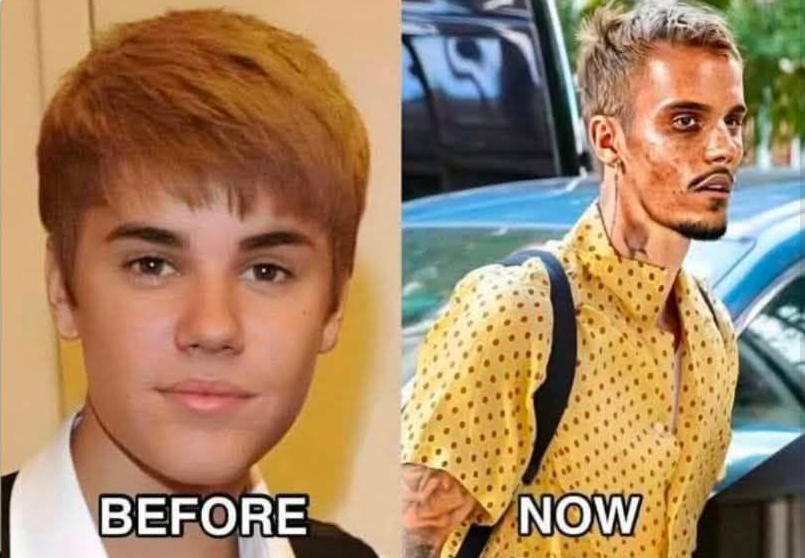
Justin Bieber Admits That He Tested Positive for… The Story Behind a Viral Headline
A dramatic headline claiming that “Justin Bieber admits that he tested positive for…” has been circulating online, immediately encouraging fans to wonder what the singer supposedly tested positive for. But before accepting the most alarming interpretation, it is important to separate verified events from recycled headlines, old reports, and social-media speculation.
A search of current reporting does not establish a new 2026 announcement from Justin Bieber confirming that he recently tested positive for an undisclosed condition. Several older, well-documented stories involving positive test results are likely being recycled to create the impression of a brand-new revelation.
That distinction matters, particularly when a celebrity’s health or medical history is involved.
The COVID-19 Diagnosis
One genuine and widely reported example occurred in February 2022, when Bieber tested positive for COVID-19 shortly after beginning his Justice World Tour. His representative confirmed the diagnosis, and several concerts were postponed as a result.
At the time, the news attracted enormous attention because Bieber had just begun a major international tour. Fans were concerned about his health, while concertgoers immediately wondered what would happen to scheduled performances.
The postponements demonstrated how quickly a health issue could affect an international entertainment operation involving performers, musicians, dancers, technicians, venues and thousands of ticket holders.
But that event happened years ago.
It should not be presented as a new diagnosis without clear evidence.
Another Older “Positive Test”
There is also an even older story that frequently resurfaces online.
In January 2014, following Bieber’s arrest in Miami Beach, a preliminary toxicology report indicated that he had tested positive for marijuana and alprazolam, the active ingredient in Xanax. Reuters and other news organizations reported on the results at the time.
Bieber was only 19 years old.
The incident became a major media story and was followed by extensive discussion about the pressures surrounding a young celebrity who had become internationally famous at an unusually early age.
Because the story is so recognizable, old social-media posts sometimes reappear years later without sufficient context.
That can make a decade-old event look like breaking news.
Why the Wording Matters
The phrase “Justin Bieber admits” also deserves attention.
An admission implies that the person personally revealed information, perhaps after keeping it secret. But a positive test can become public in several different ways.
A representative might issue a statement.
Authorities might release information.
Journalists might report documents.
A person might discuss the result themselves.
These are very different circumstances.
A viral post can blur those distinctions with a few dramatic words.
That is why readers should always ask: When did this happen? Who confirmed it? What was the original source?
Those three questions can prevent a great deal of confusion.
Bieber’s Health Has Been Publicly Discussed Before
There are legitimate reasons why fans may be especially attentive to headlines involving Bieber’s health.
In 2020, he publicly discussed having Lyme disease and infectious mononucleosis. Later, in 2022, he announced that he had been diagnosed with Ramsay Hunt syndrome, a condition that caused facial paralysis.
His announcement about Ramsay Hunt syndrome was particularly emotional because Bieber showed fans the physical effects of the condition himself.
He explained that one side of his face was paralyzed and that he was experiencing difficulty moving parts of his face.
The announcement caused widespread concern.
But it also demonstrated why accurate information is important.
When a famous person discusses a medical condition, millions of people can see the information within minutes. Rumors can spread just as quickly.
The Problem With Viral Celebrity Posts
Social-media pages frequently use unfinished headlines such as:
“Justin Bieber admits that he tested positive for…”
The missing words are the entire hook.
The reader is encouraged to click, comment or share because curiosity takes over.
Sometimes the story behind the headline is real but old.
Sometimes the headline changes the meaning of the original report.
Sometimes the claim is based entirely on an unsupported post.
And sometimes the missing information has little connection to what the headline implies.
That is why sensational wording should never be treated as proof.
A Facebook post currently circulating with nearly identical wording does not establish a new medical disclosure.
Bieber’s Public Image Has Changed
Justin Bieber’s career has unfolded under an unusually intense level of public attention.
He became famous as a teenager and spent much of his youth under constant scrutiny.
Every hairstyle, relationship, performance and personal decision became potential news.
As he grew older, he began speaking more openly about the challenges associated with fame.
That evolution is important.
The teenage singer who once appeared constantly in entertainment headlines eventually became an adult artist trying to establish greater control over his private life.
That means dramatic rumors about his personal circumstances can be particularly intrusive.
Why Fans React So Quickly
Bieber has one of the largest and most devoted global fan bases in popular music.
When a rumor appears online, fans can spread it rapidly—sometimes before journalists have had an opportunity to verify it.
Some fans immediately become worried.
Others defend him.
Some search for the original source.
Others share the post because the headline appears urgent.
This cycle is common across celebrity culture.
A vague headline creates curiosity.
Curiosity creates clicks.
Clicks create more visibility.
More visibility makes the rumor appear more credible.
Eventually, people may believe that something has been confirmed simply because they have seen the same claim repeatedly.
But repetition is not verification.
What We Can Actually Confirm
The verified historical record includes several important events involving Bieber and positive medical or toxicology tests.
He tested positive for COVID-19 in February 2022, resulting in postponed tour performances.
He also had a positive toxicology result involving marijuana and alprazolam following his 2014 arrest.
Those are established historical facts.
What is not established by the current viral headline is that Bieber has made a new 2026 confession about another positive test.
That distinction should remain at the center of the story.
A Reminder About Celebrity Privacy
There is also a broader lesson here.
Being famous does not mean someone loses the right to privacy.
Medical information can be deeply personal. Even when celebrities voluntarily share certain experiences, that does not mean every rumor about their health deserves to be repeated as fact.
Fans can care about an artist while still respecting boundaries.
In fact, responsible fandom can mean doing exactly that.
Instead of immediately sharing a frightening headline, fans can pause and check whether a reputable publication, the artist’s representatives or the artist’s own verified channels have confirmed the claim.
The Real Story Is More Complicated
The viral phrase may sound like the beginning of a shocking new revelation, but the available evidence tells a more nuanced story.
Justin Bieber has indeed had publicly documented positive test results in the past.
He has also publicly discussed significant health experiences.
But those facts should not be combined into one new claim without evidence.
The most responsible conclusion is therefore simple: there is no verified evidence in the current sources that Bieber has just announced a new positive test matching the vague viral headline.
Instead, the wording appears to be drawing attention to older stories or circulating social-media claims.
Final Takeaway
Justin Bieber’s life has been documented intensely since he became famous as a teenager. His successes, struggles, relationships, performances and health experiences have all attracted enormous attention.
That makes him an easy target for sensational headlines.
When you see “Justin Bieber admits that he tested positive for…”, the most important word may actually be the unfinished part of the sentence.
Until the missing information is supported by a credible source, there is no reason to assume the most alarming interpretation.
The singer has previously tested positive for COVID-19, and an old toxicology report also documented marijuana and alprazolam in his system after his 2014 arrest.
But those are historical events—not evidence of a new announcement today.
In an era when a sensational headline can travel around the world in minutes, taking a moment to verify the date, source and original statement can make all the difference.
For Bieber and his fans, that distinction is more than a technicality. It is the difference between news and rumor.