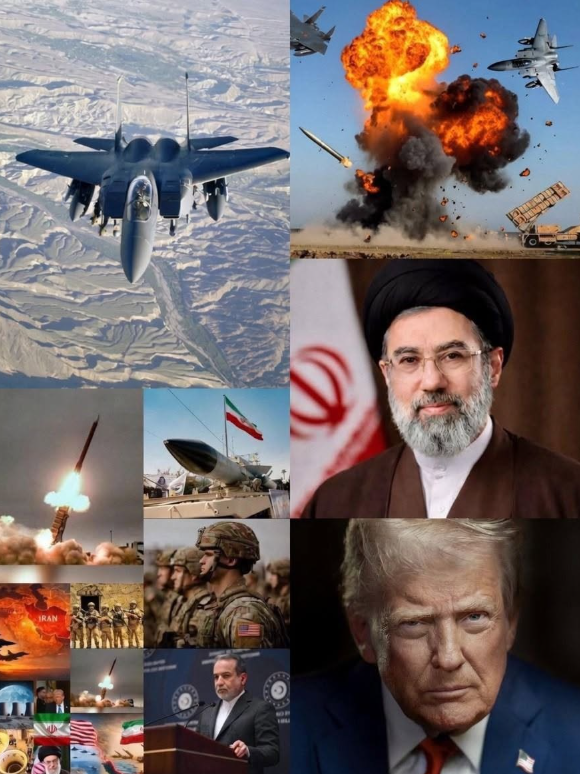
URGENT: “Iran Will Strike America Tonight” — What Is Confirmed and What Remains Unverified
A frightening headline claiming that “Iran will strike America tonight” and that the attack will begin with a particular U.S. state is circulating online. The wording is alarming and could understandably cause fear among readers, particularly Americans who may wonder whether an attack is imminent and whether their own community could be targeted.
However, the specific claim that Iran has decided to attack the United States tonight beginning with a named state should not be presented as confirmed fact without official evidence.
There is a genuine and extremely serious conflict involving the United States and Iran. Current reporting shows that tensions remain high, Iranian officials continue to issue threats against American forces, and negotiations over the Strait of Hormuz remain underway. But that is different from having verified information that Iran has ordered a missile or drone attack on the U.S. mainland tonight.
A Real Conflict Behind a Potentially Misleading Headline
The reason this type of headline can appear believable is that the United States and Iran are already engaged in a major military confrontation.
Recent reports say Iran’s military has continued threatening American forces. ABC News reported on August 16 that Iran’s army announced a $30,000 reward for anyone who kills or captures a U.S. soldier, while Iran’s armed forces said they would continue resisting the United States and Israel.
These statements are extremely serious.
They demonstrate that the conflict remains dangerous and that American military personnel in the region face genuine risks.
But American troops stationed overseas are not the same thing as the American mainland.
A threat against U.S. military personnel or bases in the Middle East should not automatically be transformed into a claim that Iran will attack a U.S. state tonight.
Why the “Tonight” Claim Needs Verification
The word “tonight” makes a headline particularly powerful.
It creates an immediate sense of danger.
Readers may begin wondering whether they should leave their homes, contact relatives, avoid airports, or prepare for an emergency.
That is exactly why claims of imminent attacks require reliable confirmation.
A genuine warning about an imminent attack on the United States would normally involve information from U.S. government agencies, national security officials, law-enforcement authorities, or other highly credible sources.
As of the latest reporting available on August 16, current coverage is focused heavily on the ongoing Iran conflict, the Strait of Hormuz, regional military activity, and negotiations. I did not find credible reporting confirming the specific claim that Iran has announced an attack on the U.S. mainland tonight.
Iran Has Threatened to Expand the Conflict
That does not mean the danger should be dismissed.
Iranian officials have repeatedly warned that continued attacks could lead to a broader confrontation.
Earlier reporting described Iranian military warnings that attacks could spread to additional areas if U.S. strikes continued. Gulf countries have also strengthened their air defenses amid uncertainty surrounding the conflict.
Those developments demonstrate why officials around the world remain concerned about escalation.
But there is an enormous difference between saying that a conflict could expand and claiming that a specific American state will definitely be attacked tonight.
The first is a possibility discussed in security analysis.
The second requires concrete evidence.
The Strait of Hormuz Is Central to the Crisis
One of the most important locations in the current confrontation is the Strait of Hormuz.
The narrow waterway is critical to global energy markets because a substantial portion of the world’s oil and liquefied natural gas shipments pass through it.
Reuters reported on August 14 that the United States was considering an indefinite naval blockade of Iran, while shipping through the Strait had been disrupted. Oil prices rose amid concerns about the potential consequences for global energy supplies.
The crisis therefore affects much more than military forces.
It affects international shipping, energy markets, governments, businesses, and consumers.
Any further escalation could have consequences around the world.
Diplomacy Has Not Completely Disappeared
Another reason readers should be cautious about claims of an immediate attack is that diplomatic efforts are still occurring.
Al Jazeera reported on August 16 that Iran and Oman were continuing discussions concerning the Strait of Hormuz. Iranian Foreign Minister Abbas Araghchi said reopening the waterway would depend on the United States upholding an agreement reached in June.
This does not mean that peace is guaranteed.
Negotiations can fail.
Military activity can resume.
Threats can escalate.
But the existence of ongoing negotiations demonstrates that the situation is more complicated than a simple story claiming that Iran has already decided to attack the United States tonight.
Could Iran Target the U.S. Mainland?
Iran has demonstrated the ability and willingness to target U.S. interests in the region.
That is a serious security concern.
However, an attack on a U.S. military installation overseas is fundamentally different from an attack on a city or state inside the continental United States.
The geographic distance, military defenses, intelligence capabilities, and consequences of such an action would be enormous.
An attack on the U.S. homeland would represent an extraordinary escalation and would likely produce immediate international attention.
That is why readers should demand a very high level of evidence before believing a social-media post claiming that such an attack is scheduled for a particular night.
Why Specific States Are Sometimes Mentioned
Viral posts frequently name a U.S. state without providing evidence.
The choice may be based on speculation, old military information, a misunderstanding of infrastructure, or simply an attempt to make the headline appear more specific.
Specificity can make misinformation seem credible.
For example, “Iran will attack America” is vague.
“Iran will begin tonight in [specific state]” sounds much more authoritative.
But naming a location does not prove that the information is real.
Readers should ask where the information came from and whether the source has the authority to make such a claim.
What Americans Should Do
People should not panic because of an unverified social-media headline.
Instead, Americans should rely on official emergency alerts and instructions from federal, state, and local authorities.
If a genuine threat develops, authorities have established systems for communicating emergency information.
People should also avoid spreading rumors.
Sharing an unverified claim can cause unnecessary fear and may make it more difficult for people to distinguish legitimate emergency warnings from fabricated posts.
If someone is concerned about a family member serving overseas, they should rely on official military communications rather than viral social-media updates.
The Difference Between a Threat and an Attack
This distinction is extremely important.
A government can threaten retaliation without carrying it out.
A military can prepare for possible operations without launching them.
A commander can warn that an enemy will face consequences without announcing a specific attack.
A country can declare that it reserves the right to respond without revealing when or where it would act.
Therefore, even serious statements from Iranian officials should not automatically be interpreted as confirmation that an attack on the U.S. mainland is scheduled for tonight.
Current reporting confirms that Iran’s rhetoric remains hostile and that the conflict is active.
It does not confirm the viral headline’s specific prediction.
The Cost of Misinformation During War
False reports are especially dangerous during wartime.
People may become frightened.
Financial markets may react.
Communities may receive unnecessary calls and messages.
Families may worry about relatives in affected areas.
False reports can also create political pressure and make diplomatic efforts more difficult.
That is why responsible news reporting should clearly distinguish between confirmed events, official warnings, intelligence assessments, and speculation.
Readers deserve to know which category they are seeing.
What to Watch for Next
The situation could change quickly.
The most important developments to watch include official statements from the U.S. government, Pentagon, White House, Department of Homeland Security, and other relevant agencies.
Developments involving the Strait of Hormuz are also important because the waterway remains central to the confrontation.
Any confirmed attack on U.S. territory would be reported rapidly by multiple major news organizations.
Until then, people should be skeptical of posts that rely on phrases such as “tonight,” “minutes ago,” “they don’t want you to know,” or “see more.”
Those phrases create urgency but do not constitute evidence.
Final Takeaway
The headline “Urgent: Iran will strike America tonight and will start with the state of…” is frightening, but the specific claim is not confirmed by the credible current reporting I found.
There is, however, a genuine and dangerous U.S.-Iran conflict. Iranian officials are continuing hostile rhetoric toward the United States, American forces remain at risk in the region, and tensions surrounding the Strait of Hormuz remain extremely high.
That reality should be taken seriously without turning an unverified prediction into a confirmed attack warning.
For now, the responsible conclusion is simple: there is no verified evidence that Iran has announced a strike on the U.S. mainland tonight beginning with a particular state.
If credible authorities issue an actual emergency warning, people should follow those instructions immediately. Until then, the safest approach is to remain calm, check reliable sources, and avoid sharing sensational claims that have not been independently verified.
In a tense international crisis, accurate information is not just preferable—it is essential.