Breaking News: “13 Countries Join Forces to Attack” — What the Viral Claim Really Means
A dramatic headline claiming that “13 countries have joined forces to attack” is circulating online and has the kind of wording that immediately grabs attention. Such a statement naturally raises frightening questions: Which countries are involved? Who are they supposedly attacking? Has a major war begun? Could the conflict spread to other parts of the world?
Before drawing conclusions, however, it is important to recognize that the headline by itself does not identify the countries, the alleged target, the location, or the nature of the military action. Without those details and independent confirmation, it would be irresponsible to present the claim as established fact.
International military events are among the most consequential stories a news organization can report. A genuine announcement that 13 nations had formed a coalition to launch an attack would normally generate widespread coverage and official statements from governments, military organizations, and major international news agencies.
A social-media post saying “see more” is not enough evidence.
Why Such Headlines Become Viral
The phrase “13 countries join forces” is powerful because it suggests an enormous military alliance.
People may immediately imagine aircraft taking off, warships moving toward a coastline, soldiers crossing borders, and governments preparing for a major confrontation.
That emotional reaction is precisely what makes these headlines effective at attracting clicks.
Online posts sometimes intentionally remove the most important information and replace it with suspenseful language. Instead of naming the countries, the post says “13 countries.” Instead of naming the target, it says “attack.” Instead of explaining what happened, it says “see more.”
The reader is encouraged to click the comments or another page to discover the missing details.
But curiosity should never be mistaken for confirmation.
“Join Forces” Does Not Always Mean an Attack
There is another important issue: the phrase “join forces” can describe many different forms of cooperation.
Countries can conduct joint military exercises.
They can participate in multinational peacekeeping operations.
They can share intelligence.
They can cooperate on maritime security.
They can provide humanitarian assistance.
They can join diplomatic initiatives.
They can participate in defensive operations.
None of those activities automatically means that the countries have declared war or launched an offensive.
A headline that uses the words “join forces” without explaining the actual operation can therefore be deeply misleading.
Military Coalitions Are Usually More Complicated
Even genuine multinational military operations are rarely as simple as a headline makes them sound.
Each participating country has its own government, military command structure, laws, political interests, and rules governing the use of force.
Some countries may provide aircraft.
Others may provide ships.
Others may offer intelligence, logistics, communications, medical assistance, or defensive systems.
A nation can therefore be part of an international operation without directly attacking another country.
That distinction is essential when evaluating dramatic reports.
Why Verification Matters
If 13 countries really launched a coordinated attack, the consequences could be enormous.
International markets could react.
Airlines could alter flight routes.
Governments could issue travel warnings.
Embassies could provide emergency information to citizens.
Military organizations would likely issue statements.
International organizations could call emergency meetings.
Newsrooms around the world would closely follow the developments.
This is why extraordinary military claims require extraordinary verification.
Before believing a post, readers should ask several basic questions.
Which 13 countries?
Who is the target?
Where did the attack occur?
When did it begin?
Which government confirmed it?
Which independent news organizations are reporting it?
If those questions cannot be answered, the claim should be treated cautiously.
Old Images Can Create New Rumors
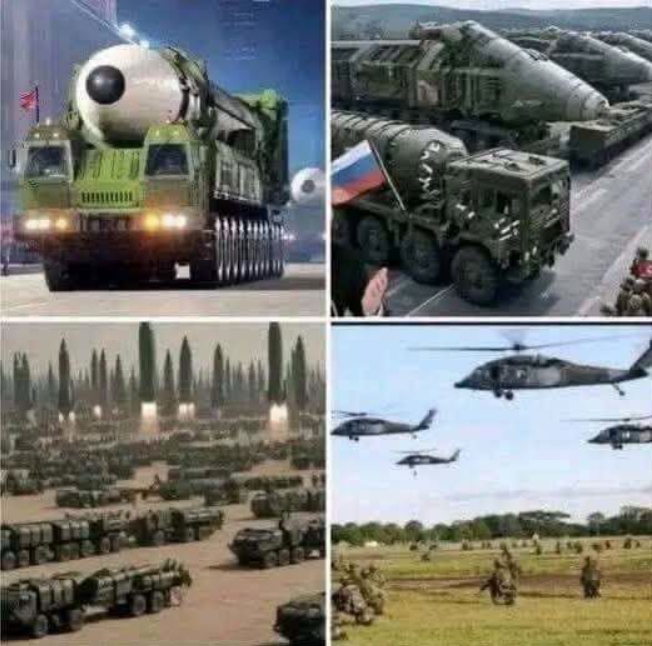
One of the biggest problems with viral breaking-news posts is recycled material.
An image of fighter jets may be several years old.
A video of explosions may have originally been recorded during an entirely different conflict.
A photograph of military ships may show a training exercise rather than preparations for war.
Once an old image is paired with a new caption, people who see it may assume that the photograph proves the caption.
It does not.
Visual evidence must also be verified.
Military Exercises Can Be Misinterpreted
Large international military exercises can look frightening when viewed without context.
Multiple countries may send warships, aircraft, troops, and military vehicles to the same region.
From a distance, such activity can resemble preparation for an invasion.
But multinational exercises are often designed to practice communication, disaster response, maritime security, search-and-rescue operations, or defensive coordination.
Therefore, the presence of military forces from many countries does not automatically indicate that those countries are preparing to attack someone.
The Difference Between Defense and Offense
This distinction is particularly important.
A defensive alliance may coordinate forces because its members believe they are threatened.
An offensive operation involves deliberately using military force against a target.
The two situations can occur simultaneously during a conflict, but they are not identical.
A headline that simply says “13 countries join forces to attack” removes all of that context.
Readers should therefore look for specific descriptions of what happened rather than relying on emotionally charged wording.
Why International Conflicts Escalate
When military confrontations occur, governments often face enormous pressure.
One attack can trigger retaliation.
A retaliatory strike can lead to another response.
Allies may become involved.
Neighboring countries may increase military readiness.
Airspace can be restricted.
Shipping routes can be disrupted.
Energy prices can rise.
The situation can become more dangerous even when governments publicly say they do not want a wider war.
That is why responsible reporting is especially important during periods of international tension.
False claims can make people believe that escalation has already occurred when it has not.
The Human Consequences of War
Behind every military headline are ordinary people.
Families can be forced to leave their homes.
Children can be separated from schools.
Hospitals can become overwhelmed.
Businesses can close.
Power and communication networks can be damaged.
People can lose access to food, water, medicine, and transportation.
A multinational military conflict could therefore have consequences far beyond the battlefield.
This is another reason why war reporting should avoid sensationalism.
The goal should be to explain what is happening accurately, not simply to produce the most frightening headline possible.
Social Media Moves Faster Than Verification
Traditional journalism has systems for checking information before publishing major claims.
Social media works differently.
A person can record a video and upload it immediately.
Another user can repost it.
A third person can add a dramatic caption.
Within minutes, thousands of people may see the material.
By the time someone discovers that the caption is wrong, the original post may already have reached millions.
This creates a major challenge for anyone trying to understand breaking international news.
The fastest post is not necessarily the most accurate post.
What Readers Should Do
When encountering a headline claiming that 13 countries have joined forces to attack, readers should pause.
Do not immediately share it.
Search for the names of the alleged countries.
Look for official government statements.
Check major international news organizations.
Compare reports from multiple independent sources.
Look at the publication date.
Reverse-check photographs or videos when possible.
Most importantly, distinguish between confirmed information and speculation.
A report can be developing without being false, but developing information should be described as developing.
The Importance of Calm During Breaking News
International crises can produce understandable fear.
People may worry about relatives overseas.
Travelers may wonder whether flights will be affected.
Families may fear that a regional conflict could become a global confrontation.
Those concerns are understandable.
But panic does not improve the situation.
The most useful response is to obtain accurate information from reliable sources and follow official instructions if an actual emergency occurs.
People should also avoid spreading unverified claims that could create unnecessary fear for others.
Final Takeaway
The headline “Breaking News: 13 countries join forces to attack… see more” is dramatic, but the wording alone does not establish that 13 nations have launched a coordinated military attack.
Without the names of the countries, the alleged target, the location, the time, and confirmation from credible authorities, the claim should be regarded as unverified.
There may be genuine military cooperation, multinational exercises, diplomatic alliances, defensive arrangements, or ongoing conflicts behind the headline. But none of those possibilities should automatically be transformed into a claim that 13 countries have launched an attack.
In an age when dramatic headlines can travel around the world within seconds, readers have an important responsibility: verify before sharing.
A genuine international military crisis will produce evidence from multiple independent sources. A sensational social-media caption alone is not enough.
When the stakes involve war, national security, and human lives, accuracy matters more than clicks, fear, or speed.