The Power of Flexibility: What This Stretching Pose Reveals About Strength, Balance, and Mobility
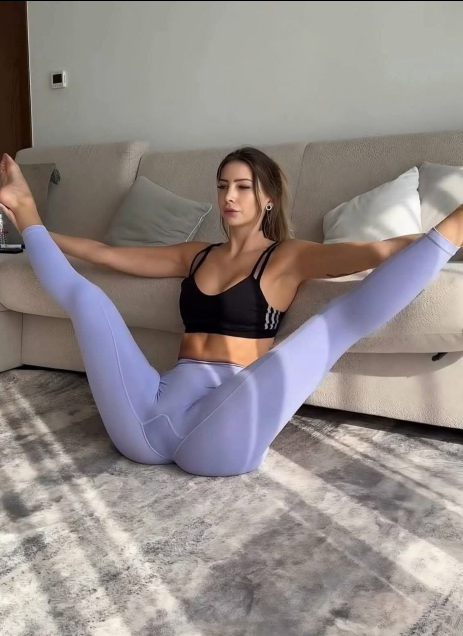
A striking fitness photograph can sometimes communicate far more than words. The image here shows a woman seated on a carpeted floor in a comfortable home setting, performing a challenging flexibility exercise. Her legs are extended widely to either side while her arms reach outward, creating a pose that requires a combination of mobility, balance, coordination, and concentration.
Although the position may look effortless, exercises involving a wide leg extension can require considerable flexibility in the hips and inner thighs. They can also challenge the muscles responsible for maintaining posture and stability. The photograph therefore offers an interesting look at how flexibility training can become part of a broader approach to physical wellness.
Flexibility Is More Than Being Able to Stretch
When people think about flexibility, they often imagine someone performing a split or touching their toes. In reality, flexibility is a much broader component of physical fitness.
Flexibility refers to the range of movement available around a joint. Different joints have different natural ranges of motion, and factors such as age, genetics, activity level, previous injuries, muscle tension, and training habits can influence how flexible a person becomes.
The pose shown in the photograph places considerable emphasis on the hips and legs. The wide position of the legs requires mobility through the hip joints while the muscles surrounding the pelvis and thighs work to maintain control.
Developing flexibility gradually can make everyday movements more comfortable. Bending, reaching, climbing stairs, getting up from the floor, and participating in recreational activities can all benefit from healthy mobility.
The Importance of Proper Technique
One of the most important lessons from any advanced stretching photograph is that appearance should not be confused with technique.
A pose may look impressive, but flexibility should never be developed by forcing the body into a position it cannot comfortably handle. Stretching too aggressively can cause pain or injury.
A safer approach is gradual progression. Someone beginning flexibility training might start with gentle hip-opening movements, seated stretches, hamstring stretches, and controlled leg movements. Over time, consistent practice may increase range of motion.
Warm muscles are generally more prepared for movement than muscles that have been suddenly stretched while cold. A few minutes of light activity can help prepare the body before deeper flexibility work.
The goal should be controlled movement rather than simply achieving the widest possible position.
Why Hip Mobility Matters
The hips are among the body’s most important movement centers. They connect the upper body and lower body while allowing movements such as walking, running, squatting, climbing, and rotating.
Limited hip mobility can sometimes make certain movements feel uncomfortable or restricted. However, improving mobility is not simply a matter of stretching one muscle group.
The hips are surrounded by numerous muscles, including the hip flexors, glutes, adductors, and external and internal rotators. Mobility exercises can help people explore comfortable movement through different directions.
The position shown in the photograph particularly emphasizes lateral movement of the legs. This can place substantial demand on the inner-thigh muscles, commonly referred to as the adductors.
Because these muscles are involved in stabilizing the legs and pelvis, gradually training them can be useful for people participating in activities such as dance, gymnastics, martial arts, yoga, and certain sports.
Strength and Flexibility Work Together
There is a common misconception that flexibility and strength are opposites. In reality, the two qualities can complement one another.
A person may be extremely flexible but lack the strength needed to control a large range of motion. Conversely, someone may have considerable strength but limited mobility.
The healthiest approach is often to develop both.
Strength training can help the muscles control movement, while flexibility exercises can help maintain or improve comfortable range of motion. Balance and coordination then help the body use that range effectively.
The pose in the photograph illustrates this relationship. Maintaining an upright torso while holding the legs in an extended position requires more than loose muscles. The abdominal muscles, back muscles, hips, and legs all contribute to stability.
Breathing and Concentration
Stretching is also an exercise in concentration.
When performing a demanding flexibility movement, slow breathing can help a person remain relaxed and focused. Holding the breath or becoming tense can make a stretch feel more difficult.
A steady breathing pattern encourages relaxation and gives the person an opportunity to notice how the body feels.
There is an important distinction between the normal sensation of stretching and pain. A gentle pulling sensation can be expected during many stretches, but sharp, burning, or sudden pain is a warning sign to stop or reduce the intensity.
Listening to the body is an essential part of responsible fitness.
Creating a Comfortable Home Workout
The photograph also demonstrates that flexibility exercises do not necessarily require an expensive gym or complicated equipment.
A comfortable floor surface, appropriate clothing, sufficient space, and a few minutes of uninterrupted time may be enough for a basic stretching session.
However, the simplicity of the environment does not mean every advanced pose is suitable for everyone.
Beginners can start with easier movements and gradually progress. For example, they might begin with seated forward stretches, gentle butterfly stretches, hip rotations, and controlled leg extensions.
Consistency is usually more valuable than attempting an extreme position once and then stopping.
Even ten minutes of mobility work performed regularly can become a meaningful part of a fitness routine.
The Psychological Benefits of Movement
Physical exercise can also influence mental well-being.
Stretching sessions often encourage people to slow down and focus on the present moment. Instead of concentrating on screens, work, or daily responsibilities, a person can pay attention to breathing and physical sensations.
This can create a calming ritual at the beginning or end of the day.
For some people, flexibility training becomes a form of personal discipline. Progress may be slow, but noticing even small improvements can provide motivation.
One week might bring only a slightly greater range of motion. Several weeks later, a movement that once felt difficult may become more comfortable.
That gradual progress can reinforce the idea that physical development does not happen overnight.
Avoiding Comparison
Fitness photographs on social media can sometimes create unrealistic expectations.
People may see someone performing an advanced pose and assume they should be able to reproduce it immediately. But every body is different.
Two people can follow the same routine and develop different levels of flexibility. Factors such as anatomy, previous training, injury history, and natural mobility all matter.
Instead of comparing one person’s range of motion with another’s, a better measure is personal progress.
If a stretch becomes more comfortable, balance improves, posture becomes easier to maintain, or everyday movement feels better, those can all represent meaningful achievements.
A Reminder About Patience
Flexibility is generally developed through repetition and patience rather than force.
A person attempting a challenging pose should prioritize stability and comfort. If the body is not ready for a particular position, there is no benefit in pushing beyond a safe range simply to imitate a photograph.
Professional guidance can also be valuable, particularly for people recovering from injuries or dealing with persistent pain.
A qualified fitness professional, physical therapist, or other appropriate healthcare professional can help determine which exercises are suitable for an individual’s circumstances.
Final Thoughts
The photograph captures an impressive example of flexibility and controlled movement, but its deeper message goes beyond the pose itself.
Physical fitness is not simply about appearance. Mobility, strength, balance, coordination, posture, and body awareness all contribute to functional movement.
A challenging flexibility position may be the result of many weeks, months, or years of consistent practice. What appears effortless in a photograph can represent considerable dedication behind the scenes.
For anyone inspired by the image, the most valuable lesson is not to immediately copy the pose. Instead, it is to appreciate the principles behind it: move gradually, develop strength alongside flexibility, breathe consistently, pay attention to technique, and respect the body’s limits.
With patience and regular practice, flexibility can become an enjoyable part of a balanced fitness routine. The ultimate goal is not simply to achieve an impressive-looking position, but to build a body that can move comfortably, confidently, and under control.