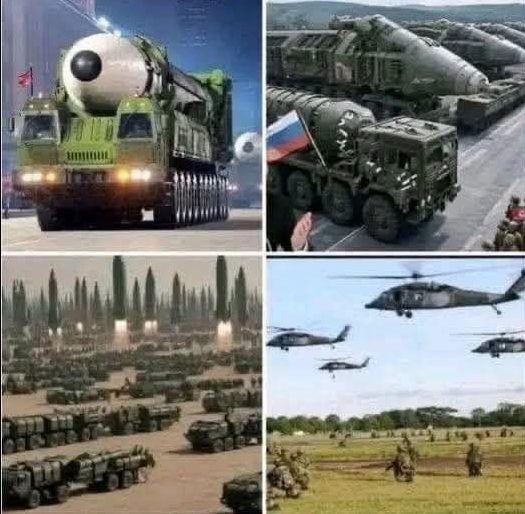
🚨 Breaking News: 13 Countries Join Forces to Attack… What the Viral Headline Really Means
A dramatic headline circulating online declares, “13 countries join forces to attack… See more.” The wording sounds like the beginning of a major international crisis, perhaps even the start of a global war. But there is an important problem with the claim: the headline is incomplete, and there is no credible evidence that 13 countries have suddenly formed a military coalition to launch a coordinated attack on a single country.
The phrase appears to come from sensational websites and social-media posts that use dramatic headlines to attract clicks. One site carrying almost identical wording describes European countries strengthening their defenses because of Russia’s war in Ukraine and broader security concerns.
That is very different from saying that 13 nations have officially decided to attack someone.
What Is Actually Happening?
The international security environment is undeniably tense.
Russia’s war against Ukraine continues to influence European defense policy, while governments across the continent have increased military spending, strengthened border defenses, conducted exercises, and discussed how NATO members should respond to potential future threats.
Recent reporting has also highlighted concerns about suspicious drone activity across Europe. A Wall Street Journal report said suspicious drones were observed in 13 countries between August 2024 and February 2026, according to an analysis cited from the International Institute for Strategic Studies.
That number—13 countries—is important because it may help explain how a dramatic headline can be constructed.
Thirteen countries experiencing or responding to security incidents is not the same thing as thirteen countries joining together to launch an attack.
The distinction is enormous.
Why These Headlines Are So Effective
A headline ending with “See more” is designed to create curiosity.
Instead of immediately explaining what happened, it withholds the most important information.
Readers see:
“13 countries join forces to attack…”
and naturally ask:
Who are they attacking?
Why are they attacking?
Has World War III started?
Which countries are involved?
Is the United States involved?
Those questions encourage people to click.
The problem is that the emotional reaction can occur before the reader ever discovers what the story actually says.
This is one reason sensational political and military headlines spread so quickly online.
Europe Is Strengthening Its Defenses
There is, however, a real story behind the broader claims.
European governments have increasingly discussed the need to strengthen their military capabilities.
Russia’s invasion of Ukraine fundamentally changed the European security debate. Countries that had spent years reducing military spending began reconsidering their assumptions about future conflict.
Governments have invested in air defense, drones, ammunition production, cybersecurity, intelligence capabilities, and military infrastructure.
NATO has also emphasized the importance of preparedness.
These developments are not necessarily evidence that European countries are preparing to launch an offensive war.
In many cases, they are intended to deter one.
The basic logic of deterrence is straightforward: a country that believes an attack would be extremely costly may be less likely to launch that attack.
The Drone Threat
One of the more serious developments in European security has been the increasing number of suspicious drone incidents.
Drones are inexpensive compared with traditional military aircraft, relatively difficult to detect in some circumstances, and capable of operating near airports, military facilities, energy infrastructure, and other sensitive locations.
The Wall Street Journal recently reported that U.S. intelligence linked an explosive-laden drone discovered at Leipzig/Halle Airport in Germany to the Russian government. The device was found in a secure area near a Ukrainian cargo aircraft, although its detonator reportedly failed.
German officials described the incident as an unprecedented security concern.
The report also described a broader pattern of suspicious drone activity across Europe.
That is certainly serious.
But again, it does not mean 13 countries have joined together to attack another nation.
The Difference Between Defense and Attack
This distinction is essential when discussing international conflicts.
Countries can cooperate militarily without planning an offensive war.
They can conduct joint exercises.
They can share intelligence.
They can purchase weapons together.
They can strengthen borders.
They can coordinate air-defense systems.
They can sign defense agreements.
They can publicly warn another country against aggression.
None of those actions automatically means they are preparing to launch an attack.
In fact, many international military alliances are explicitly built around deterrence.
The goal is to convince potential adversaries that attacking one member would carry unacceptable consequences.
Could a Larger War Still Happen?
That is a legitimate question.
International conflicts can escalate unexpectedly.
A military incident involving one country can create pressure on allies. Misunderstandings, accidents, cyberattacks, drone incidents, missile strikes, or attacks on infrastructure can all create dangerous situations.
That is why governments maintain diplomatic channels even during periods of intense confrontation.
The existence of military preparations does not mean war is inevitable.
In fact, military preparedness and diplomacy often operate simultaneously.
Countries can prepare for the possibility of conflict while also attempting to prevent it.
Why “World War III” Headlines Should Be Treated Carefully
Online discussions frequently turn every major international crisis into predictions about World War III.
Such language attracts attention because it invokes one of the most frightening possibilities imaginable.
But history shows that international crises are complicated.
A conflict can involve several countries without becoming a global war.
Likewise, countries can support one side diplomatically, economically, or militarily without becoming direct combatants.
That is why responsible reporting requires specific information.
Who attacked whom?
Which government ordered the attack?
Where did it happen?
What weapons were used?
Which countries participated?
What did their governments officially say?
Without those details, a dramatic headline should not be treated as confirmation of a major military event.
The Broader Global Picture
The world is experiencing several simultaneous security challenges.
The war in Ukraine remains a central concern for Europe.
The Middle East has also experienced serious military escalation. Recent reporting has described continued fighting involving the United States and Iran, attacks affecting regional countries, and diplomatic efforts aimed at reducing the conflict.
Those developments can make headlines about a “13-country attack” sound plausible.
But several separate conflicts and security concerns should not automatically be combined into one event.
That is precisely why readers need to examine the original source.
Social Media Makes the Problem Worse
A traditional newspaper headline generally provides enough information for readers to understand what happened.
Viral social-media headlines often do the opposite.
They deliberately leave out the most important words.
“13 countries join forces to attack…”
“President confirmed as…”
“Breaking news from New York…”
“Something terrible just happened…”
The formula is remarkably effective.
The reader is given just enough information to become emotionally invested but not enough information to understand the situation.
That encourages clicking, sharing, and commenting.
Unfortunately, once thousands of people share a misleading headline, the claim can begin to look credible simply because it is everywhere.
Popularity is not proof.
What Readers Should Look For
Before believing a headline about an international military crisis, look for several basic pieces of information.
First, identify the countries involved.
Second, determine who is allegedly being attacked.
Third, look for official statements from governments or military authorities.
Fourth, check whether established news organizations are reporting the same event.
Finally, pay attention to the date.
Old stories are frequently reposted as though they happened minutes ago.
A headline saying “breaking news” does not necessarily mean the event happened today.
The Real Story Is More Complicated
The available evidence points toward a world experiencing heightened security tensions—not a confirmed 13-country military alliance suddenly launching an attack.
European governments are strengthening defenses because of concerns about Russia and other security threats. Suspicious drone activity has been reported in numerous countries. NATO members are increasingly focused on preparedness. And multiple international conflicts are occurring simultaneously.
All of those developments deserve serious attention.
But they should not be transformed into a claim that 13 nations have suddenly declared war without evidence.
Final Takeaway
The viral phrase “13 countries join forces to attack… See more” is dramatic, but the available evidence does not support interpreting it literally as confirmation of a new 13-country offensive.
There is a genuine and serious story behind the broader discussion: European security is changing, governments are increasing military preparedness, suspicious drone activity has raised concerns, and several international conflicts are creating unprecedented geopolitical pressure.
But preparation for a potential conflict is not the same as launching one.
The best response to a frightening breaking-news headline is not panic.
It is verification.
Before sharing a claim that could make millions of people believe a new world war has begun, readers should ask one simple question:
What exactly has been confirmed—and by whom?
Until those details are provided by credible sources, the headline should be treated as a sensational teaser rather than proof that 13 countries have joined forces to attack.