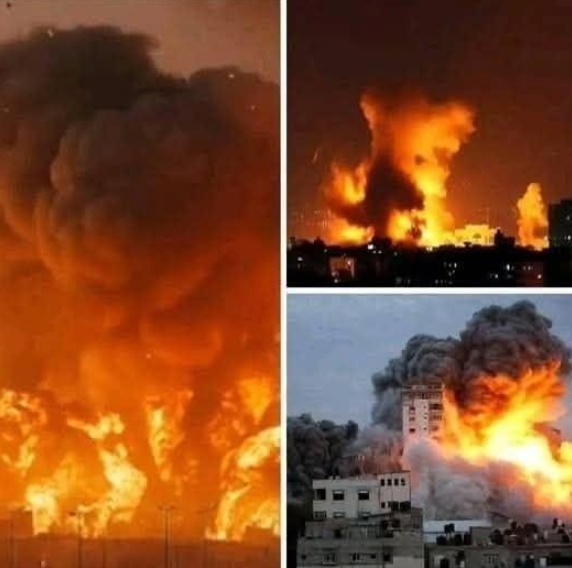
Breaking News: “Maximum Worldwide Alert — The War Begins” — What the Latest Reports Actually Show
A dramatic headline circulating online declares, “BREAKING NEWS. Maximum worldwide alert. The war begins…” The wording immediately suggests that a new global conflict has suddenly erupted and that governments around the world have entered an unprecedented state of emergency.
The reality is more complicated.
As of August 12, 2026, the world is already dealing with a serious and ongoing war involving the United States and Iran, with fighting and tensions affecting shipping routes, energy markets and countries throughout the Middle East. At the same time, diplomatic efforts have continued, meaning the current situation should not automatically be described as the beginning of a brand-new world war. Reuters reported on August 12 that U.S. and Yemen’s Iran-aligned Houthis had reported separate attacks on shipping, even as efforts to reach an agreement with Iran continued.
That combination—military confrontation alongside negotiations—is what makes the current moment particularly dangerous.
A conflict that has already spread beyond one battlefield
The phrase “the war begins” can be misleading because fighting between the United States and Iran has already been underway for months.
The conflict has affected the Persian Gulf and, most importantly, the Strait of Hormuz, one of the world’s most strategically important waterways.
The strait connects the Persian Gulf with the Gulf of Oman and serves as a crucial route for international energy shipments. Because so much global energy traditionally passes through the region, disruptions can quickly affect countries far beyond the Middle East.
Recent reporting indicates that shipping through the strait has fallen dramatically. Al Jazeera reported on August 12 that only eight vessels crossed the waterway on Tuesday, compared with roughly 130 to 140 before the war.
That decline demonstrates why the conflict has become an international economic issue rather than simply a regional military confrontation.
Trump says the United States has control of Hormuz
President Donald Trump intensified the rhetoric on August 12 when he said the United States has “total control” over the Strait of Hormuz.
Reuters reported that Trump described the American military presence as a powerful blockade and said Iran was unable to challenge it.
Iran, however, rejected the characterization.
According to Al Jazeera, Iranian officials said the strait would remain closed until Washington changed its behavior and met Tehran’s demands.
The conflicting claims illustrate the fundamental problem confronting diplomats: Washington and Tehran continue to describe the situation in dramatically different terms.
For ordinary people watching the news, that can make it difficult to determine whether events are moving toward escalation or negotiation.
Diplomatic efforts have not completely disappeared
Despite the alarming headlines, diplomacy remains part of the story.
CBS News reported on August 12 that Pakistan said the United States and Iran were close to some form of peace arrangement or deal.
That does not mean a final agreement has been reached.
It also does not mean the fighting has ended.
Instead, it demonstrates how complicated modern conflicts can become. Military operations and diplomatic negotiations can occur simultaneously.
One side may threaten additional action while diplomats search for a compromise.
A military confrontation can continue while governments attempt to establish a ceasefire.
And negotiations can appear close to success one day and collapse the next.
That is why the phrase “maximum worldwide alert” should be approached carefully.
Why the headline sounds so frightening
Sensational headlines often use words such as “maximum alert,” “worldwide emergency,” “the war begins,” or “the world is changing forever.”
These phrases are effective because they trigger an immediate emotional reaction.
People want to know whether their country is in danger.
They want to know whether troops are being deployed.
They want to know whether missiles have been launched.
They want to know whether transportation, fuel prices or daily life could be affected.
But dramatic language is not the same thing as an official declaration of a global war.
A genuine worldwide military emergency would normally produce extensive confirmation from governments, defense ministries, international organizations and multiple major news organizations.
Readers should therefore look beyond the headline and ask what has actually been confirmed.
Shipping attacks add to the danger
The situation remains serious because commercial shipping has been targeted.
Reuters reported that the United States and Yemen’s Iran-aligned Houthis reported separate attacks involving shipping on Tuesday.
This is particularly significant because maritime transportation is essential to the global economy.
When shipping companies believe a route has become too dangerous, vessels may be delayed, rerouted or kept away from the area altogether.
That can create consequences thousands of miles from the conflict zone.
Energy prices can rise.
Insurance costs can increase.
Supply chains can be disrupted.
Manufacturers can face higher transportation expenses.
Consumers may eventually see higher prices.
In other words, a military conflict in one region can create economic effects around the world.
The Strait of Hormuz is at the center of the crisis
The importance of the strait cannot be overstated.
For decades, governments and energy companies have treated the waterway as one of the key arteries of global commerce.
Its disruption therefore creates a problem far beyond military strategy.
Every additional day of reduced shipping increases uncertainty for energy markets.
Governments must consider alternative supply routes.
Companies must evaluate the safety of crews and vessels.
And financial markets must anticipate how long the disruption could last.
That is one reason Trump’s latest statements about controlling the waterway have received so much attention.
Iran rejects Washington’s version of events
Iran’s response has been equally significant.
Tehran has rejected Trump’s claim that the United States has “total control” over Hormuz.
Iranian officials say the strait will not reopen unless Washington meets certain conditions and changes its conduct.
This creates a dangerous diplomatic standoff.
Washington wants freedom of navigation and has demanded concessions from Tehran.
Tehran wants pressure removed and has demanded changes from Washington.
Neither side appears willing to simply accept the other’s position.
That is why negotiations are so important.
A diplomatic agreement could reduce the risk of additional attacks and gradually restore shipping.
A breakdown in negotiations could produce another escalation.
What would constitute a true global emergency?
There is a major difference between a severe regional war and a confirmed global war.
A genuine worldwide conflict involving multiple major powers would likely involve direct military participation by numerous countries, broad mobilization, major changes in military readiness and significant attacks across several regions.
At present, the available reporting supports the conclusion that the world is facing a highly dangerous international crisis—but it does not establish that a new global war has suddenly begun today.
The distinction is important.
It prevents fear from replacing facts.
What people should watch next
The next several days could be crucial.
First, observers will be watching the Strait of Hormuz.
Any significant increase in commercial shipping could indicate that security conditions are improving.
A further decline could indicate that companies remain unwilling to risk the route.
Second, attention will remain on U.S.-Iran negotiations.
If Washington and Tehran reach an agreement, the temperature of the crisis could fall dramatically.
If talks collapse, military tensions could rise again.
Third, shipping attacks will be closely monitored.
Repeated attacks could force more vessels to avoid the region and increase pressure on governments to respond.
Finally, markets will be watching energy supplies.
A prolonged disruption could create economic consequences far beyond the battlefield.
The human side of the crisis
Behind the military statements and political declarations are ordinary people.
Families in the Middle East are dealing with uncertainty.
Military personnel are operating in dangerous conditions.
Commercial sailors are being asked to navigate increasingly risky waters.
Businesses are trying to determine whether they can continue normal operations.
And people around the world are wondering whether the conflict could become something much larger.
That human dimension is often lost when social media reduces a complicated crisis to a single phrase such as “THE WAR BEGINS.”
Wars are not headlines.
They are experienced by people.
The bottom line
The phrase “Maximum worldwide alert. The war begins” captures the fear surrounding today’s international tensions, but it should not be treated as a verified declaration that a new world war has suddenly started.
What is confirmed is already serious: the United States and Iran remain locked in a major conflict; shipping through the Strait of Hormuz has fallen dramatically; attacks involving shipping have been reported; Trump says the United States has control of the strategic waterway; Iran rejects that claim; and diplomatic efforts are still underway.
The next chapter could move toward a negotiated settlement—or toward another dangerous escalation.
For now, the world is watching the Middle East closely.
The most important question is no longer simply whether a war has begun.
It is whether diplomacy can prevent the existing conflict from becoming even wider.