🚨 BREAKING NEWS: Claims That a B-2 Spirit Was Shot Down Spread Online — Here’s What the Evidence Shows
A dramatic claim that a U.S. B-2 Spirit stealth bomber was shot down has circulated online, generating intense discussion and speculation. But before treating the headline as confirmed breaking news, there is an important distinction to make: there is no credible confirmation that a B-2 Spirit has been shot down in the reported incident.
In March 2026, viral videos and images circulated claiming that Iranian forces had destroyed a U.S. B-2 during the conflict. Fact-checkers found that some of the material was fabricated or AI-generated, while credible reporting did not confirm the loss of a B-2.
That makes this story a powerful example of how quickly dramatic military claims can spread online.
The B-2 Spirit
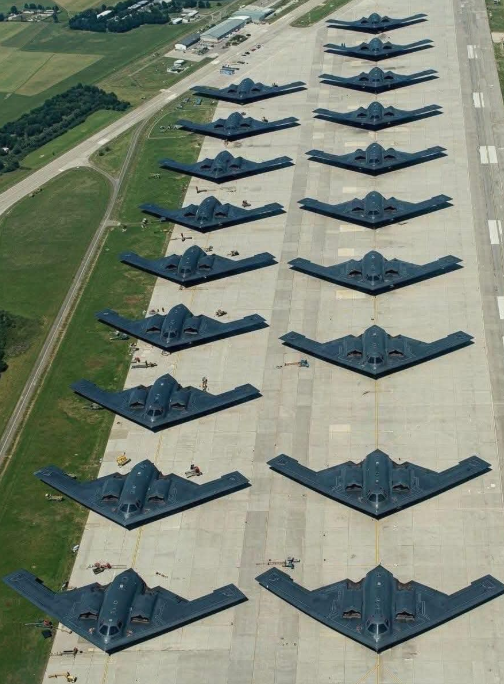
The B-2 Spirit is one of the most recognizable aircraft in the U.S. military arsenal.
Unlike conventional aircraft with a familiar fuselage-and-tail configuration, the B-2 has a distinctive flying-wing design. Its unusual shape is closely associated with its stealth capabilities.
The aircraft was developed to penetrate heavily defended airspace and deliver long-range strikes. Its low-observable design is intended to make detection by enemy radar significantly more difficult.
That capability has made the B-2 a symbol of American airpower for decades.
Because of its rarity and technological sophistication, any genuine loss of a B-2 would be a major military event.
It would almost certainly attract extensive attention from governments, military analysts, aviation experts, and international news organizations.
Why the Claim Became Viral
The alleged shoot-down claims gained attention because of videos showing what appeared to be a large aircraft or burning object falling from the sky.
Social-media users began suggesting that the object was a B-2.
The speculation spread quickly.
But the original material did not establish that the aircraft was a B-2.
One widely circulated image claiming to show a downed B-2 and captured American personnel was examined by Full Fact and determined to be fake. The organization noted several inconsistencies, including the fact that a B-2 is operated by a two-person crew while the image appeared to show three U.S. servicemen.
Another video purporting to show a captured B-2 being transported through Iranian streets was also found to contain signs of AI generation and digital manipulation.
These findings are important because they demonstrate how easily military imagery can be manufactured or altered.
A Real B-2 Loss Would Be Extraordinary
The B-2 fleet is extremely small compared with many other military aircraft fleets.
Every aircraft represents a significant strategic investment.
The U.S. Air Force has therefore treated the B-2 fleet as a highly valuable national-security asset.
In fact, the Air Force recently announced that the B-2 Spirit of Ohio returned to operations after completing programmed depot maintenance in June 2026. The Air Force described the return as important to maintaining the number of available bombers and preserving readiness.
That provides an important piece of current context.
Rather than evidence of a newly destroyed B-2, official information shows that B-2 aircraft continue to receive extensive maintenance and remain part of the U.S. strategic bomber force.
Stealth Does Not Mean Invincible
It is also important to understand what “stealth” actually means.
A stealth aircraft is not literally invisible.
Stealth technology is designed to reduce the aircraft’s radar signature and make detection and tracking more difficult.
The aircraft can still potentially be detected under certain circumstances.
Weather, radar technology, operating conditions, aircraft configuration, sensor networks, and other factors can influence detection.
Therefore, it would be inaccurate to describe the B-2 as impossible to detect or impossible to attack.
At the same time, claiming that a particular B-2 has been successfully shot down requires evidence.
A burning object in the sky isn’t enough.
The Difference Between a Crash and a Shoot-Down
Another important distinction involves the word “crash.”
An aircraft can crash for many reasons.
Mechanical failure, weather, pilot error, navigation problems, runway incidents, structural problems, or other technical issues can all contribute to aviation accidents.
A shoot-down is fundamentally different because it implies hostile action.
That requires evidence showing that an external weapon or attack caused the aircraft’s destruction.
Without such evidence, describing an aircraft as “shot down” can transform an unverified accident into a completely different story.
The B-2 Has Experienced Accidents Before
The B-2 has not been immune to accidents.
One of the best-known incidents occurred in 2008, when the Spirit of Kansas crashed shortly after takeoff from Andersen Air Force Base in Guam. The two crew members ejected safely, but the aircraft was destroyed.
Another serious incident involved the Spirit of Georgia in 2021.
That aircraft was significantly damaged during an incident at Whiteman Air Force Base. Remarkably, the Air Force eventually repaired it and returned it to flight in November 2025.
That history demonstrates why the words “B-2 crash” and “B-2 shot down” should not automatically be treated as interchangeable.
The Problem With Viral Military Videos
Modern conflicts have created an enormous amount of online video.
Some footage is genuine.
Some footage is old.
Some footage comes from completely different conflicts.
And increasingly, some footage is computer-generated or digitally manipulated.
This makes verification particularly difficult.
A video showing an aircraft exploding can look convincing even when it has nothing to do with the event being described.
A photograph can be altered.
A military vehicle can be digitally inserted into a real landscape.
An old video can be given a new caption.
AI tools have made these techniques even easier.
The result is an information environment where visual evidence must be examined carefully.
Why Verification Matters
Military claims are particularly sensitive.
A confirmed shoot-down involving a U.S. strategic bomber could have major geopolitical consequences.
It could influence public opinion, military planning, diplomatic statements, and international perceptions.
That is why professional news organizations and military authorities normally seek corroborating evidence before declaring such an event confirmed.
Possible evidence could include official statements, identifiable wreckage, satellite imagery, independent photographs, radar information, eyewitness accounts, or multiple credible reports that agree on the basic facts.
A single viral post is not enough.
What We Can Say With Confidence
Based on the available evidence, there is no credible confirmation that Iran successfully shot down a U.S. B-2 Spirit in the incident described by the viral claims.
Fact-checking organizations specifically investigated imagery associated with the claim and found fabricated or AI-generated material.
That doesn’t mean military aircraft cannot be lost.
It means the specific claim needs evidence before it can responsibly be presented as fact.
The Bigger Story
Perhaps the most interesting part of this episode is not the dramatic headline itself.
It is what the episode reveals about modern warfare.
Today’s conflicts are fought not only in the air, on the ground, and at sea.
They are also fought in the information environment.
Images can become weapons.
Rumors can become propaganda.
A short video can influence millions of people before journalists have time to investigate it.
And artificial intelligence is making it increasingly difficult for ordinary viewers to distinguish genuine footage from manufactured material.
That makes media literacy more important than ever.
Final Thoughts
The B-2 Spirit remains one of the world’s most sophisticated military aircraft, and any confirmed loss would be enormously significant.
But sensational headlines should not substitute for evidence.
The viral claims that a B-2 was shot down in the reported incident have not been substantiated by credible evidence. Some of the most widely shared imagery connected to the claim has actually been identified as fake or AI-generated.
So while the headline may say “BREAKING NEWS,” the responsible conclusion is more cautious:
The alleged B-2 shoot-down has not been confirmed.
Until reliable authorities and independent sources establish what happened, readers should be skeptical of dramatic photographs, videos, and social-media posts claiming to show the aircraft’s destruction.
In an age when convincing fake images can be created in minutes, the most important question isn’t simply “What does this picture show?”
It is:
“Can we prove that the picture shows what the headline says it shows?”
That distinction could make all the difference between understanding a major military event and becoming part of a viral misinformation campaign.