Another Iranian Commander Killed: Basij Chief Gholamreza Soleimani Dies in Tehran Strike
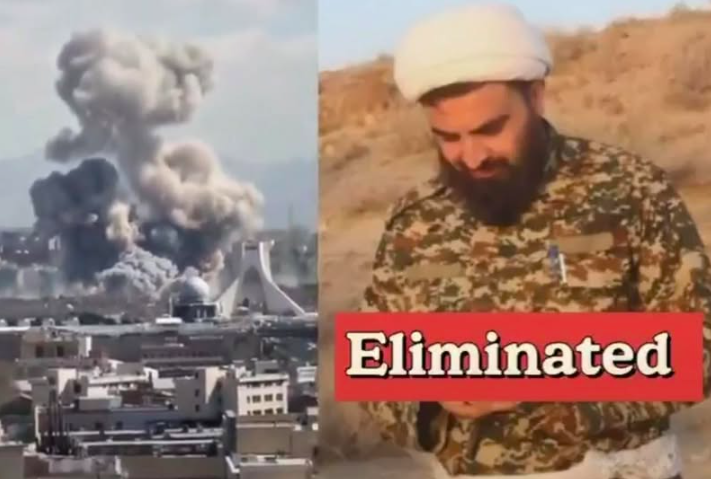
A major development in the war involving Iran, Israel and the United States emerged on March 17, 2026, when Iranian state media confirmed the death of Gholamreza Soleimani, the commander of Iran’s Basij paramilitary force. Israel had announced earlier that its forces had targeted and killed him in a strike in Tehran.
The development immediately attracted international attention because Soleimani was not a minor figure within Iran’s security establishment. He had led the Basij, a force operating under the Islamic Revolutionary Guard Corps (IRGC), for roughly six years and was closely associated with Iran’s internal security apparatus. His death therefore represented another significant loss for Iran’s military and security leadership during an already extraordinary period of conflict.
According to the Israeli military, the strike occurred in the heart of Tehran and was based on intelligence identifying Soleimani’s location. The IDF said its air force conducted the operation and described it as a precise strike against the Basij leadership. Iranian authorities subsequently confirmed Soleimani’s death, describing him as having been killed in what they called an attack by the United States and Israel.
Who Was Gholamreza Soleimani?
Soleimani had been one of the most recognizable commanders within Iran’s internal security structure. The Basij is a volunteer-based paramilitary organization that operates under the IRGC and has branches throughout Iran.
Established after the 1979 Islamic Revolution, the Basij has played multiple roles over the decades. It has been involved in mobilization, security operations and the government’s response to domestic unrest. Human-rights organizations and Western governments have repeatedly criticized the organization over its alleged involvement in suppressing protests.
The Basij was particularly prominent during periods of mass demonstrations inside Iran. Its members have been deployed alongside other security forces during unrest, making the organization one of the most visible instruments of the Iranian government’s internal security system.
For supporters of Iran’s government, however, the organization represents loyalty to the Islamic Republic and national defense. Iranian officials have repeatedly portrayed Basij members as volunteers protecting the country against domestic and foreign threats.
That complicated history explains why Soleimani’s death carries significance far beyond the loss of a single military commander.
A Wider Attack on Iran’s Leadership
The strike did not occur in isolation.
It came during an intense period in which senior Iranian political, military and security officials were being targeted. Other senior figures had also been killed during the conflict, creating enormous pressure on Iran’s leadership structure. Reuters later reported that the deaths of multiple senior military and political figures had severely disrupted Iran’s command structure.
Another major figure reported killed during the same period was Ali Larijani, secretary of Iran’s Supreme National Security Council. Israeli officials said Larijani and Soleimani were both eliminated in overnight strikes. Iranian authorities later confirmed Larijani’s death as well.
The simultaneous loss of senior political and security officials demonstrated how deeply the conflict had penetrated Iran’s leadership system.
For Israel, targeting senior commanders was intended to weaken Iran’s ability to coordinate military and internal-security operations.
For Tehran, the deaths represented a direct challenge to the survival and stability of the Islamic Republic.
The Basij Becomes a Major Target
Following Soleimani’s death, Israeli forces also struck Basij positions across Tehran, according to Israeli reporting. The objective appeared to extend beyond removing individual commanders and toward damaging the organization’s ability to operate throughout the capital.
The Basij’s decentralized structure, however, makes it difficult to eliminate the organization simply by removing its top leadership.
Unlike a conventional military unit dependent entirely on a single headquarters, the Basij has numerous local branches and networks. This means that even a major loss of leadership does not automatically mean the disappearance of the organization.
The Associated Press reported that despite strikes against senior leaders and positions, Basij and other security forces continued operating checkpoints and maintaining security measures in Tehran.
That reality makes the consequences of Soleimani’s death more complicated than the headline might suggest.
Why the Strike Matters
The killing of a senior commander can have several consequences during wartime.
First, there is the immediate loss of experience. Senior commanders possess knowledge of personnel, communications systems, organizational structures and operational procedures. Replacing them can take time.
Second, there is the psychological effect.
When commanders are killed despite attempts to protect them, other officials may become more cautious. They may change locations frequently, reduce communications and avoid predictable routines.
Third, there is a political dimension.
The death of a senior Basij commander can be presented by Israel as evidence that its intelligence and military capabilities remain capable of reaching highly protected figures inside Tehran.
Iran, meanwhile, can portray the same event as evidence of foreign aggression and use it to rally supporters around the government.
This information battle is almost as important as the military operation itself.
The Human Cost
Behind every military headline are civilians living through the consequences.
Tehran is a densely populated city of millions of people. Military strikes in or around the capital inevitably raise concerns about civilian safety, infrastructure damage and disruption to everyday life.
Residents can face explosions, air-raid warnings, damaged buildings, transportation problems, communications disruptions and uncertainty about where the next strike may occur.
For ordinary Iranian families, the death of a commander may be far less important than whether they can safely get home, find food, communicate with relatives or protect their children.
That distinction is important when discussing the conflict.
Military leaders may describe operations in terms of targets and command structures, but civilians experience war at street level.
What Happens Next?
The death of Soleimani is unlikely by itself to determine the outcome of the conflict.
Iran has extensive security institutions, and the Basij remains a large organization with local structures throughout the country. Even after losing senior leaders, Iran can appoint replacements and continue operations.
At the same time, repeated losses among senior commanders could create serious organizational challenges.
If leadership losses continue, Iran could face difficulties coordinating forces, maintaining communications and protecting important officials.
The broader conflict therefore remains unpredictable.
Each strike can produce military consequences, political reactions and new escalation.
For Israel and the United States, weakening Iran’s military and security leadership may be viewed as a way to reduce Tehran’s ability to wage war or suppress internal opposition.
For Iran’s government, the priority is maintaining control while demonstrating that its institutions remain functional despite the deaths of senior officials.
A Turning Point or Another Chapter?
The killing of Gholamreza Soleimani is undoubtedly a major event, but whether historians eventually view it as a turning point will depend on what follows.
If Iran’s security structure remains intact, his death may ultimately become one episode in a much longer conflict.
If the loss of senior commanders contributes to fragmentation, defections or a major political transformation, however, the strike could acquire much greater historical significance.
For now, one thing is clear: the conflict has moved far beyond attacks against conventional military installations.
Senior political leaders, intelligence officials and internal-security commanders have all become part of the battlefield.
Soleimani’s death demonstrates the extraordinary reach of the campaign and the degree to which Iran’s leadership is under pressure.
Yet the most important question is no longer simply who has been eliminated.
It is what happens to Iran’s political and military system after so many senior figures are gone—and whether those losses lead to further escalation, internal change, or an eventual path toward negotiations.
The answer will shape not only Iran’s future but potentially the wider Middle East for years to come.