Breaking Free: The Invisible Chains That Hold Us Back
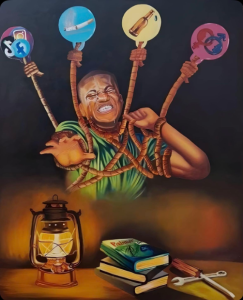
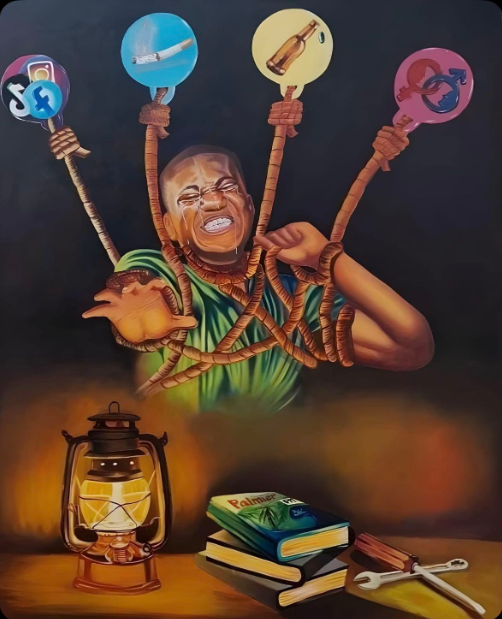
Not all chains are made of iron. Some cannot be seen, yet they are just as powerful. They quietly wrap around our thoughts, habits, emotions, and daily routines until we no longer realize they are controlling us. The symbolic artwork above captures this reality with striking clarity. A person struggles while tied by ropes connected to various temptations and distractions, reminding us that many of life’s greatest battles take place within the mind.
In today’s world, freedom is often defined as the ability to make choices. We can choose what to watch, what to buy, where to go, and whom to follow online. Yet with so many choices comes a different kind of challenge. Some choices slowly become habits, and some habits quietly become addictions.
One of the most obvious symbols in the image is social media. Platforms designed to connect people have transformed how we communicate, learn, and entertain ourselves. Used wisely, they offer incredible opportunities to stay informed and maintain relationships across great distances. However, endless scrolling can also consume hours that might otherwise be spent learning new skills, strengthening relationships, or simply enjoying the present moment.
Many people have experienced the feeling of checking their phone “for just a minute” only to realize an hour has disappeared. Notifications, likes, and short videos are intentionally designed to capture attention. Over time, this constant stimulation can make it difficult to focus on longer tasks such as reading, studying, or meaningful conversations.
Another rope in the artwork represents smoking. For generations, tobacco has been one of the world’s most recognized addictive substances. Millions have struggled to quit despite understanding its health risks. Addiction often begins with curiosity, social influence, or stress relief, but breaking free requires determination, support, and sometimes professional help.
Nearby, the bottle symbolizes alcohol. Like many things in life, alcohol affects different people in different ways. While some consume it responsibly, others find themselves relying on it to cope with stress, loneliness, anxiety, or disappointment. When a temporary escape becomes a permanent habit, relationships, careers, and physical health may begin to suffer.
The final symbol appears to represent adult content, another modern challenge made increasingly accessible through the internet. Many experts note that excessive consumption of highly stimulating online content can interfere with relationships, expectations, productivity, and emotional well-being. For some individuals, recognizing the problem is the first step toward building healthier habits and seeking appropriate support if needed.
Although each rope represents a different struggle, they all share one common characteristic: they promise immediate satisfaction while often demanding a long-term cost.
What makes these invisible chains especially powerful is that they rarely appear all at once. They tighten gradually. A few extra minutes online become hours. Occasional unhealthy habits become daily routines. Small compromises slowly reshape priorities until people find themselves wondering how life became so different from what they originally intended.
The image also includes objects that symbolize hope. A lantern rests on the table, casting light into the darkness. Light has long represented wisdom, understanding, and truth. Before anyone can overcome a problem, they must first recognize that it exists. Honest self-reflection often becomes the beginning of meaningful change.
Next to the lantern are several books. Throughout history, books have represented knowledge, education, and personal growth. Reading exposes people to new ideas, different perspectives, and practical solutions developed by others who have faced similar challenges. Whether through literature, biographies, psychology, philosophy, or spiritual teachings, learning often provides the tools needed to overcome obstacles.
Beside the books lies a wrench, a practical tool used for repair. Unlike magical solutions, a wrench represents effort. Personal growth usually requires work. Broken habits are repaired through consistent action rather than overnight transformation. Every healthy choice strengthens discipline little by little.
Breaking free from unhealthy habits rarely happens instantly. Most lasting change comes through small daily decisions. Choosing to spend less time on a phone, exercising regularly, setting healthier routines, talking honestly with trusted friends or family members, and seeking professional guidance when necessary are all examples of practical steps that gradually loosen life’s invisible ropes.
Support from others also plays an important role. Friends, family members, mentors, teachers, counselors, and support groups often provide encouragement during difficult moments. Many people who successfully overcome addiction or destructive habits describe the importance of accountability and community. Few people achieve lasting transformation entirely on their own.
Equally important is self-compassion. Personal growth does not require perfection. Setbacks happen. Progress is rarely a straight line. Learning from mistakes instead of surrendering to them allows individuals to continue moving forward despite temporary failures.
Modern society offers incredible opportunities for education, creativity, and connection. The same technologies that can distract us can also teach valuable skills, connect us with inspiring communities, and provide access to resources that previous generations never imagined. The key lies not in rejecting technology altogether but in learning to control it instead of allowing it to control us.
Ultimately, the illustration reminds us that every person faces some form of internal struggle. The specific ropes may differ from one individual to another, but nearly everyone battles habits, fears, distractions, or temptations that compete for attention and energy. Recognizing these challenges is not a sign of weakness—it is often the first sign of strength.
True freedom is not simply having unlimited choices. It is developing the wisdom and discipline to choose what genuinely improves our lives. By seeking knowledge, embracing honest reflection, using practical tools for growth, and accepting support from others, people can gradually loosen the invisible chains that hold them back.
The road toward freedom is rarely easy, but every step matters. Each positive decision weakens the grip of unhealthy habits and strengthens character. Over time, those small victories accumulate, allowing individuals to reclaim their focus, their purpose, and ultimately, their future.