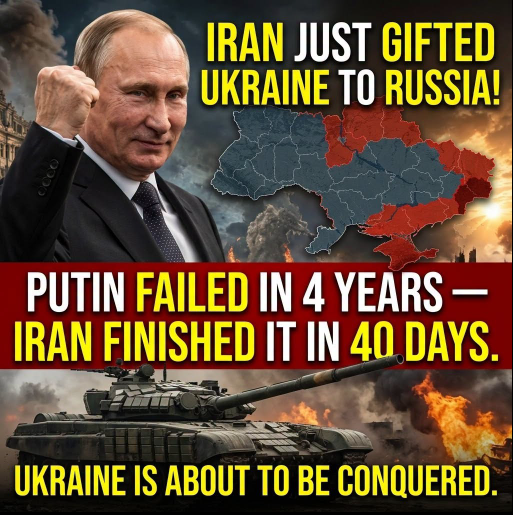
Fictional Story: “The Silver Platter”
The following is a work of fiction. It does not describe real events or real government actions.
The first reports appeared just after sunrise. Financial markets hesitated. Television anchors interrupted scheduled programming. Across Europe, analysts scrambled to interpret a series of unexpected diplomatic developments that seemed to shift the balance of power overnight.
No one had anticipated the announcement.
For months, negotiations had taken place behind closed doors. Intelligence agencies suspected that several nations were quietly reshaping alliances, but concrete evidence remained elusive. Then came a statement from an unnamed diplomatic source suggesting that a secret agreement had fundamentally altered the strategic landscape.
Within minutes, headlines spread across the globe.
Social media erupted with speculation. Commentators declared that history had changed forever. Some insisted that a major regional power had unknowingly delivered a decisive advantage to another nation. Others urged caution, reminding audiences that early reports during international crises are often incomplete.
Inside government offices, officials gathered around secure briefing tables.
Maps covered the walls.
Military advisers reviewed satellite imagery while economists examined the potential effects on energy markets. Every decision carried enormous consequences, and every rumor threatened to influence public opinion before verified information became available.
In the fictional Republic of Norland, Prime Minister Elena Kovacs convened an emergency cabinet meeting.
“We cannot react to rumors,” she told her ministers. “We respond only to facts.”
Her words reflected the challenge facing every modern government: information now traveled faster than verification.
Meanwhile, international journalists raced between embassies searching for confirmation.
Some diplomats refused to comment.
Others denied everything.
A handful simply smiled and walked away.
Those reactions fueled even more speculation.
Across television studios, experts debated whether the geopolitical shift had been planned for years or whether it had emerged from a series of unintended consequences. One analyst argued that history often changes through gradual decisions rather than dramatic battles.
Another disagreed.
“Sometimes,” he said, “a single diplomatic choice creates consequences that no one anticipates.”
As the hours passed, global markets became increasingly volatile.
Oil prices fluctuated.
Currencies shifted.
Shipping companies reviewed international trade routes.
Investors searched for stability while governments attempted to reassure their citizens.
Behind the scenes, intelligence officers pieced together fragments from intercepted communications, economic reports, and diplomatic meetings. Each clue pointed toward a larger strategy, but the complete picture remained hidden.
Then came another surprise.
A confidential memorandum appeared online.
Its authenticity could not immediately be confirmed.
Nevertheless, millions of people shared screenshots before investigators had an opportunity to examine the document.
Some celebrated.
Others panicked.
Many simply waited.
Cybersecurity specialists warned that fabricated documents had become common tools in modern information warfare. Even convincing files could be manipulated to influence public opinion before the truth emerged.
The uncertainty became almost as significant as the events themselves.
Governments activated crisis communication teams.
Military leaders emphasized preparedness rather than escalation.
International organizations encouraged dialogue while reminding member states that misunderstanding could prove just as dangerous as deliberate aggression.
Meanwhile, ordinary citizens followed developments from homes, offices, cafés, and airports around the world.
Parents wondered how future events might affect their children’s futures.
Business owners considered supply chains.
Students watched history unfold in real time.
Although the fictional crisis dominated headlines, experienced diplomats quietly worked toward preventing further escalation.
Private conversations replaced public speeches.
Secure video conferences continued late into the night.
Every carefully chosen word carried diplomatic weight.
Finally, after several tense days, representatives from multiple nations gathered for an international summit.
Television cameras focused on every handshake.
Every facial expression generated headlines.
Every sentence was analyzed by political commentators around the world.
When negotiations concluded, the outcome surprised nearly everyone.
The crisis had not been caused by a single nation secretly “handing” victory to another.
Instead, it resulted from years of misunderstandings, competing interests, economic pressures, intelligence failures, and strategic miscalculations.
The dramatic headlines had simplified a situation that was, in reality, extraordinarily complex.
Historians would later describe the fictional crisis as a reminder that international relations rarely fit into simple narratives.
Wars, alliances, sanctions, diplomacy, and security decisions emerge from countless interconnected choices rather than one dramatic moment.
The public gradually realized another important lesson.
Sensational headlines often attract attention because they reduce complicated events into emotionally powerful slogans.
Reality is almost always more nuanced.
As the fictional summit concluded, markets stabilized.
Diplomats returned home.
Journalists published deeper investigations instead of speculation.
Citizens reflected on how easily uncertainty can spread in the digital age.
Prime Minister Kovacs addressed her nation one final time.
“Our greatest strength,” she said, “is not reacting first. It is understanding first.”
Her words became the defining message of the crisis.
In an age where information travels instantly, patience, verification, and careful analysis remain among the most valuable tools any society possesses.
And while dramatic headlines may capture the world’s attention, history is usually written not by the loudest voices, but by the facts that endure after the speculation fades.