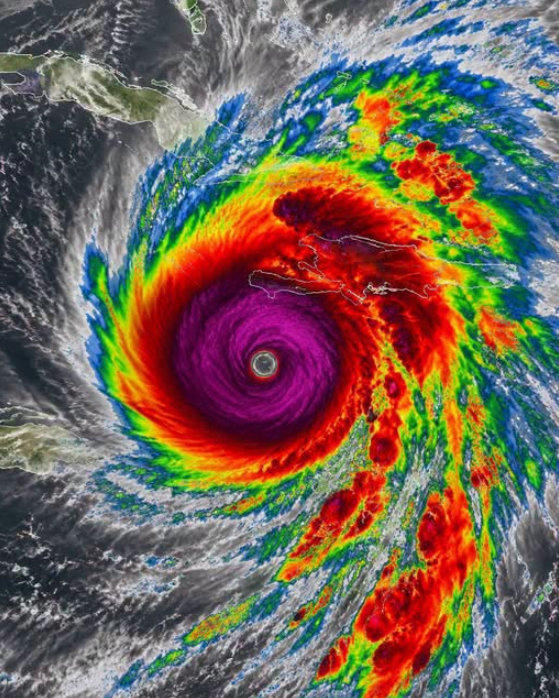
BREAKING NEWS: Large Hurricane “Melissa” Category 5 Forming? Here’s What We Know
Social media has been flooded with alarming posts claiming that a massive Category 5 hurricane named “Melissa” is rapidly forming and threatening coastal communities. The dramatic headlines, often accompanied by phrases like “See more” or “Breaking News,” have sparked concern and prompted thousands of people to share the posts without verifying their accuracy.
At this time, however, there is no official confirmation from recognized meteorological agencies that a Category 5 hurricane named Melissa is currently forming. Weather systems in the Atlantic and Pacific are closely monitored around the clock by experts, and any storm that reaches hurricane strength is tracked using satellite imagery, aircraft reconnaissance, and sophisticated forecasting models.
When a tropical disturbance begins to organize over warm ocean waters, meteorologists first classify it as a tropical depression. If sustained winds increase, it becomes a tropical storm and receives a name from a predetermined list. Only when maximum sustained winds reach at least 74 miles per hour does it officially become a hurricane.
A Category 5 hurricane represents the highest classification on the Saffir-Simpson Hurricane Wind Scale. Such storms have sustained winds of at least 157 miles per hour and are capable of causing catastrophic damage. Buildings can suffer severe structural failures, trees may be uprooted, power outages can last for weeks, and widespread flooding often accompanies the extreme winds.
Because of the devastating potential of these storms, weather agencies issue frequent updates whenever a hurricane threatens populated areas. Emergency managers work with local governments to coordinate evacuations, open shelters, and provide residents with guidance on how to stay safe.
Unfortunately, sensational social media posts often exaggerate or fabricate weather events to attract attention. Headlines claiming that a Category 5 hurricane is “forming right now” without citing official sources can spread unnecessary panic. In many cases, the accompanying images are taken from previous storms or digitally altered to make the situation appear more dramatic than it really is.
Meteorologists rely on scientific data rather than speculation. Satellites observe cloud development, ocean temperatures, atmospheric moisture, and wind patterns. Hurricane Hunter aircraft may fly directly into storms to collect measurements that cannot be obtained from space. These observations help improve forecasts and provide emergency officials with the most accurate information available.
Residents living in hurricane-prone regions are encouraged to stay informed through trusted weather agencies rather than relying solely on social media posts. Official forecasts are updated several times a day, especially when tropical systems are active.
Preparing for hurricane season is important regardless of whether a specific storm is approaching. Experts recommend assembling an emergency kit that includes drinking water, nonperishable food, flashlights, batteries, prescription medications, important documents, and portable phone chargers. Families should also discuss evacuation routes and identify a safe meeting place in case they become separated.
Homeowners can reduce storm damage by securing outdoor furniture, trimming weak tree branches, reinforcing windows if necessary, and ensuring drainage systems are clear. Taking these steps before a storm develops is much safer than waiting until severe weather is imminent.
Climate scientists continue to study how warmer ocean temperatures may influence hurricane intensity. While research suggests that some storms may become stronger under favorable conditions, each hurricane develops differently depending on numerous atmospheric and oceanic factors. Forecasting remains a complex scientific process that improves as new data become available.
If an actual Category 5 hurricane were developing, national weather agencies would issue watches and warnings well in advance whenever possible. Television stations, radio broadcasts, weather apps, and emergency alert systems would all distribute verified information to help the public make informed decisions.
The best response to any alarming weather headline is to pause before sharing it. Check whether the information comes from an official meteorological organization or a reputable news outlet. False claims can spread quickly online, creating confusion during situations where accurate information is essential.
As hurricane season continues, forecasters remain vigilant, monitoring tropical waves and areas of disturbed weather across the oceans. Most systems never become major hurricanes, while others weaken before reaching land. Continuous observation allows experts to refine predictions and provide communities with timely guidance.
For now, reports claiming that a Category 5 Hurricane Melissa is already forming should be treated with caution unless confirmed by official weather authorities. Staying informed through trusted sources, preparing emergency supplies in advance, and following local emergency instructions remain the most effective ways to stay safe during hurricane season.
Weather can change rapidly, but accurate information saves lives. Before reacting to dramatic headlines or sharing alarming social media posts, verify the facts through recognized meteorological agencies. Responsible reporting and informed preparation are the strongest defenses against both dangerous storms and dangerous misinformation.