The Simple Ways People Use to Remove Weeds Growing Between Patio Stones
A beautiful patio can transform an outdoor space into a relaxing place for gatherings, meals, and quiet moments. However, one common problem many homeowners face is weeds growing between patio stones. Those small green plants pushing through cracks and gaps can make even the most carefully designed patio look neglected. The good news is that removing weeds between patio stones does not always require expensive tools or professional help. Many people use simple, affordable methods to restore the clean appearance of their outdoor areas.
Weeds grow between patio stones because the spaces between the stones collect soil, dust, leaves, and organic material. Over time, these materials create a perfect environment for weed seeds to settle and grow. Rain, wind, birds, and nearby plants can all contribute to the spread of unwanted growth. While weeds may seem harmless at first, their roots can sometimes spread and make cracks wider, potentially affecting the stability of the patio surface.
One of the simplest methods people use is pulling weeds by hand. This traditional approach works especially well when weeds are still young and have not developed deep roots. The best time to pull weeds is after rainfall or after watering the area because the soil becomes softer, making it easier to remove the entire plant. Pulling slowly and carefully helps remove the roots instead of only breaking off the leaves, which can allow the weed to grow back.
For tougher weeds, many homeowners use a small garden tool such as a weeding knife, screwdriver, or patio crack scraper. These tools help reach into narrow spaces between stones and loosen stubborn roots. A tool allows people to dig deeper and remove weeds that cannot be pulled easily by hand. This method is especially useful for patios with many cracks or older stone surfaces where weeds have been growing for a long time.
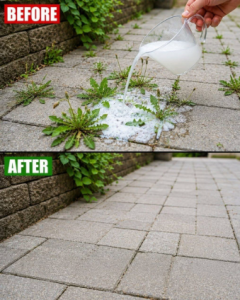
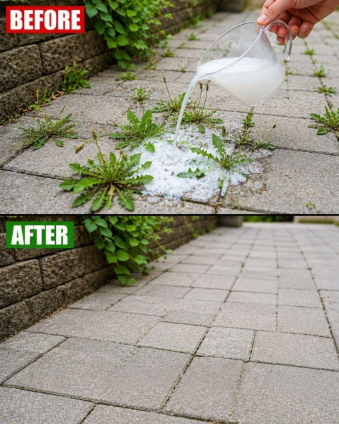
Another popular technique is using boiling water. This simple household solution can be surprisingly effective. Carefully pouring boiling water directly onto weeds can damage their leaves and roots, causing them to die. Many people prefer this method because it does not require chemical weed killers. However, caution is important because boiling water can also harm nearby plants, grass, or flowers if it is poured in the wrong place.
White vinegar is another common home remedy used by some people to control weeds. Vinegar contains acetic acid, which can dry out plant leaves and weaken weeds. Some homeowners spray vinegar directly onto unwanted plants growing between patio stones. This method tends to work best on small, young weeds. It may be less effective on large, established weeds with deep roots, and repeated applications may be needed.
Salt is another old-fashioned method that some people use to prevent weeds from returning. Salt can make the area less suitable for plant growth by affecting the soil conditions. However, it should be used carefully because too much salt can damage surrounding plants and may affect the soil for a long time. Areas near lawns, gardens, or valuable plants should be treated with caution.
For those who prefer store-bought solutions, there are many weed removal products available. These products are designed to kill weeds and prevent future growth. Some are made specifically for use on patios, driveways, and pathways. When using chemical products, it is important to follow the instructions carefully, avoid unnecessary exposure, and consider the impact on pets, children, and nearby plants.
A more natural approach many people use is improving the spaces between patio stones to prevent weeds from returning. After removing existing weeds, homeowners often clean out the gaps and refill them with materials such as polymeric sand. This special type of sand hardens when activated with water, creating a stronger barrier that makes it harder for weeds to take root.
Regular maintenance is one of the easiest ways to keep patio stones looking clean. Sweeping the patio frequently helps remove dirt, leaves, and seeds before they settle into cracks. Removing fallen organic material quickly can reduce the chances of weeds growing. Some homeowners also pressure wash their patios occasionally to remove buildup and clear small plants before they become larger problems.
Another useful prevention method is sealing patio stones. A quality patio sealer can help protect the surface and reduce the amount of moisture and debris that collects between stones. While sealing does not guarantee that weeds will never appear, it can make the environment less inviting for weed growth and make future cleaning easier.
Some people also use flame weeders, which use heat to destroy unwanted plants. These tools can be effective for patios and walkways because they target weeds growing in cracks. However, they require careful handling, especially in dry conditions or near flammable materials. Safety should always be the priority when using heat-based methods.
The best weed removal method often depends on the size of the problem. A few small weeds may only require hand pulling, while a patio covered in stubborn growth may need a combination of cleaning, removal, and prevention techniques. Many homeowners find that combining simple methods provides the best results.
Removing weeds between patio stones does not have to be a difficult or expensive task. With regular care and a few basic techniques, homeowners can maintain a clean and attractive outdoor space. Whether using hand tools, boiling water, natural treatments, or preventive measures like polymeric sand, there are many ways to fight unwanted growth and keep patios looking their best.
The key is consistency. Weeds are much easier to manage when they are removed early before they develop strong root systems. A few minutes of regular maintenance can save hours of work later and help preserve the beauty and value of an outdoor living area. With patience and the right approach, anyone can keep their patio stones looking fresh, tidy, and welcoming throughout the year.