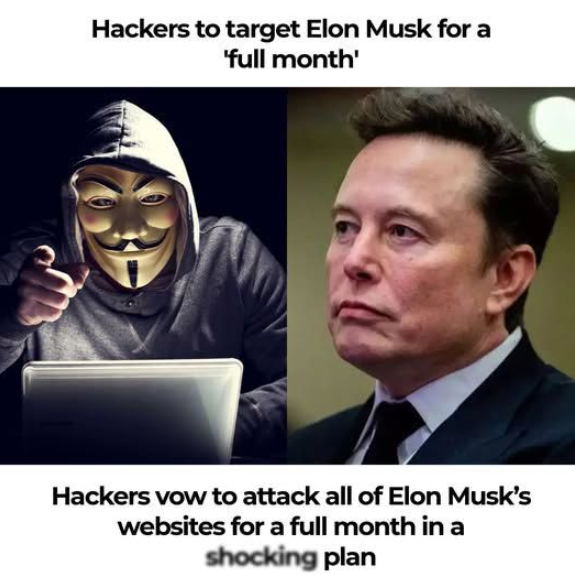
Tesla, SpaceX, and X—Musk-Owned Companies Are Seen as High-Risk Targets
Few business leaders attract as much global attention as Elon Musk. As the driving force behind Tesla, SpaceX, and X (formerly Twitter), Musk has built a business empire that spans electric vehicles, space exploration, artificial intelligence, telecommunications, and social media. While these companies have transformed their respective industries, their high public profile has also made them attractive targets for cybercriminals, activists, competitors, and other malicious actors.
Security experts increasingly describe Musk-owned companies as “high-risk targets” because of their global influence, valuable technology, and enormous amounts of sensitive data. Every announcement, product launch, software update, or political statement can trigger waves of online attention—both positive and negative. With billions of dollars at stake, protecting these organizations has become an increasingly complex challenge.
Tesla, for example, is far more than an electric vehicle manufacturer. The company develops advanced battery technology, autonomous driving software, robotics, artificial intelligence, and one of the world’s largest electric vehicle charging networks. Every Tesla vehicle functions like a connected computer, constantly exchanging data for navigation, diagnostics, software updates, and performance improvements.
Because of this digital infrastructure, cybersecurity remains a top priority. Security researchers continually examine connected vehicle systems for potential vulnerabilities, while Tesla operates bug bounty programs that reward ethical hackers who responsibly disclose security flaws before criminals can exploit them.
SpaceX faces an entirely different set of security challenges. As a leading aerospace company responsible for launching satellites, transporting astronauts, and operating the Starlink satellite internet network, SpaceX manages technologies that are valuable both commercially and strategically. Any disruption to launch systems, communications infrastructure, or satellite operations could have significant consequences.
The company’s growing role in global communications through Starlink has further increased attention from governments, military organizations, and cybersecurity experts. Satellite internet networks are considered critical infrastructure in many situations, making strong digital defenses essential.
Meanwhile, X serves hundreds of millions of users worldwide who rely on the platform for news, entertainment, politics, and real-time communication. Large social media platforms routinely face cyberattacks, phishing campaigns, misinformation operations, spam networks, and attempts to compromise user accounts.
Protecting such a platform requires constant monitoring for suspicious activity while balancing security with user privacy and freedom of expression. The scale alone presents enormous technical challenges.
One major concern across all Musk-owned companies is phishing. Criminals frequently impersonate Tesla customer support, SpaceX recruiters, or X verification teams in an effort to steal passwords, financial information, or cryptocurrency. Fake emails, fraudulent websites, and counterfeit social media accounts remain among the most common attack methods.
Ransomware also represents a growing threat for large corporations. Cybercriminal groups increasingly target organizations with valuable intellectual property and significant financial resources. Manufacturing facilities, engineering networks, and cloud infrastructure can all become attractive targets if security measures fail.
Industrial espionage presents another challenge. Companies developing cutting-edge technologies often attract competitors seeking confidential research, product designs, software code, or manufacturing techniques. Strong access controls, encryption, employee training, and continuous monitoring help reduce these risks.
Physical security is equally important. Tesla factories, SpaceX launch facilities, and company offices require sophisticated protection systems to prevent unauthorized access, theft, vandalism, or sabotage. Security teams coordinate closely with local authorities to maintain safe operations.
Artificial intelligence has introduced both opportunities and risks. AI systems can help identify cyber threats faster than traditional methods by recognizing unusual network activity and detecting malicious behavior. At the same time, criminals increasingly use AI to create convincing phishing emails, fake videos, and automated attacks that are more difficult to detect.
Another challenge comes from public visibility. Elon Musk’s comments frequently generate worldwide media coverage, sometimes attracting intense public debate. As a result, his companies often become focal points for online campaigns, protests, and coordinated digital activity that security teams must monitor carefully.
Supply chain security has become increasingly important as well. Modern manufacturing depends on thousands of suppliers providing hardware, software, electronics, and specialized components. Even if a company’s own systems remain secure, vulnerabilities introduced through suppliers can create additional risks.
Cloud computing also requires extensive safeguards. Large organizations store enormous quantities of engineering data, customer information, software development resources, and operational systems in cloud environments. Multi-factor authentication, encryption, continuous monitoring, and strict identity management are now standard defensive practices.
Employee awareness remains one of the strongest defenses against cyber threats. Regular training helps staff recognize phishing attempts, suspicious downloads, fraudulent phone calls, and social engineering tactics designed to bypass technical security measures.
Governments around the world continue strengthening cybersecurity regulations affecting transportation, aerospace, telecommunications, and critical infrastructure. Companies operating in these sectors must continuously adapt to evolving compliance requirements while maintaining operational efficiency.
Despite these risks, Musk-owned companies continue expanding into new industries. Tesla advances autonomous driving and robotics. SpaceX develops next-generation launch systems while expanding Starlink. X continues evolving its platform with new communication and financial features.
Each innovation creates exciting opportunities but also introduces new security considerations that require careful planning and constant improvement.
Cybersecurity experts generally agree that organizations with global influence will continue facing increasingly sophisticated threats. Rather than relying on a single protective measure, companies employ multiple layers of defense, including advanced monitoring systems, encrypted communications, rapid incident response teams, regular software updates, employee education, and collaboration with security researchers.
As technology becomes even more interconnected, safeguarding digital infrastructure will remain one of the defining challenges for companies operating at the forefront of innovation. For Tesla, SpaceX, and X, maintaining public trust depends not only on developing groundbreaking products but also on protecting the systems, data, and services that millions of people rely upon every day. Their continued success will depend on staying one step ahead of an ever-evolving landscape of cybersecurity threats while continuing to push the boundaries of technology, transportation, communications, and space exploration.