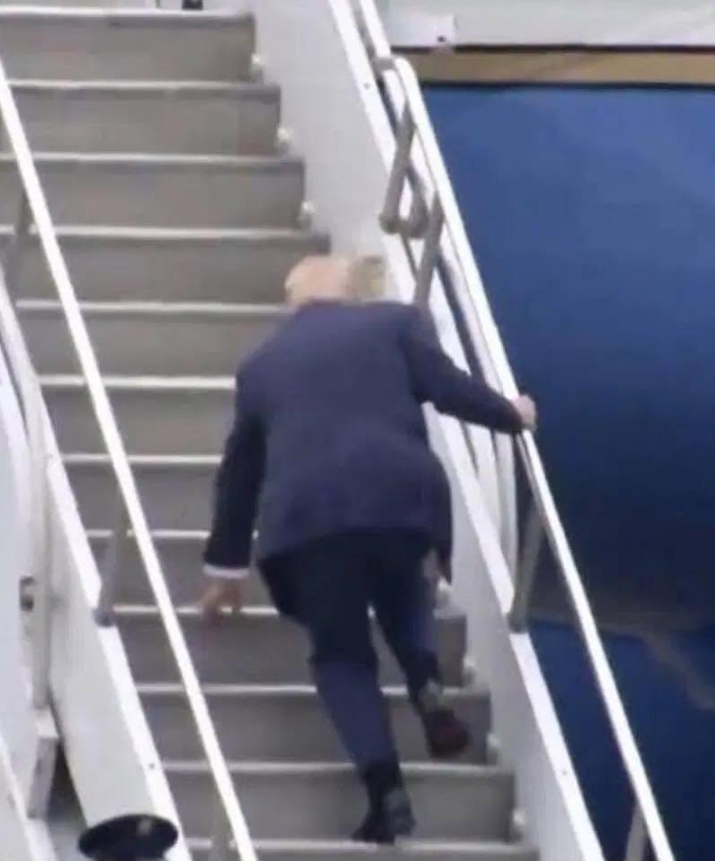
In June 2025, President Donald Trump briefly stumbled while climbing the stairs to Air Force One before departing on an official trip. The moment, captured on video by news cameras covering the event, quickly spread across television broadcasts and social media platforms. Although the clip generated widespread discussion, the stumble lasted only a moment. Trump immediately regained his footing, continued up the staircase without assistance, waved to reporters, and boarded the aircraft as scheduled.
As is common with presidential departures, journalists and photographers were already present to document the event. Air Force One departures are highly visible occasions, and nearly every movement made by the president is recorded from multiple camera angles. Because of this constant coverage, even small, ordinary incidents can become widely viewed and discussed online within minutes.
Shortly after the video appeared, numerous social media users shared the footage, offering a wide range of reactions. Some treated the incident humorously by creating memes and jokes, while others defended the president, noting that missing a step can happen to anyone. The conversation quickly expanded beyond the incident itself, becoming part of broader political debates between supporters and critics.
The White House did not indicate that the stumble resulted in any injury or required medical evaluation. Trump proceeded with his planned schedule after arriving at his destination, attending meetings and public events without any visible signs of discomfort. News organizations covering the trip likewise reported that the stumble did not interrupt the day’s agenda.
Public figures, particularly presidents, often receive intense scrutiny over even minor moments. Because every appearance is closely monitored, routine actions such as walking across a stage, boarding an airplane, or greeting officials can become subjects of national conversation if something unexpected occurs. Modern technology and social media have amplified this phenomenon, allowing short video clips to reach millions of viewers within hours.
Political analysts noted that similar incidents have involved presidents from both major political parties. Former President Joe Biden experienced several widely reported stumbles while boarding Air Force One during his presidency. President Gerald Ford became known in popular culture for a few highly publicized falls during the 1970s. President Barack Obama also had occasional minor slips while walking stairs or participating in public events. These moments often receive significant media attention regardless of the individual involved.
Experts in presidential security have pointed out that the stairs leading to Air Force One can sometimes present challenges. Weather conditions such as rain, wind, or bright sunlight may affect visibility or footing. Additionally, presidents often board while carrying documents or waving to reporters and supporters, making the climb slightly more complicated than it appears on television.
Medical experts generally caution against drawing conclusions about a person’s health based on a brief video clip. A single stumble does not necessarily indicate an underlying medical condition. Fatigue, distraction, uneven footing, or simply misjudging a step can cause anyone to momentarily lose balance. For that reason, physicians emphasize that health assessments should rely on comprehensive medical evaluations rather than isolated public moments.
The incident also highlighted how quickly information spreads in the digital age. Within minutes of the video appearing online, countless accounts had reposted the footage, often adding commentary that reflected political opinions. Some posts accurately described the event as a brief stumble, while others exaggerated what occurred or suggested conclusions that were unsupported by available evidence. This rapid sharing underscores the importance of verifying information through reliable news organizations before accepting sensational claims.
Communications specialists note that viral clips frequently lack context. A few seconds of video rarely tell the complete story of an event. Longer recordings often show that an individual immediately recovered, continued normally, and experienced no further difficulty. Watching the full sequence rather than an edited excerpt can provide a more accurate understanding of what actually happened.
Supporters of President Trump argued that the incident was insignificant and should not overshadow discussions about government policy or international affairs. Critics viewed it as another highly visible moment that attracted public attention. Regardless of political perspective, most mainstream reporting agreed on the basic facts: Trump briefly lost his footing, quickly recovered, boarded the aircraft independently, and continued with his scheduled travel.
Media scholars frequently observe that stories involving unexpected moments from prominent public figures attract enormous public interest because they appear spontaneous and unscripted. Unlike prepared speeches or official announcements, these brief incidents feel authentic, making them especially likely to spread across news broadcasts and social media feeds. However, they also remind audiences that public officials are human and occasionally experience the same everyday mishaps as anyone else.
The discussion surrounding the video also sparked broader conversations about fairness in media coverage. Commentators from across the political spectrum compared reactions to similar incidents involving different presidents, arguing that public responses often reflect existing political viewpoints. Some believed the coverage was excessive, while others argued that such moments are naturally newsworthy because they involve the nation’s highest office.
Ultimately, the documented facts remain straightforward. Donald Trump briefly stumbled while ascending the stairs to Air Force One, regained his balance almost immediately, continued boarding the aircraft without assistance, and completed his planned schedule. No official information indicated that the incident resulted in injury or disrupted presidential activities. While the video generated widespread online discussion and political commentary, the event itself was brief and concluded without any reported complications.