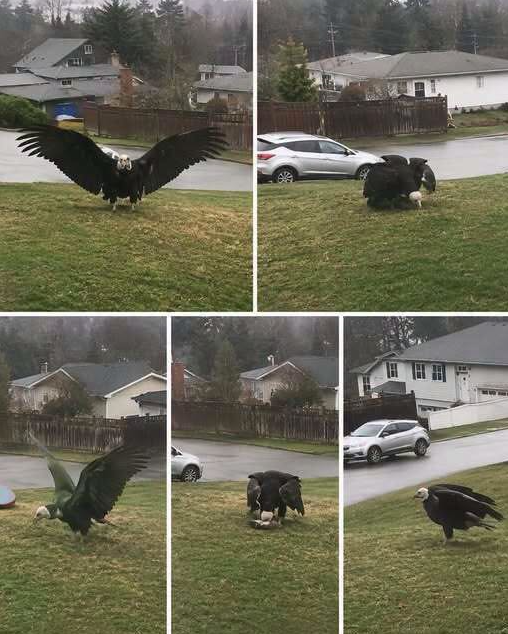
Giant Eagle Captured in Broad Daylight? Here’s What Really Happened
A dramatic headline claiming that a “giant eagle” has been captured has been circulating widely on social media, accompanied by striking photos and sensational captions. The posts encourage readers to click “See More,” promising shocking details about an enormous bird unlike anything ever seen before.
At first glance, the images appear convincing. The bird seems to tower over nearby people, with massive wings stretching far beyond what most would expect from an eagle. Unsurprisingly, thousands of users have shared the story, wondering whether scientists have discovered a new species or whether an escaped prehistoric creature has somehow survived into modern times.
As incredible as these claims may sound, the truth is far less mysterious.
Wildlife experts explain that photographs can be highly misleading when taken from unusual angles. A technique known as forced perspective can make an object in the foreground appear dramatically larger than people or objects standing farther away. This effect has been used in photography and filmmaking for decades.
In many viral images of “giant eagles,” the bird is being held much closer to the camera while the people standing behind it are several feet farther away. The result creates the illusion of a bird of impossible size.
That doesn’t mean large eagles don’t exist. Several species are genuinely impressive. The Steller’s sea eagle, found primarily in northeastern Asia, is among the heaviest eagles in the world and can have a wingspan exceeding seven feet. Harpy eagles from Central and South America possess enormous talons capable of catching monkeys and sloths. Golden eagles, found across much of the Northern Hemisphere, are also powerful hunters with remarkable eyesight.
Even so, none of these birds approach the gigantic proportions often shown in viral social media posts.
Another reason these stories spread so quickly is because they tap into humanity’s fascination with enormous creatures. Legends from around the world describe giant birds capable of carrying away livestock—or even people. Ancient myths mention creatures with wings that darkened the sky, while folklore from many cultures tells of mysterious birds inhabiting remote mountains and forests.
Modern science, however, relies on physical evidence rather than dramatic stories. Every known eagle species has been carefully studied, measured, and documented by ornithologists. Discovering a truly gigantic eagle would require extensive scientific examination, DNA analysis, and verification by wildlife authorities before such a finding would be announced.
Occasionally, authentic discoveries of unusual birds do occur. Conservation teams sometimes encounter rare species in remote habitats, while rehabilitation centers rescue injured birds that astonish visitors with their impressive size. These real events can easily become exaggerated as they spread across the internet.
Digital editing also plays a role. Image-editing software and artificial intelligence have made it easier than ever to create realistic-looking pictures that blur the line between fact and fiction. Without careful verification, many viewers assume these images represent real events.
Wildlife professionals encourage people to examine extraordinary claims critically. Questions such as “Who reported the discovery?” “Has a recognized scientific organization confirmed it?” and “Are there multiple reliable sources?” can help separate genuine news from internet rumors.
Interestingly, some of the largest birds in history are known only from fossils. Millions of years ago, enormous flying birds did exist. Species such as Argentavis magnificens are believed to have had wingspans far greater than those of today’s eagles. These prehistoric giants soared over ancient landscapes long before humans appeared.
Their existence demonstrates that nature has produced incredible flying animals in the past, but there is no credible evidence that such birds still roam the skies today.
Conservationists also remind the public that modern eagles face genuine challenges. Habitat loss, pollution, illegal hunting, and collisions with power lines continue to threaten many populations worldwide. Rather than focusing on sensational myths, experts encourage support for efforts that protect the magnificent birds that actually exist.
Watching an eagle soar through the air remains an unforgettable experience. Their keen eyesight, powerful wings, and remarkable hunting abilities have earned them admiration for centuries. They symbolize strength, freedom, and resilience in many cultures around the world.
In the end, the viral story of a “giant eagle captured” serves as another reminder that extraordinary headlines often prioritize clicks over accuracy. While enormous prehistoric birds once existed and today’s largest eagles are undeniably impressive, claims of impossible-sized eagles should be approached with healthy skepticism until supported by reliable scientific evidence.
Sometimes the real story is every bit as fascinating as the myth. The world’s largest living eagles are extraordinary creatures in their own right, and protecting them ensures future generations will continue to marvel at one of nature’s greatest aerial predators.