Fire Disrupts Operations at London’s Heathrow Airport: Major Travel Delays Follow
One of the world’s busiest international airports faced significant disruption after a fire near the facility led to operational challenges and widespread travel delays. The incident affected thousands of passengers and prompted an extensive response from emergency services, airport officials, and airline operators as they worked to restore normal operations.
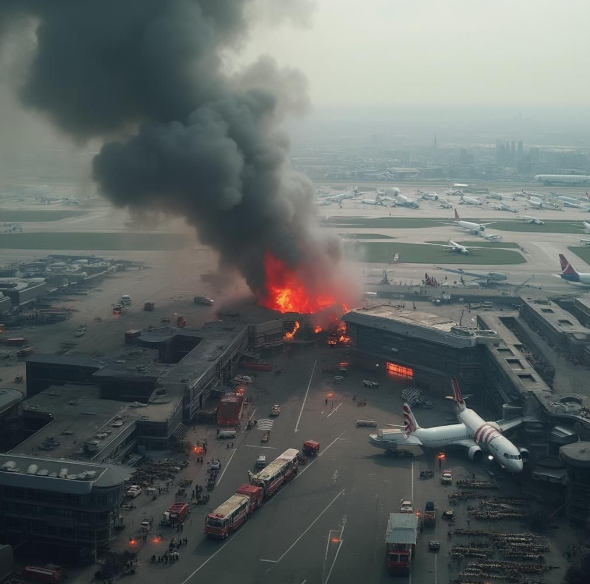
According to officials, emergency crews responded quickly after reports of a fire in infrastructure serving the airport. Firefighters arrived on the scene within minutes, working to contain the blaze and prevent it from spreading further. As a precaution, authorities temporarily suspended or reduced airport operations while the situation was brought under control.
Passengers arriving at Heathrow during the disruption encountered long lines, delayed departures, canceled flights, and uncertainty about their travel plans. Many travelers reported spending hours waiting for updates as airlines worked to determine when flights could safely resume.
Airport officials emphasized that passenger safety remained the highest priority throughout the emergency. While the fire itself was outside the airport’s main passenger terminals, its impact on essential infrastructure created operational challenges that required immediate action.
Heathrow serves millions of passengers each year and functions as one of Europe’s most important aviation hubs. Hundreds of flights connect the airport daily with destinations across North America, Asia, Africa, the Middle East, and Europe. Because of its role as a global transportation center, even a temporary disruption can create ripple effects throughout the international aviation network.
Airlines immediately began adjusting schedules as aircraft awaiting departure remained on the ground. Incoming flights were either delayed, diverted to alternative airports, or temporarily held until airport authorities confirmed that operations could continue safely.
Some travelers found themselves stranded after missing connecting flights, while others were required to spend additional hours inside terminals waiting for revised departure times. Airport staff worked alongside airline representatives to provide information, rebook passengers where possible, and distribute updates as conditions changed.
Emergency responders established a secure area around the fire while investigators assessed the extent of the damage. Fire crews remained at the scene until they were confident that all remaining hot spots had been extinguished and there was no danger of the blaze reigniting.
Authorities also conducted inspections of nearby infrastructure to ensure it remained safe before allowing airport operations to gradually return to normal. Engineers evaluated electrical systems and other critical facilities that support airport functions.
Officials praised the coordinated response between firefighters, police, airport personnel, and emergency management agencies. Their combined efforts helped minimize further disruption while ensuring public safety remained the central focus.
The exact cause of the fire was not immediately confirmed. Investigators began examining the scene shortly after firefighters extinguished the blaze, looking for evidence that could explain how the incident started.
Fire investigators typically evaluate several possible causes, including electrical faults, equipment failures, accidental ignition sources, and environmental factors. Until their examination is complete, officials generally avoid speculating about what may have triggered the fire.
The disruption once again highlighted the complexity of operating a major international airport. Heathrow relies on extensive networks of electrical power, communications equipment, fuel systems, baggage handling technology, and air traffic coordination. Any interruption affecting these systems can quickly impact thousands of passengers.
Modern airports have contingency plans designed to respond to emergencies ranging from severe weather and technical failures to fires and security incidents. These plans involve close coordination among airport management, airlines, emergency responders, and government agencies.
Throughout the incident, airlines encouraged passengers to monitor flight information before traveling to the airport. Many carriers issued travel advisories through their websites, mobile applications, email notifications, and social media accounts.
Some passengers were offered alternative travel arrangements, while others qualified for hotel accommodations or meal vouchers depending on airline policies and the nature of their delays.
Business travelers, vacationers, and families alike experienced disruptions to carefully planned itineraries. International travelers with connecting flights often faced additional complications involving immigration procedures, baggage transfers, and rebooking onto available flights.
Despite the inconvenience, many travelers expressed appreciation for the professionalism shown by emergency responders and airport staff during the incident. Clear communication and visible emergency coordination helped reassure passengers as the situation unfolded.
Aviation experts note that while airport disruptions can be frustrating, temporary operational suspensions are often necessary whenever safety concerns arise. Delaying flights or temporarily closing portions of an airport allows officials to verify that infrastructure remains secure before normal operations resume.
Commercial aviation places a strong emphasis on risk management. Airport operators routinely conduct emergency drills and maintain response plans that can be activated quickly during unexpected events.
As investigators continue reviewing the circumstances surrounding the fire, they are expected to determine whether additional safety recommendations should be made to reduce the likelihood of similar incidents in the future.
In the meantime, Heathrow officials continue working with airlines to restore normal schedules and assist passengers affected by the disruption. Flight operations are typically resumed in phases to avoid overwhelming airport systems after a major interruption.
Travel experts advise passengers flying through major airports following significant operational incidents to check their flight status before leaving for the airport, arrive with extra time when possible, and remain in contact with their airline for the latest information regarding delays or schedule changes.
The incident serves as a reminder that airports are complex transportation systems where even infrastructure issues outside passenger terminals can have widespread consequences. Thanks to rapid action by emergency responders and coordinated efforts among airport personnel, the fire was addressed while minimizing risks to travelers and staff.
As the investigation continues, officials are expected to release additional details regarding the cause of the fire, the extent of the damage, and any measures being taken to strengthen infrastructure resilience. For now, airport operations continue moving toward full recovery, with airlines and airport authorities focused on helping passengers reach their destinations as safely and efficiently as possible