Mexican President States That Trump Is Not an Enemy of Mexico
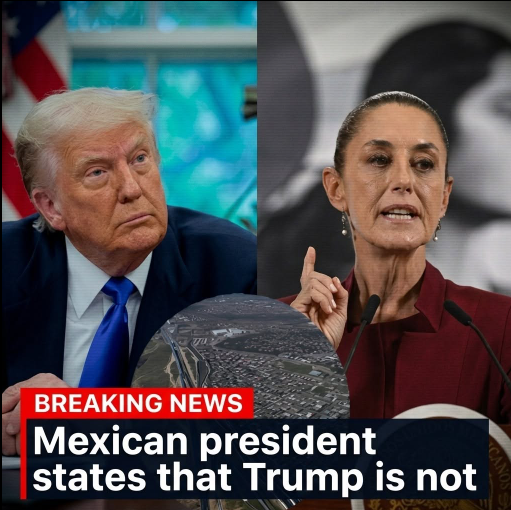
Relations between Mexico and the United States have often been characterized by both cooperation and disagreement, especially when it comes to issues such as immigration, trade, border security, and economic policy. Despite political tensions that sometimes dominate headlines, leaders from both countries have repeatedly emphasized the importance of maintaining a strong bilateral relationship. Recently, the Mexican president made headlines after stating that former U.S. President Donald Trump is “not an enemy of Mexico,” a remark that sparked discussion on both sides of the border.
The statement reflects a broader diplomatic approach focused on maintaining constructive ties with whichever administration or political figure holds influence in the United States. Mexico and the U.S. share one of the world’s largest trading partnerships, a nearly 2,000-mile border, and deep cultural, economic, and family connections that make cooperation essential regardless of political differences.
During public remarks, the Mexican president reportedly stressed that disagreements over policy should not be confused with personal hostility. While acknowledging that there have been significant differences in opinion on immigration enforcement, tariffs, and border policy during Trump’s political career, the president suggested that dialogue and mutual respect remain the best path forward.
Observers noted that the comments may be intended to reinforce stability in the relationship between the neighboring countries. The United States is Mexico’s largest trading partner, accounting for a substantial portion of Mexico’s exports. Millions of jobs in both countries depend on the smooth movement of goods across the border, making economic cooperation a priority for leaders in Washington and Mexico City.
Trade has remained one of the strongest pillars of the bilateral relationship. Since the implementation of the United States-Mexico-Canada Agreement (USMCA), businesses across North America have continued to rely on integrated supply chains that connect manufacturers, farmers, transportation companies, and retailers. The agreement replaced the North American Free Trade Agreement (NAFTA) and established updated rules covering labor standards, digital commerce, environmental protections, and dispute resolution.
Even during periods of political disagreement, both governments have generally worked to preserve these economic ties. Business leaders have frequently encouraged officials to avoid unnecessary disruptions that could affect employment, investment, or consumer prices.
Immigration remains another major issue shaping the relationship. Throughout Trump’s presidency, border security and illegal immigration became central topics of political debate. Policies including the construction of border barriers, increased deportations, and the “Remain in Mexico” program generated strong reactions in both countries.
Mexico often found itself balancing domestic concerns with the need to cooperate on migration management. Mexican authorities increased efforts to address migrant flows through southern Mexico while also calling for broader regional solutions that address the economic and humanitarian conditions driving migration.
The Mexican president’s recent remarks suggest that while policy disagreements may continue, maintaining communication with American political leaders is necessary to address shared challenges. These include organized crime, drug trafficking, human smuggling, and cross-border commerce.
Security cooperation has become increasingly important as both countries seek to combat criminal organizations involved in trafficking fentanyl and other illegal drugs. Law enforcement agencies regularly exchange intelligence and coordinate investigations targeting transnational criminal networks.
Analysts say that regardless of which political party controls the White House, both nations have strong incentives to continue collaborating on security matters. Criminal organizations operate across borders, making international cooperation an essential component of effective enforcement.
Energy policy has also been a recurring source of discussion between the two governments. Mexico has pursued policies emphasizing state control over portions of its energy sector, while U.S. officials have expressed concerns about market access for American companies. These disputes have generally been addressed through consultations established under the USMCA framework.
Climate cooperation represents another area where the countries continue seeking common ground. Environmental issues such as water management, air quality, renewable energy development, and conservation affect communities on both sides of the border.
The Mexican president’s statement has also generated discussion among political commentators. Some view the remarks as a pragmatic acknowledgment that future cooperation could involve working with Trump again if he returns to office. Others interpret the comments as part of Mexico’s longstanding diplomatic tradition of maintaining respectful relations with leaders regardless of ideological differences.
Diplomacy often requires separating political rhetoric from official government relationships. While election campaigns may feature strong language, governments typically continue working together on practical matters once elections conclude.
Millions of people have personal ties connecting the two countries. Families frequently live on both sides of the border, and cross-border travel supports tourism, education, and business. These human connections contribute to the resilience of the bilateral relationship even during politically challenging periods.
Economic analysts note that nearshoring has strengthened Mexico’s role in North American manufacturing. Companies seeking to shorten supply chains have increasingly invested in Mexican production facilities, creating opportunities for growth while reinforcing economic integration with the United States.
The future of U.S.-Mexico relations will likely continue to involve both cooperation and disagreement. Issues such as migration, trade enforcement, environmental policy, and security are unlikely to disappear, but both governments recognize the importance of managing these challenges through ongoing dialogue.
Political leaders often emphasize that neighboring countries cannot simply ignore one another. Geography, commerce, and shared interests require continuous engagement regardless of differences in domestic politics.
The Mexican president’s observation that Trump is “not an enemy of Mexico” appears to underscore this practical reality. While disagreements over specific policies may persist, maintaining diplomatic communication remains essential for addressing issues that affect millions of people in both nations.
Ultimately, the strength of the U.S.-Mexico relationship extends beyond any individual leader. It is built on decades of economic integration, cultural exchange, security cooperation, and shared responsibility for managing one of the world’s busiest international borders. As political landscapes evolve, both countries are expected to continue balancing national priorities with the mutual benefits that come from constructive engagement.