Fiction: The Morning the Capital Held Its Breath
The first hint that something unusual was happening came before sunrise, when commuters noticed an increased police presence around several government buildings in the nation’s capital. Traffic slowed, helicopters circled overhead, and officers quietly redirected vehicles away from streets that were normally packed with early morning workers.
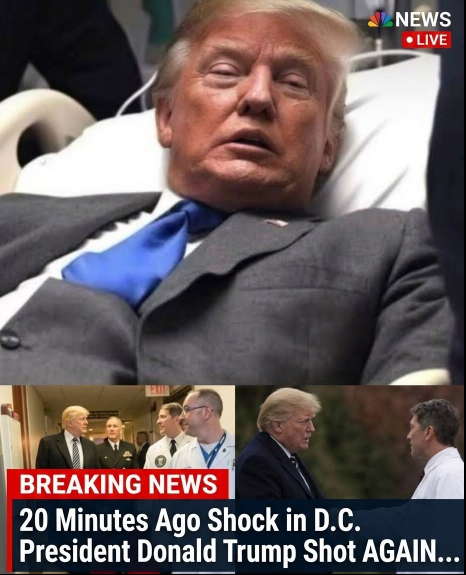
Within minutes, photographs began appearing on social media.
Some showed flashing emergency lights reflected against office windows. Others captured officers setting up temporary barricades. No one outside the security perimeter knew exactly what had happened, yet thousands of online comments confidently declared that they did.
By the time television stations interrupted their regular programming, rumors had already spread farther than verified facts.
Inside the National Security Coordination Center, officials gathered around large digital maps displaying live camera feeds from across the city. Every report was carefully logged. Every witness statement was compared with surveillance footage. Experienced investigators understood that early information during any emergency was often incomplete.
The first priority was simple: determine the facts.
Meanwhile, journalists worked under intense pressure. Producers demanded updates every few minutes, but responsible reporters resisted the temptation to speculate. Instead, they reminded viewers that information was still developing and encouraged everyone to wait for official confirmation before accepting dramatic claims shared online.
Across Washington, the atmosphere became tense.
Office workers stood near windows trying to see what was happening several blocks away. Tourists paused their sightseeing plans as security officers temporarily restricted access to nearby streets. Restaurant owners watched customers gather around televisions mounted above the counters.
Every conversation centered on the same question.
“What happened?”
Investigators followed established procedures.
Security specialists examined every camera angle available from nearby intersections.
Officers interviewed maintenance workers, delivery drivers, and employees who had arrived early for work.
Bomb technicians inspected an unattended object discovered near a restricted area while tactical teams secured surrounding buildings.
The operation unfolded with remarkable discipline.
Nobody rushed to conclusions.
Nobody assumed the worst.
Hours later, investigators pieced together the timeline.
Construction crews working overnight had accidentally left equipment inside an area scheduled to receive additional security screening before a government event later that morning. Standard protocols required an immediate response until officials could verify that no genuine threat existed.
The equipment proved harmless.
The response, however, had unintentionally sparked nationwide speculation.
Communications experts later reconstructed how misinformation spread.
One social media account guessed that a major attack had occurred.
Another account repeated the claim without verifying it.
Soon thousands of users copied increasingly dramatic versions of the same story.
Each repost added new details that nobody had confirmed.
Within an hour, millions of people believed conflicting versions of events despite investigators having released no official findings.
When authorities finally held a press conference, they explained exactly what had happened.
The public learned that security measures had functioned exactly as designed.
Potential risks had been investigated thoroughly.
No attack had occurred.
No public officials had been injured.
The temporary restrictions existed solely because trained professionals refused to ignore anything unusual near protected locations.
The announcement brought relief across the country.
Television networks corrected earlier speculation.
News websites updated headlines with verified information.
Many people expressed appreciation that officials had acted cautiously instead of taking unnecessary risks.
Still, researchers studying digital communication found the incident fascinating.
Their analysis showed that inaccurate posts traveled much faster than later corrections.
Emotionally charged messages generated enormous attention within minutes.
Carefully verified information reached audiences more slowly despite being far more reliable.
Journalism professors used the event as a teaching example.
Students compared rumor-driven reporting with evidence-based reporting.
They discussed why audiences often share dramatic stories before checking reliable sources.
They examined how responsible news organizations verify facts through multiple independent confirmations before publishing major claims.
Security officials also reviewed the operation.
Although the response had been successful, they explored ways to communicate more effectively with the public during rapidly developing situations.
Their objective was clear.
Provide enough information to reduce unnecessary speculation while protecting sensitive operational details that could affect public safety.
Citizens reflected on their own role as well.
Many admitted they had shared posts before knowing whether the information was accurate.
Others decided they would rely more heavily on established news organizations and official statements during future emergencies.
The day’s greatest lesson had little to do with police barricades or helicopters.
Instead, it highlighted the importance of patience.
Facts require investigation.
Evidence requires verification.
Responsible reporting requires both.
As evening settled over Washington, traffic returned to normal.
Government offices reopened.
Visitors once again filled parks and museums.
The helicopters disappeared into the distance, leaving behind only memories of an unusually tense day.
For investigators, the operation demonstrated the value of preparation.
For journalists, it reinforced the importance of accuracy over speed.
For the public, it served as a reminder that extraordinary claims deserve careful scrutiny before being accepted as truth.
The capital had experienced a moment of uncertainty, but it also demonstrated how trained professionals, responsible reporters, and informed citizens can work together to ensure that facts ultimately prevail over rumors.
Long after the barricades were removed, that lesson remained the most important outcome of the day. In an age when information moves around the world in seconds, careful verification remains one of the strongest safeguards against confusion and unnecessary panic. Truth may sometimes arrive more slowly than speculation, but it remains the foundation upon which public trust is built.