 Air Canada Boeing 737 MAX Runs Off Taxiway After Landing in Montréal, Investigation Underway
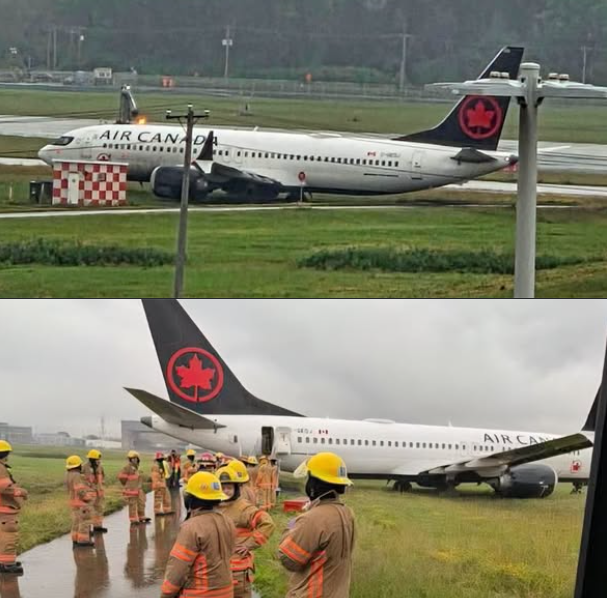
An Air Canada Boeing 737 MAX 8 operating Flight AC774 from Los Angeles to Montréal experienced a taxiway excursion after landing at Montréal–Trudeau International Airport on Thursday, prompting an official investigation by the Transportation Safety Board of Canada (TSB). Although the aircraft left the paved taxiway and came to rest on a grassy area, all 156 passengers and six crew members safely evacuated the aircraft without injury.
The incident has drawn attention from aviation authorities and industry observers, not because of casualties or major damage, but because any event involving an aircraft leaving the designated paved surface is taken seriously. Such occurrences, known as taxiway excursions or runway excursions depending on where they happen, provide valuable opportunities to improve aviation safety and prevent future incidents.
According to preliminary information, Flight AC774 had completed what appeared to be a routine flight from Los Angeles International Airport to Montréal–Trudeau International Airport. The Boeing 737 MAX 8 landed safely before beginning its taxi toward the assigned gate.
While exiting the runway, however, the aircraft departed the paved taxiway and rolled onto a grassy area adjacent to the pavement. The aircraft eventually came to a complete stop, allowing airport emergency personnel to respond immediately.
Airport rescue and firefighting teams arrived within minutes to assess the situation. As a precaution, emergency services surrounded the aircraft while officials confirmed that there were no signs of fire, fuel leaks, or other immediate hazards.
Passengers remained calm throughout the event and were later instructed to leave the aircraft in an orderly manner. Rather than conducting a full emergency evacuation using inflatable slides, passengers reportedly deplaned safely under the direction of the flight crew once authorities determined conditions were stable.
Air Canada later confirmed that all 156 passengers and six crew members were safe and that no injuries had been reported.
For many travelers onboard, the unexpected stop in the grassy area was surprising. While moments like these can understandably cause concern, aviation professionals emphasize that modern commercial aircraft are designed with multiple layers of safety and that crews receive extensive training to handle abnormal situations.
Flight attendants are regularly trained for a wide range of emergencies, from medical incidents to evacuations and unusual aircraft movements. Their calm communication often plays a major role in helping passengers remain composed during unexpected events.
Following the incident, Montréal–Trudeau International Airport temporarily closed the affected runway and taxiway while crews inspected the aircraft and surrounding pavement. Airport operations personnel worked quickly to ensure that no damage to airport infrastructure had occurred before reopening affected areas.
The temporary closure resulted in several flight delays and minor disruptions throughout the day. Airport officials coordinated with airlines and air traffic controllers to minimize the impact on arriving and departing flights while maintaining safe operating conditions.
Investigators from the Transportation Safety Board of Canada were dispatched to the airport shortly after the occurrence. The TSB is Canada’s independent agency responsible for investigating transportation accidents and incidents involving aviation, marine, rail, and pipeline operations.
Its primary mission is not to assign blame or determine legal liability. Instead, investigators seek to understand exactly what happened, identify contributing factors, and recommend safety improvements when necessary.
As part of the investigation, specialists are expected to examine numerous aspects of the incident, including the aircraft’s condition, weather observations, runway and taxiway conditions, airport lighting and markings, air traffic control communications, maintenance records, and data recorded by the aircraft’s flight data recorder.
Cockpit voice recordings may also be reviewed if investigators determine they are relevant to understanding the sequence of events.
At this stage, officials have not indicated what caused the aircraft to leave the taxiway.
Several possibilities are typically considered during investigations of this nature. Weather conditions, reduced visibility, slippery pavement caused by rain, braking performance, steering system operation, aircraft speed while taxiing, airport surface conditions, and even simple navigational misunderstandings can all become areas of review.
Importantly, the existence of an investigation does not suggest that any one factor is responsible. Aviation investigations are intentionally thorough because safety depends on identifying every possible contributing element before reaching conclusions.
The aircraft involved was a Boeing 737 MAX 8, one of the most widely used narrow-body commercial aircraft operating today. Airlines around the world rely on the aircraft for short- and medium-haul routes because of its fuel efficiency and modern flight systems.
Since returning to commercial service following extensive certification reviews several years ago, the 737 MAX fleet has accumulated millions of flight hours worldwide. Incidents such as taxiway excursions are evaluated independently and should not automatically be viewed as reflecting broader concerns about a particular aircraft model.
Aviation experts often note that taxiway and runway excursions occur for a variety of reasons across many different aircraft types. While relatively uncommon, they remain one of the categories of incidents that regulators continually monitor because understanding them contributes to improving airport safety.
Modern airports invest heavily in runway lighting, pavement maintenance, signage, surveillance systems, and pilot guidance procedures designed to reduce the likelihood of surface incidents.
Similarly, airlines continually reinforce standard operating procedures with pilots through recurrent simulator training, classroom instruction, and operational reviews.
Air Canada issued a statement acknowledging the occurrence and emphasizing that the safety of passengers and employees remains its highest priority. The airline also confirmed that it is cooperating fully with investigators as they gather information regarding the event.
Passengers whose travel plans were affected by the temporary runway closure were assisted by airline and airport staff as schedules gradually returned to normal.
While photographs of aircraft resting on grass can appear dramatic, aviation specialists caution that images alone rarely reveal the seriousness of an incident. In many cases, aircraft sustain only limited damage, and determining the extent of any repairs requires detailed engineering inspections.
Maintenance teams will likely conduct comprehensive examinations of the landing gear, wheels, brakes, tires, fuselage, and other structural components before the aircraft returns to service. Any required repairs must meet strict regulatory standards before the airplane is approved to fly again.
Incidents like this also demonstrate the effectiveness of aviation’s layered safety approach. Emergency responders, airport operations staff, flight crews, air traffic controllers, maintenance personnel, and investigators each play distinct roles designed to protect passengers and maintain public confidence in air travel.
Although an unexpected event occurred after landing, the absence of injuries reflects how these systems work together when something unusual happens.
In the coming weeks, investigators from the Transportation Safety Board of Canada will continue collecting evidence, interviewing relevant personnel, reviewing technical data, and analyzing every stage of the flight. Preliminary findings may become available during the investigation, but a final report could take several months depending on the complexity of the case.
That report, once completed, may include safety recommendations if investigators identify opportunities to further reduce the risk of similar occurrences in the future.
For passengers, the incident serves as a reminder that aviation remains one of the safest forms of transportation. Even when unusual situations occur, extensive planning, rigorous crew training, modern aircraft technology, and coordinated emergency response procedures are designed to prioritize passenger safety above all else.
As the investigation proceeds, aviation authorities will work to determine precisely why Flight AC774 left the taxiway after landing and whether any additional safety measures should be implemented. Until those findings are released, officials continue to emphasize that the investigation remains ongoing and that no conclusions regarding the cause have yet been reached.