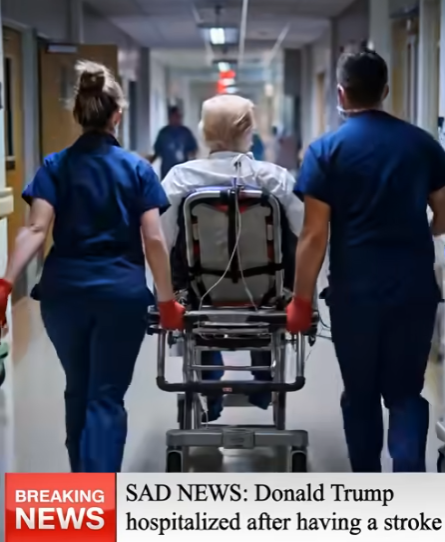

SAD NEWS: Concerns Over President Donald Trump’s Health Spark Widespread Speculation Following Recent Medical Visits
In the fast-paced world of 24/7 news and social media, headlines like “SAD NEWS: Donald Trump Hospitalization … See more” spread rapidly, often fueled by rumors, unverified clips, and political tensions. As of mid-2026, President Donald Trump, at approximately 80 years old, has drawn significant public attention due to multiple visits to Walter Reed National Military Medical Center. While the White House has consistently described these as routine checkups and declared the president in “excellent health,” the frequency of visits—coupled with his status as the oldest inaugurated president—has prompted questions, speculation, and partisan debate.
This article examines the facts surrounding Trump’s recent medical evaluations, the broader context of presidential health transparency, and the implications for leadership at the highest level.
Recent Medical Visits: Routine or Cause for Concern?
In late May 2026, President Trump underwent a multi-hour medical and dental examination at Walter Reed, marking his third such visit in roughly 13 months during his second term. The White House characterized the appointment as preventive care, including routine physical and dental assessments. Following the visit, Trump posted on social media that “Everything checked out PERFECTLY.” A subsequent memo from the White House physician, Dr. Sean Barbabella, reinforced this, noting strong cardiac, pulmonary, neurological, and overall physical function.
The report acknowledged minor issues common for someone of Trump’s age, such as lower leg swelling and bruising on the hands. Recommendations reportedly included weight management and increased exercise. Notably, the president was reportedly evaluated by a team of around 22 medical specialists, a detail that some observers found noteworthy given the scope of a “routine” exam.
Earlier visits and delayed releases of full reports have added to the scrutiny. In previous instances, the administration highlighted Trump’s robust health while downplaying concerns about age-related stamina or cognitive fitness. Critics, including some Democratic lawmakers, have called for greater transparency, such as the release of detailed cognitive testing results.
Social media has amplified unverified claims. Viral videos purporting to show Trump being assisted or stumbling have been debunked as AI-generated or misleading. White House officials have pushed back against “fake news” narratives, pointing to Trump’s active public schedule, including policy meetings, executive actions, and public appearances.
Presidential Health Transparency: A Historical Perspective
Health disclosures for U.S. presidents have long been a balancing act between public interest and privacy. From Woodrow Wilson’s stroke to Franklin D. Roosevelt’s concealed polio and heart issues, to more recent examples like Ronald Reagan’s Alzheimer’s diagnosis post-presidency or Joe Biden’s age-related discussions, transparency varies.
The 25th Amendment provides mechanisms for temporary transfer of power in cases of incapacity, but invocation is rare and politically charged. Modern presidents typically release summaries of annual physicals, though the level of detail is at the discretion of the administration. Trump’s team has followed this pattern, releasing memos rather than exhaustive reports.
At nearly 80, Trump’s age places him in a demographic where risks of cardiovascular events, cognitive decline, or reduced resilience increase statistically. Supporters argue his energy levels, golf outings, and demanding schedule demonstrate vitality. Detractors point to visible signs—hand bruising, gait observations, or speech patterns—as potential red flags warranting fuller disclosure.
Medical experts emphasize that without full context, speculation can be irresponsible. Conditions like edema (swelling) can stem from minor causes like diet, medications, or prolonged standing, while bruising might relate to blood thinners or minor trauma.
Political and Media Reactions
News of Trump’s Walter Reed visits inevitably sparked a spectrum of responses. Conservative outlets and supporters framed them as standard maintenance for a hardworking leader. Progressive voices and some independents used the occasions to question fitness for office, especially amid ongoing policy battles, international tensions, and domestic priorities.
Social media platforms saw a surge in both supportive messages wishing the president well and critical commentary. Hashtags and viral posts often lacked nuance, blending facts with exaggeration. Mainstream outlets like CNN, NPR, PBS, and The Guardian reported on the visits with emphasis on the need for transparency, while noting the absence of acute emergencies.
The timing of these checkups—amid a busy second term—also raised logistical questions about continuity of government and the demands placed on any elderly leader.
Broader Implications for Leadership and the Nation
Presidential health is not merely a personal matter; it affects national stability, policy execution, and public confidence. An aging leader must demonstrate capacity to handle crises, from economic challenges to geopolitical conflicts. Trump’s administration has highlighted achievements and resilience, positioning him as a vigorous “America First” advocate.
Looking ahead, regular health monitoring is prudent. Advances in medicine allow many octogenarians to remain active, but vigilance is key. Questions about succession planning, vice presidential readiness, and cabinet dynamics naturally arise in such discussions, regardless of party.
Public discourse benefits from facts over sensationalism. “Sad news” clickbait often exploits emotions without evidence. Responsible journalism separates routine care from emergencies and avoids diagnosing from afar.
Moving Forward: Facts, Fitness, and Focus
As President Trump continues his term, expect ongoing scrutiny of his health alongside his policy agenda. The White House will likely maintain that he remains fit for duty, supported by medical professionals. Independent verification and fuller disclosures could help alleviate concerns.
For Americans across the political spectrum, the focus should remain on governance outcomes—economy, security, healthcare access, and unity—while respecting the humanity of leaders who face age-related realities like everyone else.
Wishing public figures well during medical evaluations is a bipartisan norm. Whether one supports or opposes Trump, the demands of the presidency are immense. Reliable information, not rumors, should guide public understanding.
In an era of misinformation, verifying sources is crucial. Official statements, reputable news organizations, and direct updates provide the clearest picture. As more details emerge from future checkups, the nation will continue balancing respect for privacy with the public’s right to know about the leader’s capacity to serve.
Presidential health stories remind us of the human element in high-stakes roles. They prompt reflection on age, capability, and the systems designed to support effective leadership. For now, the White House message is one of normalcy and strength, with Trump projecting confidence in his physical and mental fitness.
The conversation around “sad news” hospitalization rumors serves as a case study in how information—and disinformation—travels in the digital age. Staying informed through credible channels remains the best defense against unfounded alarm.