CAUTION: If You Sleep on Your Right Side… Here’s What You Should Know
Sleep is one of the most important parts of maintaining good physical and mental health. While most people focus on getting enough hours of rest, sleep position can also play a role in comfort and certain health conditions. One question that frequently appears online is: “What happens if you sleep on your right side?” The answer isn’t as simple as many clickbait headlines suggest.
The truth is that sleeping on your right side is not inherently dangerous for most healthy people. However, depending on your medical condition, body type, or pregnancy status, one sleeping position may be more comfortable or beneficial than another.
Many adults naturally switch positions several times during the night without realizing it. Sleep experts estimate that people change positions dozens of times while sleeping. This movement helps relieve pressure on joints and muscles while promoting circulation.
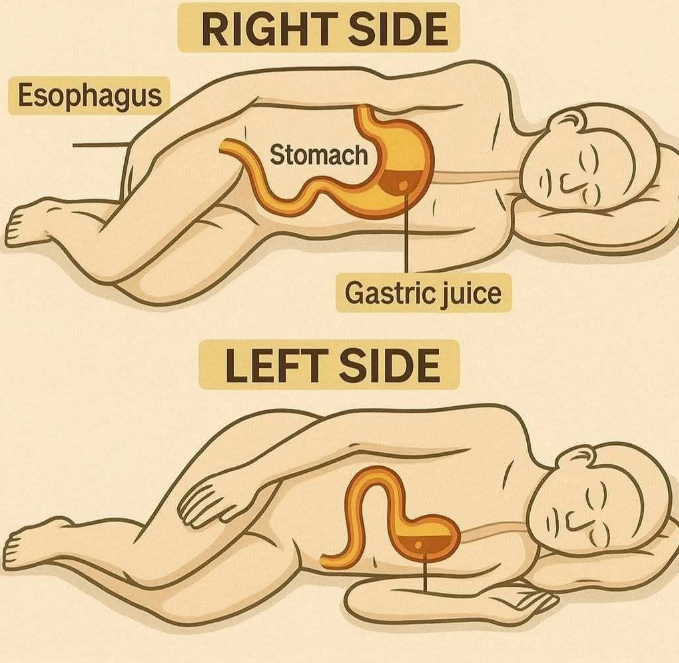
One of the biggest discussions surrounding right-side sleeping involves acid reflux. The stomach sits primarily on the left side of the body, and some research suggests that sleeping on the left side may help reduce nighttime acid reflux symptoms. Gravity may help keep stomach contents where they belong, reducing the chance of acid flowing back into the esophagus. By contrast, some people find that sleeping on their right side can worsen reflux symptoms.
However, this does not mean everyone who sleeps on their right side will experience heartburn. Many people sleep comfortably in that position without any digestive problems.
Heart health is another topic frequently mentioned in articles about sleep positions. Some researchers have explored whether body position influences circulation or heart function. While certain heart conditions may make one position more comfortable than another, there is no strong evidence that healthy individuals should avoid sleeping on their right side solely because of heart concerns. People with specific cardiovascular conditions should follow the advice of their healthcare providers rather than internet myths.
Pregnancy often changes sleeping recommendations. During the later stages of pregnancy, many healthcare professionals encourage sleeping on the left side because it may improve blood flow between the mother and baby and reduce pressure on certain blood vessels. Even so, experts generally agree that pregnant women should not panic if they wake up on their right side. Comfort and getting enough quality sleep remain important.
Sleep position can also affect breathing. Some individuals with obstructive sleep apnea or heavy snoring may notice differences depending on whether they sleep on their back, side, or stomach. Side sleeping, in general, is often recommended because it can help keep the airway more open than sleeping flat on the back.
Muscle and joint comfort are additional considerations. People experiencing shoulder pain may prefer sleeping on the opposite side to reduce pressure on the affected joint. Similarly, individuals with hip discomfort often benefit from placing a pillow between their knees while sleeping on either side to help maintain proper alignment.
The spine also benefits from good sleeping posture. Whether sleeping on the left or right side, keeping the head, neck, and spine aligned with a supportive pillow and mattress can reduce morning stiffness and discomfort. A pillow placed between the knees may also help keep the hips properly aligned.
Some online posts claim that sleeping on the right side damages internal organs or significantly shortens life expectancy. These claims are not supported by strong scientific evidence. While certain medical conditions may influence recommended sleeping positions, healthy people generally do not need to worry about serious harm from sleeping on either side.
Comfort remains one of the most important factors in achieving quality sleep. A position that allows you to sleep through the night without pain or frequent waking is usually preferable to forcing yourself into an uncomfortable posture simply because of an internet trend.
Doctors emphasize that sleep quality often matters more than sleep position alone. Adults are generally encouraged to aim for seven to nine hours of sleep each night while maintaining consistent bedtimes, limiting caffeine before bed, and creating a comfortable sleep environment.
Choosing the right mattress and pillow can make a significant difference. A mattress that properly supports the body’s natural curves and a pillow that keeps the neck in a neutral position may improve overall sleep quality regardless of whether someone sleeps on the left or right side.
Lifestyle habits also contribute to restful sleep. Regular exercise, limiting screen time before bed, maintaining a cool bedroom temperature, and avoiding large meals late in the evening can all improve sleep more than changing sleep position alone.
If you regularly experience severe heartburn, persistent shoulder pain, breathing problems during sleep, or chronic insomnia, consulting a healthcare professional is advisable. These symptoms may indicate underlying medical conditions that require evaluation and treatment.
The popularity of viral health headlines has made it increasingly important to separate evidence from exaggeration. Sensational statements like “Never sleep on your right side!” often oversimplify complex medical topics to attract attention. In reality, sleep recommendations vary depending on the individual and their health circumstances.
Ultimately, sleeping on your right side is perfectly normal for many people. Unless your doctor has recommended a specific sleeping position because of a medical condition, there is usually no reason to be concerned. The most important goals are getting enough sleep, maintaining good sleep hygiene, and choosing a position that allows you to wake feeling rested and comfortable.
In the end, the “best” sleeping position is often the one that provides consistent, high-quality sleep while minimizing pain or discomfort. Rather than worrying about alarming headlines, focus on healthy sleep habits and seek medical advice if you have persistent sleep-related concerns. A good night’s sleep remains one of the most valuable investments you can make in your overall health and well-being.