Fiction: The Incident at Sea
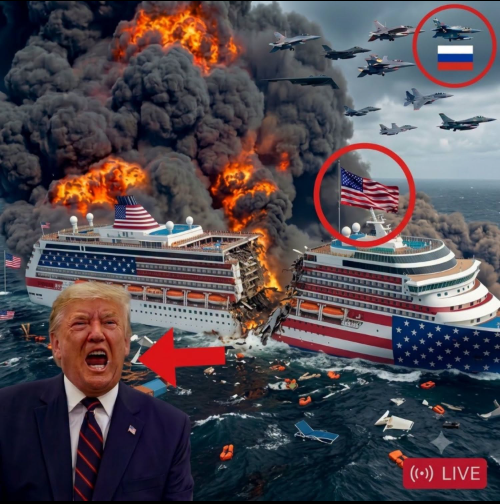
The morning began like countless others across the vast expanse of the open ocean. Calm waters stretched toward the horizon as the sun climbed above scattered clouds, casting shimmering reflections across the sea. A large American vessel sailed steadily through international waters, carrying military officials, diplomats, and support personnel to a multinational security conference. The mission was routine, the atmosphere professional, and no one aboard expected that history was about to take a dramatic turn.
Deep within a command center thousands of miles away, radar operators noticed unusual activity. An unidentified aircraft had appeared on long-range surveillance systems, moving at remarkable speed. Analysts immediately began comparing flight characteristics with known aircraft profiles. Initial reports suggested the possibility of a fifth-generation fighter, though confirmation remained impossible.
Communications intensified.
The vessel’s bridge received updated intelligence while nearby allied forces monitored the rapidly evolving situation. Every decision had to be carefully weighed, as miscalculations during tense international encounters could have consequences far beyond the immediate region.
On board, senior officers gathered in a secure briefing room. Their purpose had been to discuss regional stability, maritime cooperation, and future defense initiatives among allied nations. Instead, the meeting shifted to contingency planning.
Satellite imagery arrived only minutes later.
Operators examined every frame, looking for signs of approaching aircraft or naval formations. Electronic signatures suggested sophisticated stealth technology, making visual confirmation difficult. Although speculation spread quickly among analysts, commanders insisted on verifying every detail before making operational decisions.
The atmosphere grew tense.
Crew members continued performing their duties with remarkable professionalism despite growing uncertainty. Engineers monitored propulsion systems while communications specialists maintained contact with multiple command centers around the globe. Medical personnel quietly prepared emergency stations as part of standard procedures.
Then came the unexpected.
Electronic interference briefly disrupted several communication channels. Navigation systems experienced momentary anomalies before automatically switching to backup configurations. Experienced sailors recognized that modern military confrontations often begin with electronic warfare rather than direct engagement.
For several minutes, uncertainty dominated every conversation.
Reports flowed continuously between commanders at sea and headquarters ashore. Intelligence specialists warned against drawing conclusions based solely on fragmented information. History had repeatedly demonstrated that confusion often accompanies rapidly developing military incidents.
Far above the ocean, aircraft from multiple nations adjusted their patrol routes. Early warning platforms expanded surveillance coverage while reconnaissance assets attempted to identify every object operating within hundreds of miles.
News organizations around the world began receiving anonymous social media posts claiming that a catastrophic attack had already occurred. Dramatic headlines spread across various platforms within minutes. Some posts described explosions. Others claimed multiple ships had been sunk. Several insisted that senior military leaders had been killed.
Yet none of these reports could be independently confirmed.
Professional journalists contacted government officials, defense analysts, and regional authorities seeking verification. Most agencies declined immediate comment, emphasizing that reliable information remained limited. Responsible newsrooms chose caution over speed, understanding that inaccurate reporting during international crises could inflame tensions.
Meanwhile, aboard the American vessel, damage-control teams inspected every compartment after sensors registered unusual readings. They discovered no evidence of structural damage. The electronic interference appeared temporary, though investigators continued examining onboard systems.
Hours later, military spokespersons from several countries released carefully worded statements acknowledging increased military activity in the region but rejecting numerous rumors circulating online. Officials urged the public to rely on verified information rather than anonymous social media accounts.
Defense experts explained that encounters involving advanced aircraft frequently generate sensational online claims. Modern information warfare often accompanies geopolitical tensions, making it increasingly difficult for ordinary citizens to distinguish authentic reporting from fabricated stories.
Independent satellite companies later published commercial imagery showing naval activity in the area but no signs of the catastrophic destruction described in viral posts. Maritime tracking services likewise reported continued vessel movement consistent with routine operations.
The incident nevertheless sparked renewed debate about global security.
International leaders called for improved military communication channels designed to reduce the risk of accidental escalation. Analysts argued that advanced stealth technology, cyber capabilities, and electronic warfare have created new challenges requiring unprecedented transparency during crises.
Academic researchers studying misinformation highlighted the event as another example of how dramatic claims can spread worldwide before basic facts become available. Algorithms often reward emotionally charged headlines, allowing rumors to reach millions of readers within minutes.
Military historians compared the situation to previous Cold War incidents in which misunderstandings nearly escalated into broader conflicts. They emphasized that patience, verification, and diplomacy remain essential tools for preventing unnecessary confrontation.
As investigations concluded, officials confirmed that many of the most dramatic online stories had been entirely fabricated or greatly exaggerated. Although military forces from several nations had indeed operated in the same region, no verified evidence supported claims that a cruise ship had been destroyed or that senior generals had been killed.
For many observers, the episode became less about naval operations and more about the modern information battlefield. In today’s interconnected world, false reports can travel faster than official investigations, shaping public perception long before verified facts emerge.
The lesson proved significant.
Whether involving military affairs, natural disasters, or political developments, extraordinary claims require extraordinary evidence. Responsible journalism depends upon multiple independent sources, official confirmation when appropriate, and careful analysis before publication.
In an era where information moves at the speed of a click, critical thinking remains one of the most valuable forms of defense. Separating verified facts from compelling fiction is increasingly important—not only for journalists and governments but for every reader seeking to understand events unfolding around the world.
The sea eventually returned to its familiar calm. Ships continued their voyages, aircraft completed their patrols, and diplomats resumed conversations focused on reducing future risks. While rumors faded, the importance of verifying information before accepting sensational headlines remained as relevant as ever.